


Oceanic
Pelagic fishes swim continuously on the water surface (or a little below it) in wide areas, such as open seas, and have no specific place to inhabit. They swim even while “asleep”.
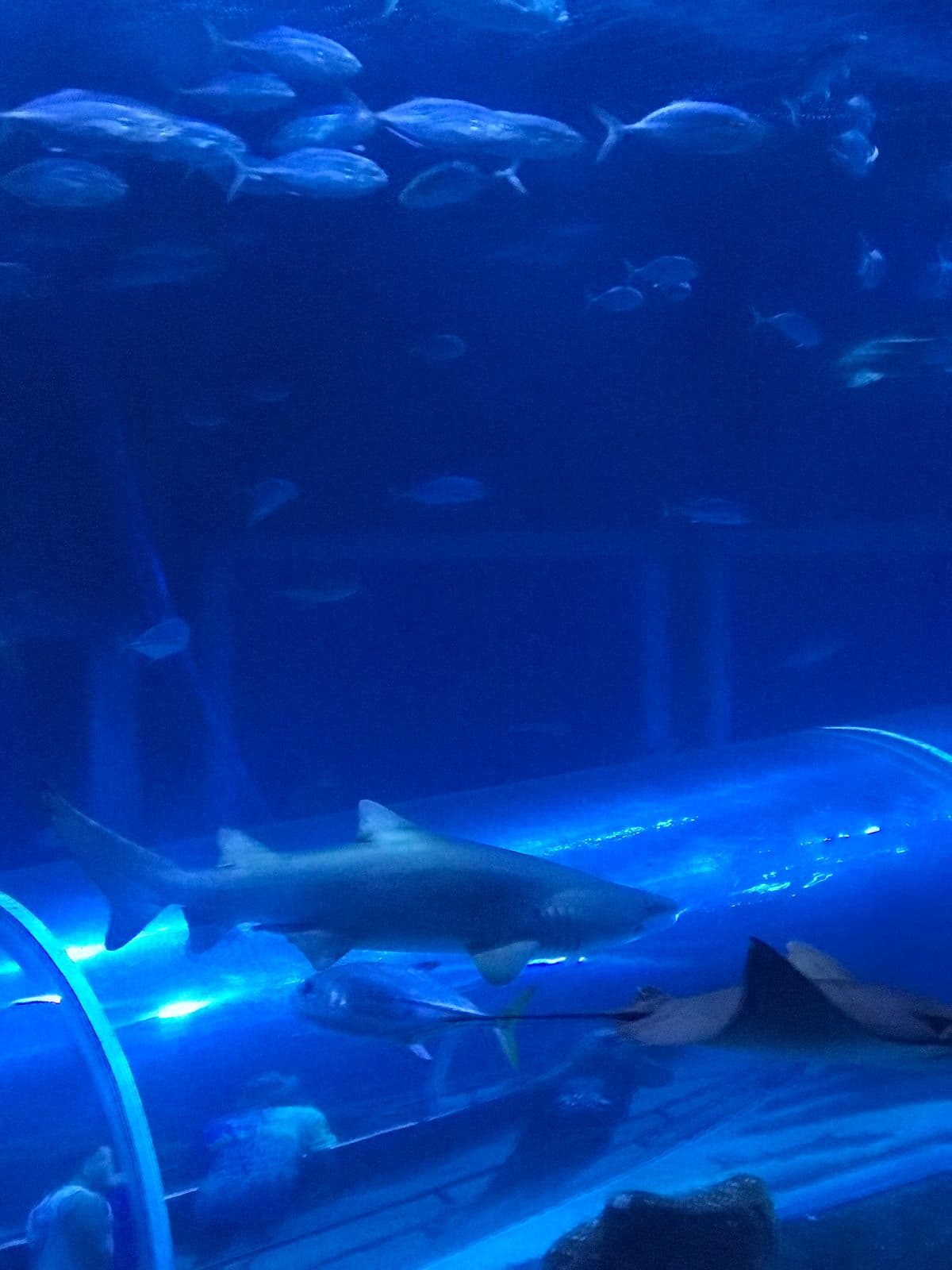
The Oceanic tank represents the most remote environment of the coast, the open sea. Not having much places to hide, the animals that live in this environment have a dark back to blend into the darkness of the bottom, and a lighter belly to blend into the brightness of the surface. Most of the species of this tank occur in our coast, and thousands of them are captured every day to serve as food for the population. This tank has 7 m depth, 3.5 million liters of water and 25 m in diameter, and houses the largest specimens of AquaRio, such as our great sharks and rays.
Here is researchTank species
Barber surgeonfish
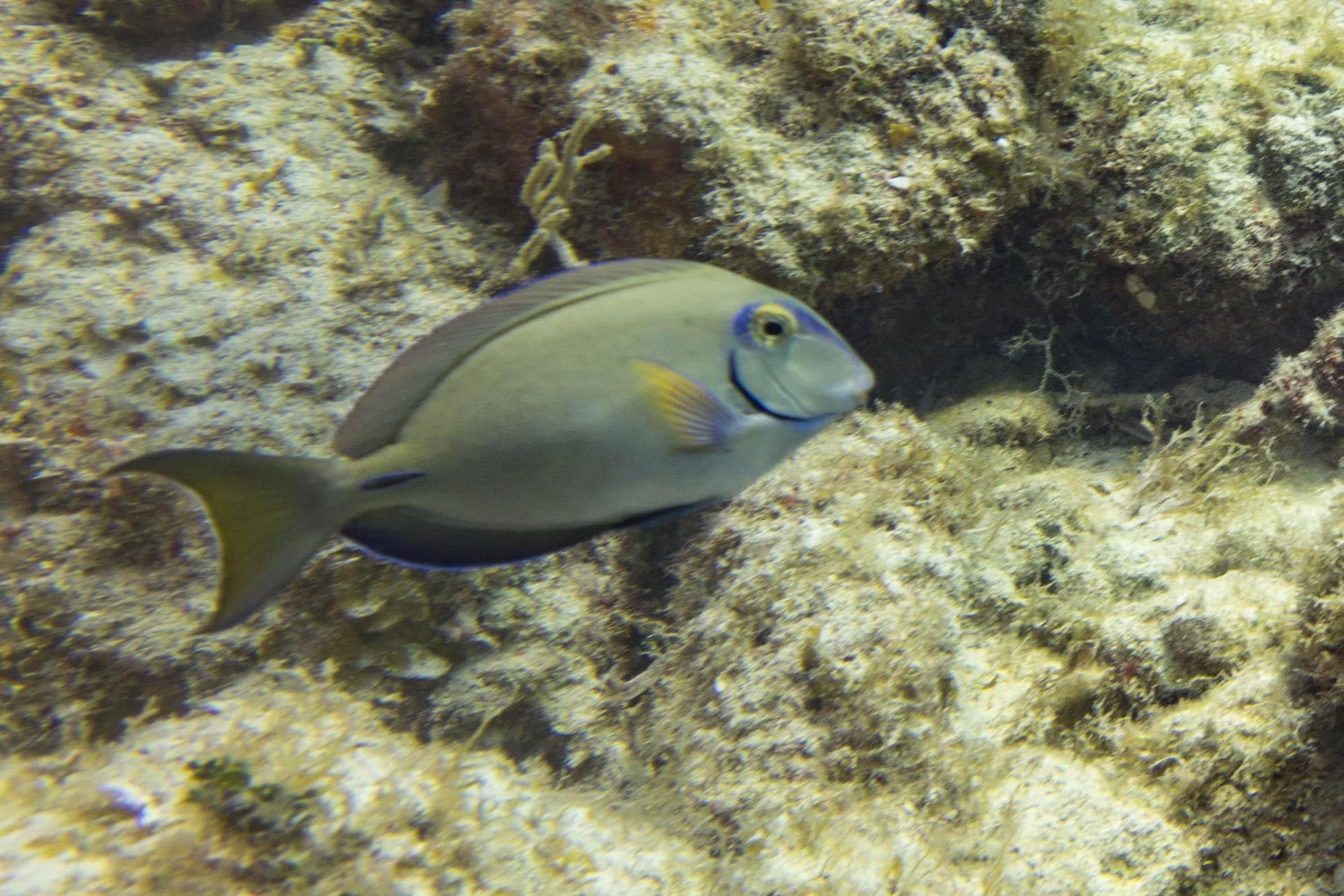
Acanthurus bahianus
It is one of the most characteristic surgeonfish of the Atlantic Ocean, living close to coral reefs in tropical regions at depths of up to 40 meters. It can reach a maximum size of 12 centimeters and its longest recorded lifespan is 31 years. It can be found in small groups of just over five individuals. It has diurnal habits and feeds almost exclusively on algae, sometimes eating small crustaceans. It has a pair of spines, located on the side of the tail, and used for defense. This characteristic is present in all species of the surgeon group.
Porkfish
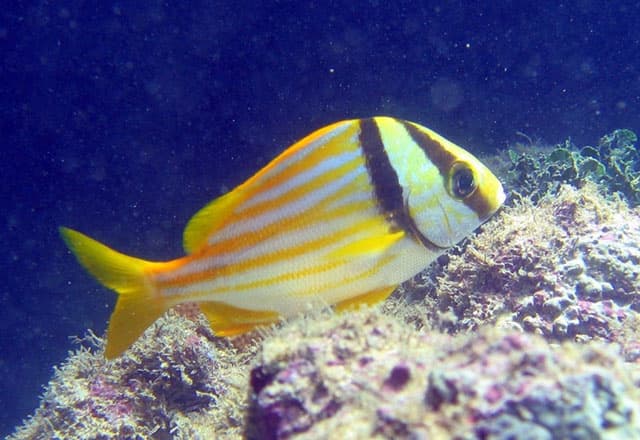
Anisotremus virginicus
A species of fish that can be found in tropical waters across the western Atlantic Ocean. It lives on coral and/or rocky bottoms, usually solitary. Despite being an omnivorous fish, juveniles usually feed on small parasites found in larger fish, and adults on small crustaceans, mollusks and annelids. This species can reach 40 cm in length. In the mating period, large aggregations can be formed. It has yellowish color with white bands along the body.
Green moray

This species is found in the Atlantic Ocean, mainly hidden in rocky shores, coral reefs and mangroves. It usually inhabits shallow depths of up to 30 m, but can occur up to 50 m. With mainly nocturnal habits, it feeds on fish and crustaceans, and can reach 300 cm in length. Green moray are poorly commercialized: some people consume their meat or keep it in aquariums. Due to its size and territorial habit, it can be aggressive.
Black margate

Species found in the Atlantic Ocean from Florida, in the United States, to the northeast region of Brazil. It is a marine species that lives associated with coral reefs, at depths of up to 20 m. It feeds on crustaceans, molluscs, small fish and sea urchin (Diadema). It reaches up to 76 cm in length and can weigh up to 5.8 kg (largest recorded). It is a commercial species, for human consumption and for aquariums.
Dusky grouper
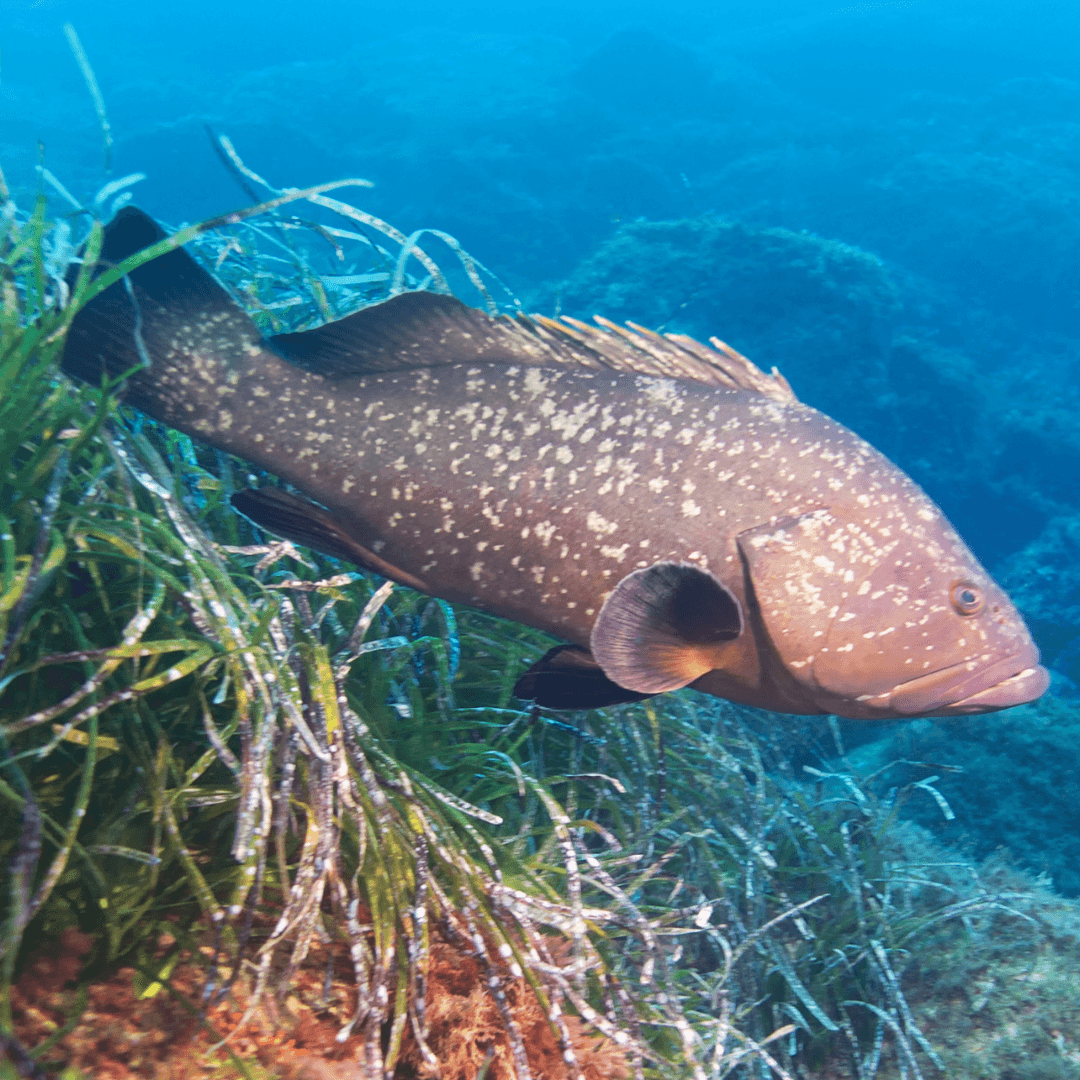
It is a marine fish with benthic habits, which lives associated with rocky reefs and caves, usually at depths between 10 and 50 meters. It is found in the Mediterranean Sea, the Atlantic Ocean and the Indian Ocean. It can reach up to 150 centimeters in length and reach up to 60 kg. They are animals that have a long life expectancy, with a maximum reported age of 50 years. They feed on molluscs, crustaceans and small fish. Adults are solitary and territorial, forming shoals during breeding seasons. They are protogynous hermaphrodites, that is, the female sexual organs are the first to develop and become mature, when the animal is close to 5 years of age. Approximately 10 years later, the male sex organs mature and become active.
Horse-eye jack
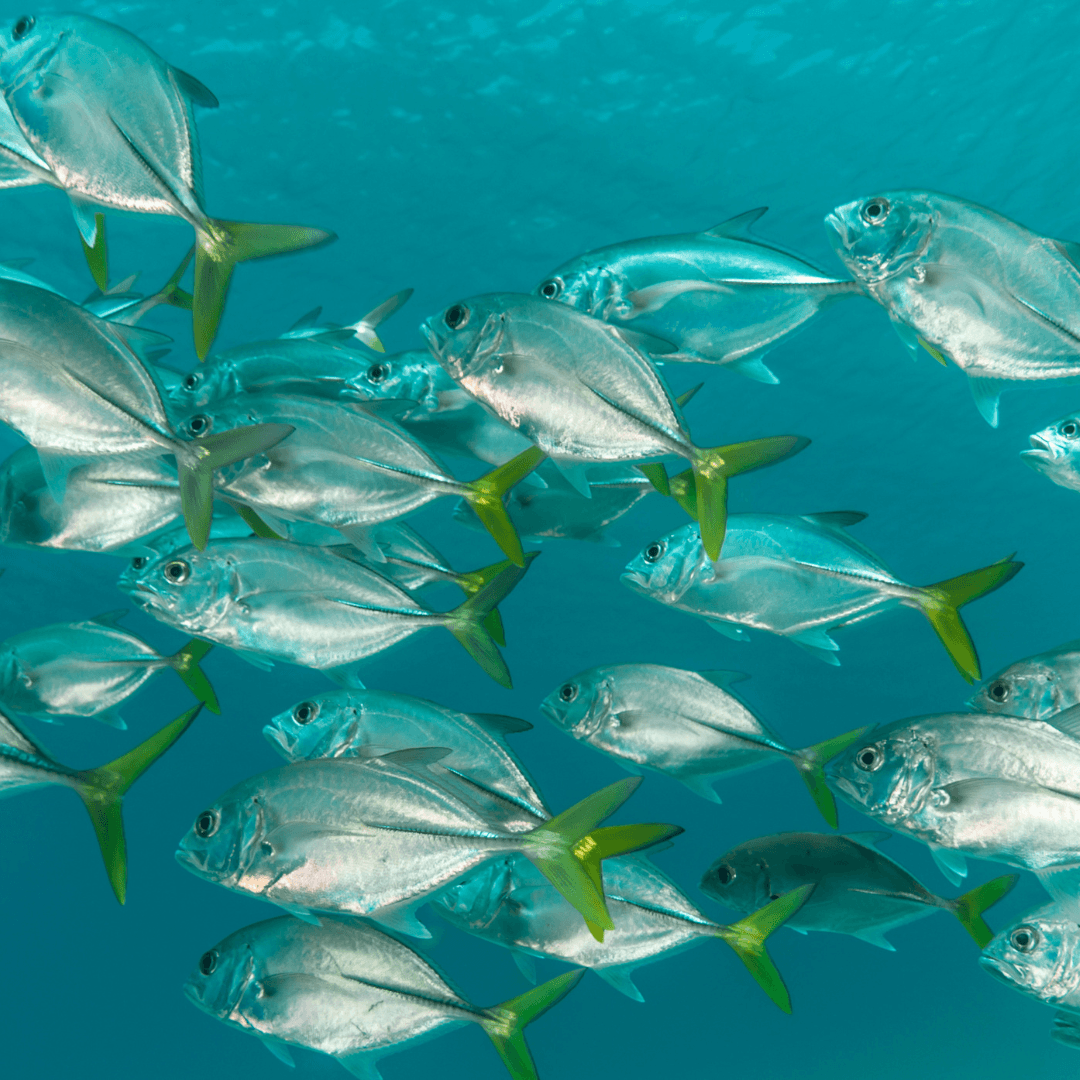
This fish has a wide distribution of populations across the Atlantic Ocean, being found close to coral reefs and oil platforms, at depths between 0 and 140 m. It feeds on smaller fish and some crustaceans such as shrimp and crabs. Individuals can measure up to 1 meter in length and weigh up to 14 kg. There have been reports of cases of ciguatera poisoning when consuming this animal. It is a commercial species in the aquarium market and in sport fishing, being not much commercial for other purposes.
Whitetip reef shark
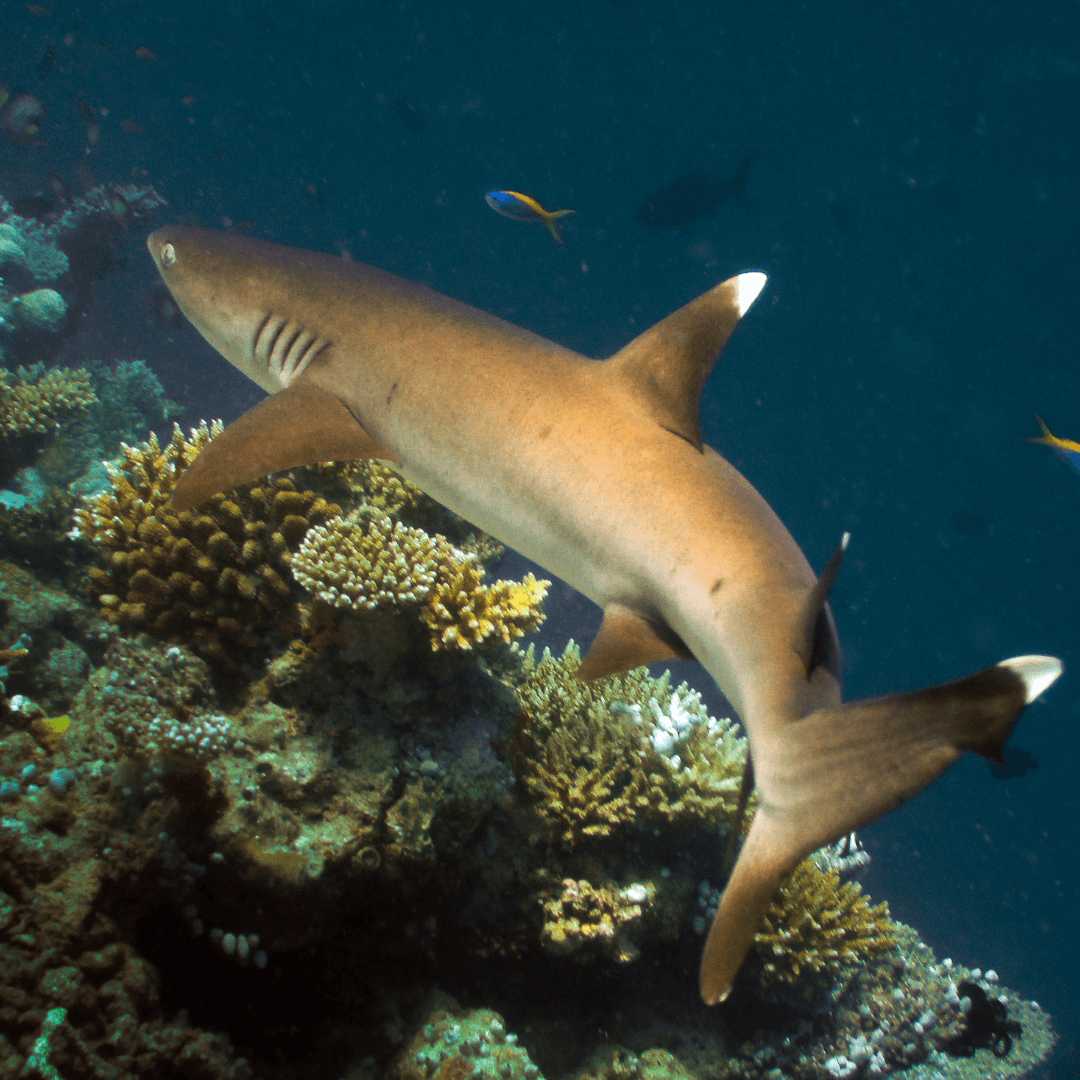
Considered a small shark, the white tip reef, can reach 200 cm in length, are very common sharks in the Indo-Pacific Ocean, but have also been found in South Africa and Central America living near coral reefs . They spend most of the day resting inside caves and at night they go out to hunt bony fish, crustaceans and some molluscs. They are viviparous sharks with the total gestation period lasting between 10 and 14 months, ending with the birth of up to 6 young. Although they can approach curious divers, they rarely present any kind of risk to humans. Because they have a relatively long gestation period, with few offspring, and eating habits restricted to a few habitats, these animals may be vulnerable to overfishing.
Blacktip Reef Shark
-
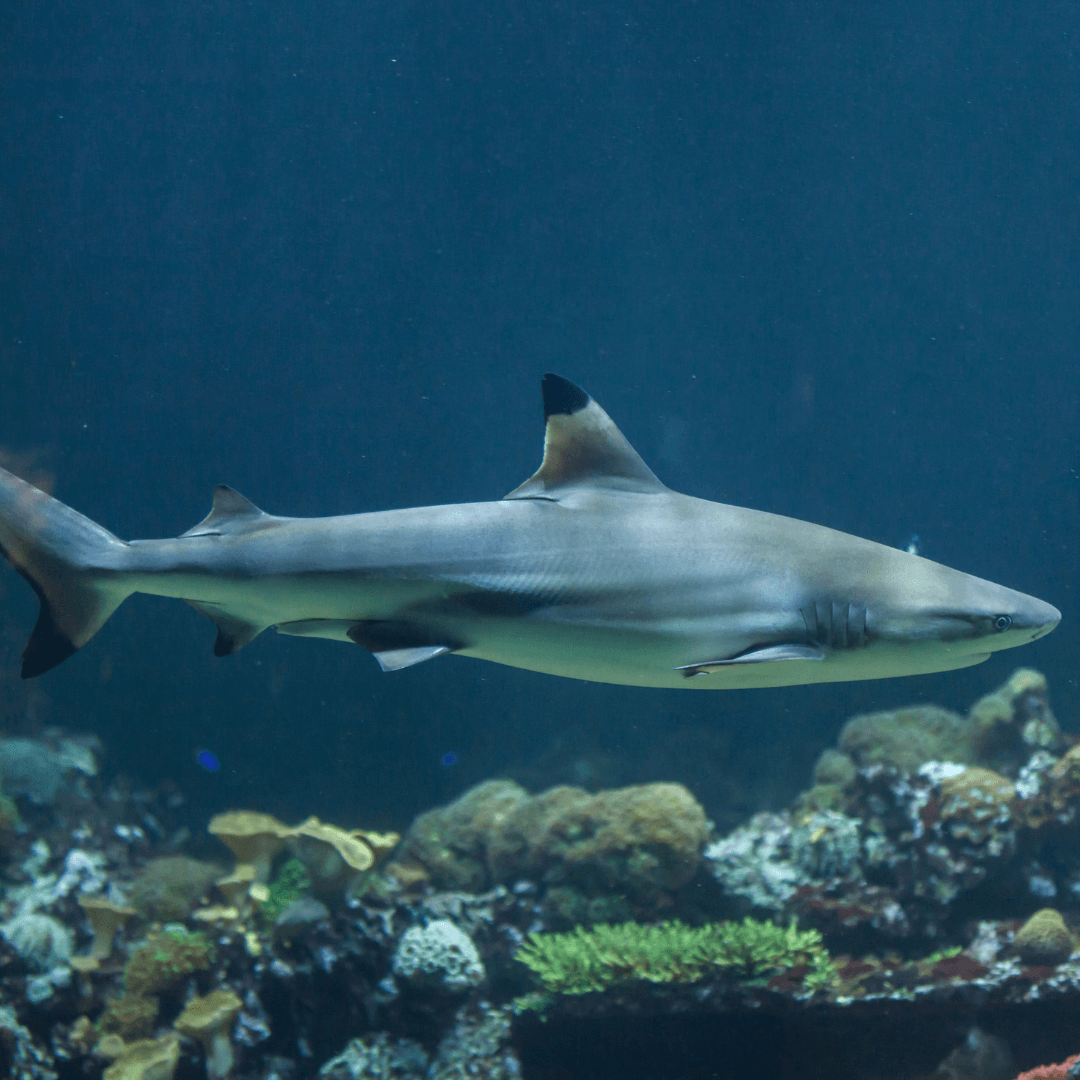
The Blacktip Reef Shark is a species of coastal shark common in the tropical regions of the Indo-West Pacific and central Pacific, found in coral reefs at depths of up to 75 meters. It can reach up to 180 cm in length and reaches sexual maturity between 90 and 134 cm. It reproduces viviparously, with small litters, and its longevity can exceed 25 years in captivity. This species is caught incidentally in various fisheries, including gillnets and artisanal fisheries, with increasing fishing pressure in several regions, such as the Great Barrier Reef, Indonesia and Fiji. Its dependence on coral reefs makes it vulnerable to habitat degradation caused by global warming and destructive fishing, such as dynamite fishing. Although there are no specific conservation plans, measures such as Marine Protected Areas and shark sanctuaries help to protect it. However, more research is needed to better understand its population and develop effective management and conservation strategies.
Sand tiger shark
Carcharias taurus
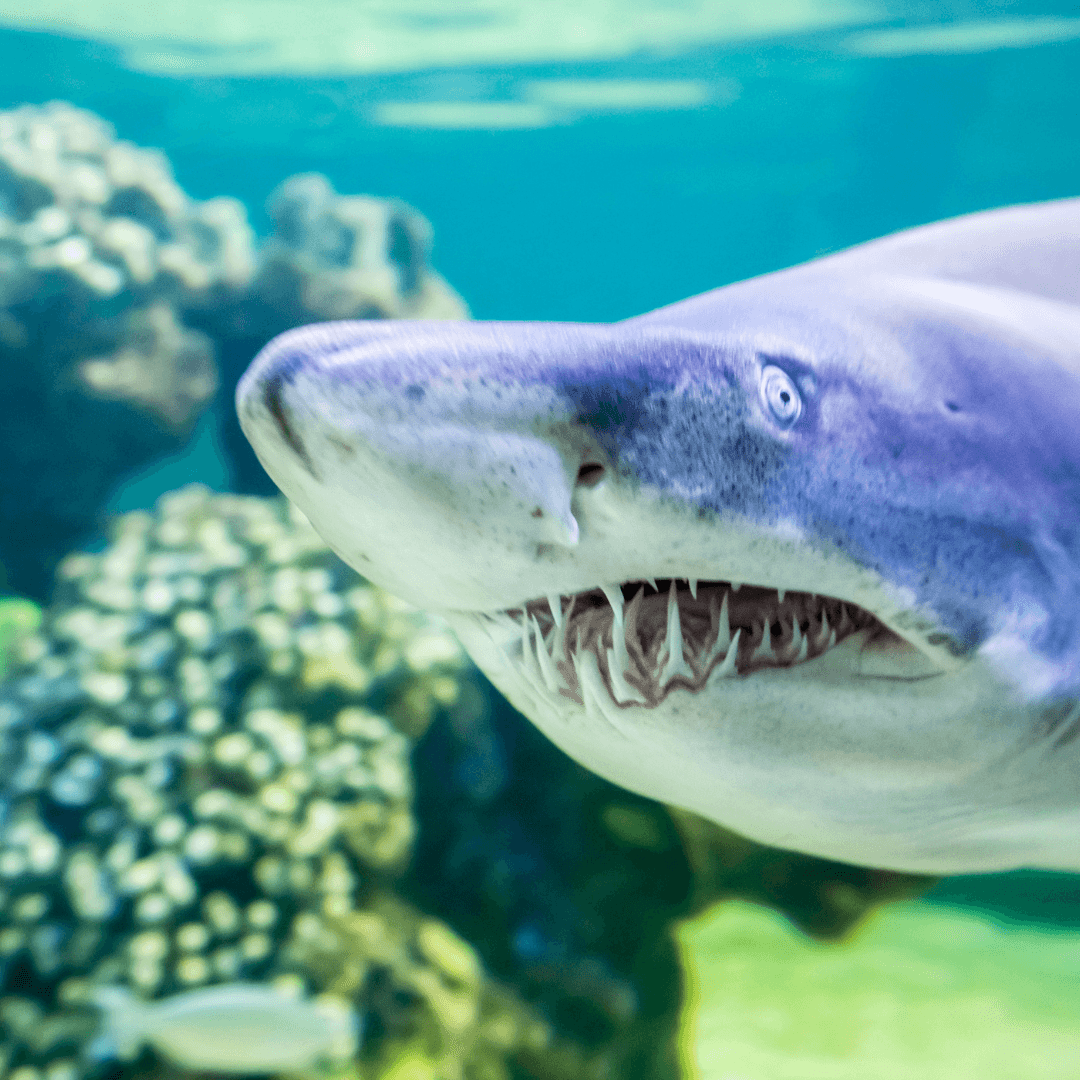
Popularly known as the bull shark or sand tiger shark (Carcharias taurus), this species has a global distribution and can be found in tropical and temperate seas of the western Indo-Pacific, western and eastern Atlantic, except in the eastern Pacific. It inhabits the coastal region and can be found close to the coast at depths of 15 to 25 meters and up to 232 meters on continental shelves. They are viviparous animals, with up to 2 pups per litter and a gestation period of 9 months. When adults, they reach a maximum size of up to 3.5 meters in length and weight of up to 200 kg, with a lighter coloration on the belly and light gray-brown on the back. It is a top predator in the marine ecosystem, feeding on invertebrates and bony fish. However, it is vulnerable to threats such as habitat degradation, climate change and overfishing, which significantly reduce the population size in several regions of the world.
Spot-fin porcupinefish
Diodon sp.
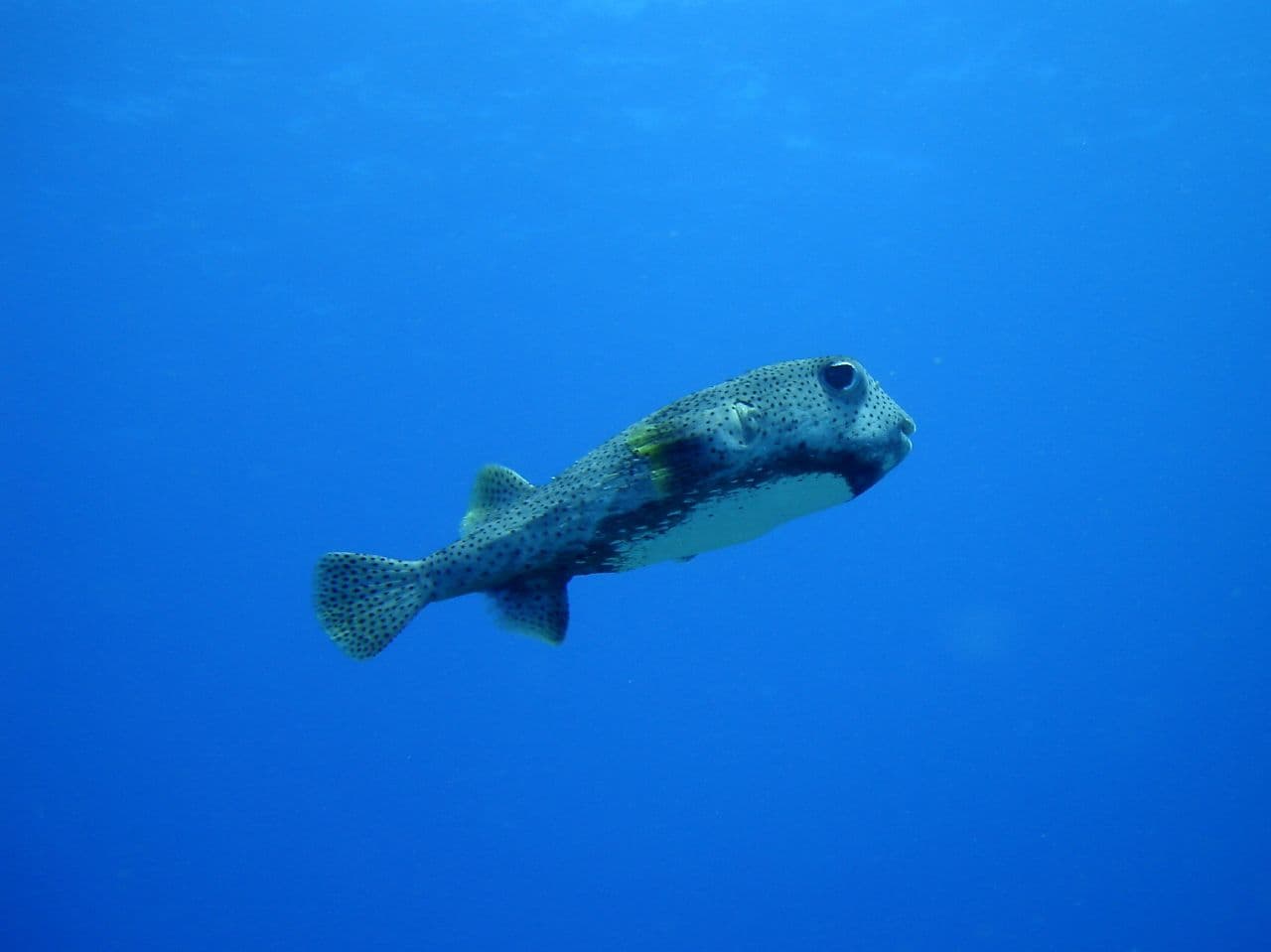
It can be found in lagoons and reefs, at a depth of up to 50m towards the sea. Younger ones can be found near the surface, and adults closer to the bottom. It has solitary and nocturnal habits. Its diet is based on invertebrates, gastropods and sea urchins. It is poisonous so it is not used in food.
Eagle ray
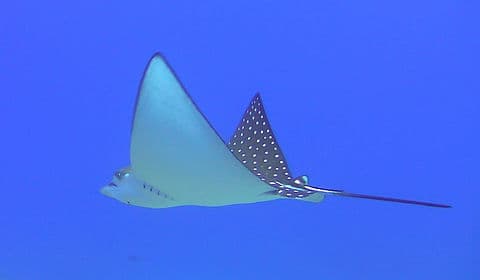
The eagle ray is a species found in various locations around the world, in tropical regions of the Atlantic, Pacific and Indian Oceans. It is occasionally seen in groups, but most sightings of this species are of solitary individuals. Its mouth is located in the lower region of the head, with serrated teeth. It is often seen feeding on crustaceans, small fishes and some mollusks, because, due to the triangular shape of its tooth, it can break the hard shell of the mollusks. It is an ovoviviparous ray, with a gestation period of about 1 year, being born up to 4 pups per pregnancy. It can reach 5 m in diameter and 3 m in length.
Permit

This species occurs commonly in the western Atlantic Ocean, being found from the United States to southeastern Brazil, including the Bahamas. It can reach up to 122 cm in length, which is the size of the largest specimen ever found, weighing up to 36 kg. It is usually a solitary fish, it lives around coral reefs and on sandy bottoms. Adults feed mainly on mollusks, crabs and small fishes, while juveniles feed on benthic invertebrates. During the summer, they are found in large schools, especially in surfing zones along sandy beaches. It is a species used for human consumption.
Spotfin hogfish
It is a species found in the Atlantic Ocean, from South Carolina (USA) to Santa Catarina (Brazil). It lives in a marine environment associated with reefs, at depths between 15 and 120 meters. It feeds on invertebrates, crustaceans and bivalves and can act as a parasite cleaner on the body of larger fish. Individuals are almost always lonely, but sometimes they can form small shoals, and can measure up to 28 cm in length. The juvenile has a predominantly yellow body, and as an adult it has a red body with a yellowish caudal fin. It is a commercial species in the aquarium market, being little commercial in other types of fisheries.
South american silver porgy
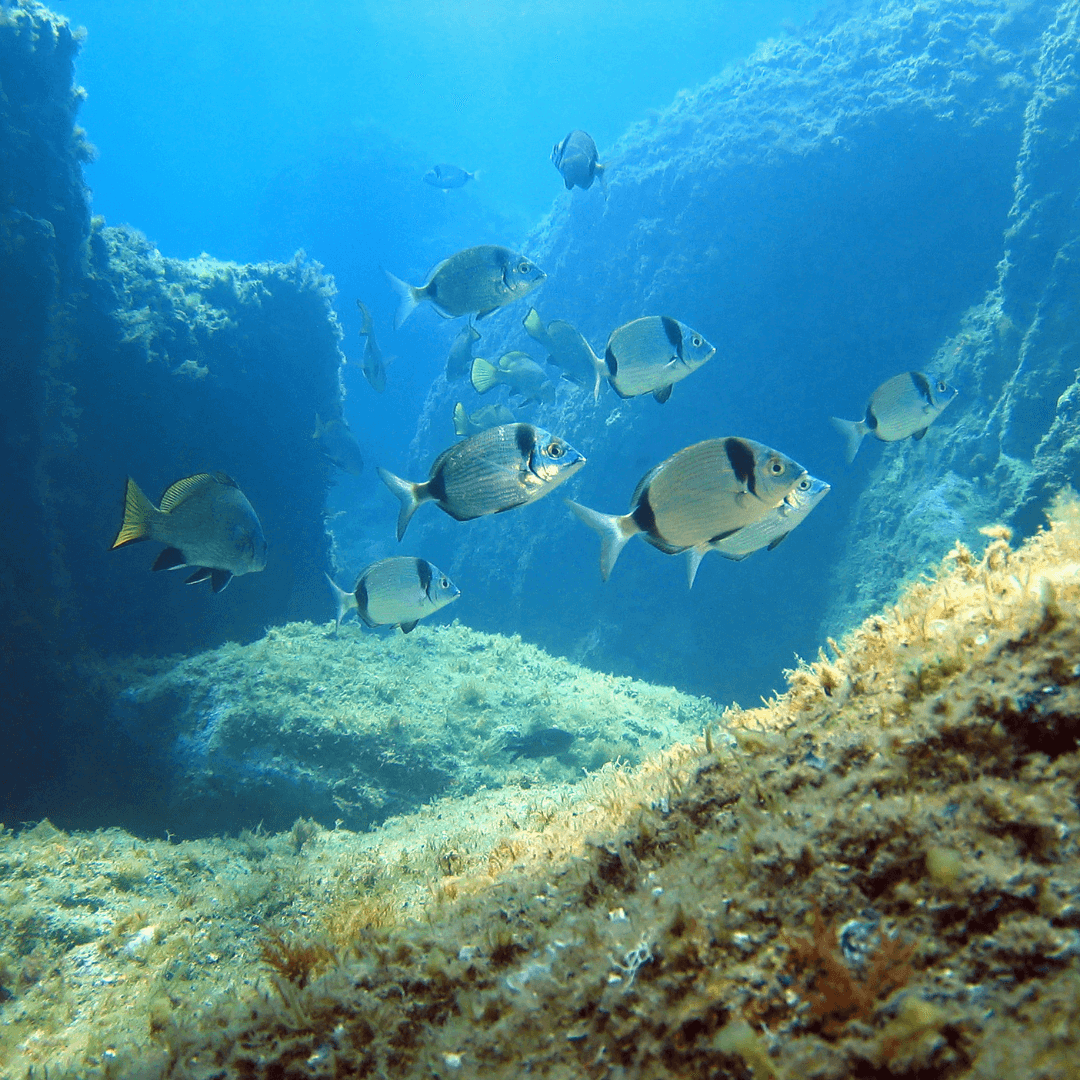
Diplodus argenteus
A species that occurs along the entire coast of the American Atlantic Ocean and in the Mediterranean Sea. It is found in turbulent coastal environments with shallow water, close to coral, rocky and/or sandy bottoms. It feeds on algae, mollusks, crustaceans and other invertebrates. Its body is oval and compressed, silver in color and has a dark rounded spot called ocellus, next to the tail, used to confuse predators. It can measure up to 37.8 cm in length. It is a little commercial fish.
Zebra shark
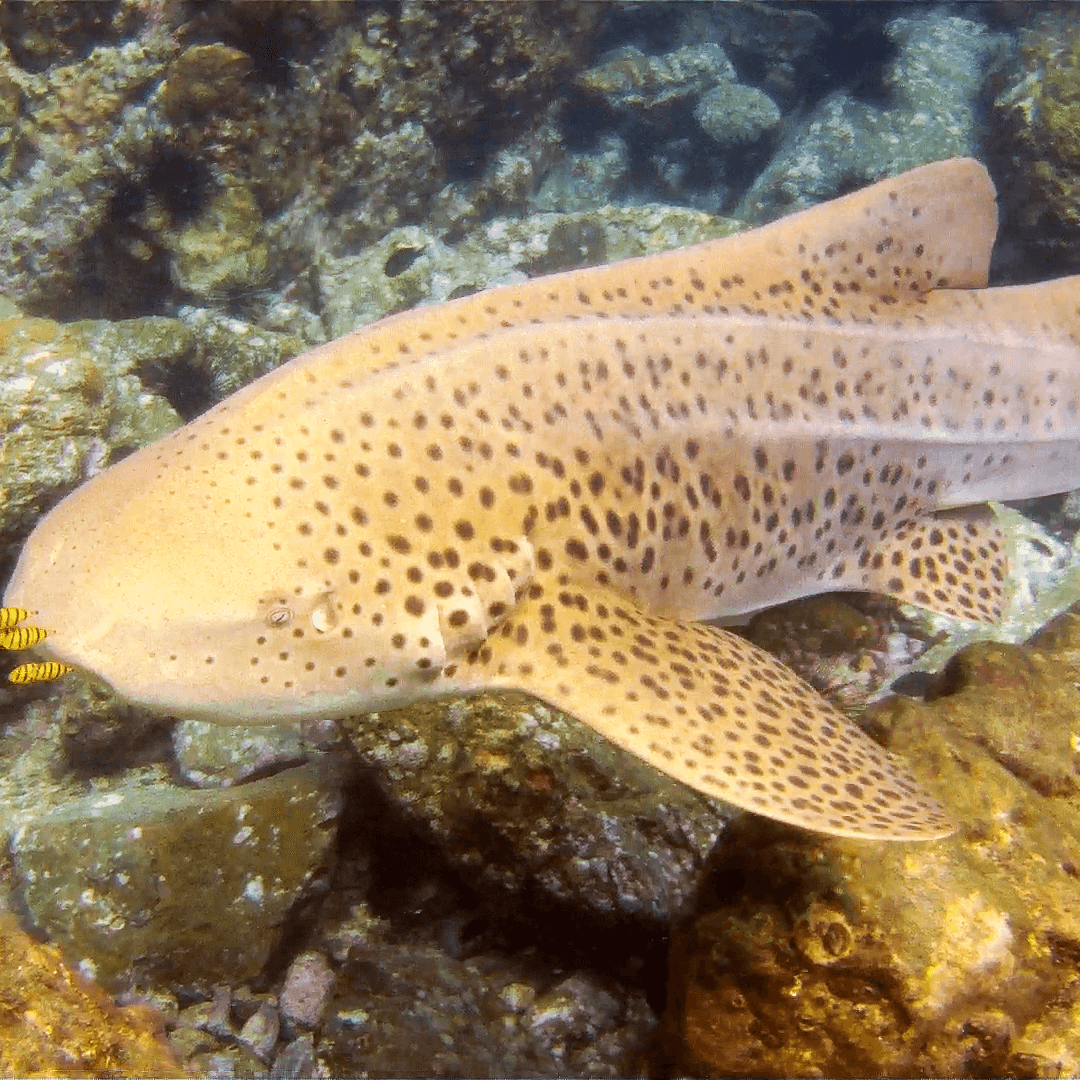
It lives in tropical regions of the Indo-Pacific Ocean, being found near coral reefs and on sandy soil substrates. Most of the day it is at rest, becomes more active at dusk and feeds on mollusks, crustaceans, small bony fish and even sea snakes. It is usually seen alone, but during the Australian summer groups of 20 to 50 individuals can be seen in shallow water. It is an oviparous shark that can lay about 46 eggs in a period of up to 112 days. It has an estimated lifespan of between 25 and 30 years, reaching sexual maturity at around 7 years. It is a species that presents no danger to human beings, and for this reason, they are highly sought after by the ecotourism market, in several countries, it is also one of the shark species most present in aquariums around the world. Although docile, it can cause accidents when provoked.
Common jack
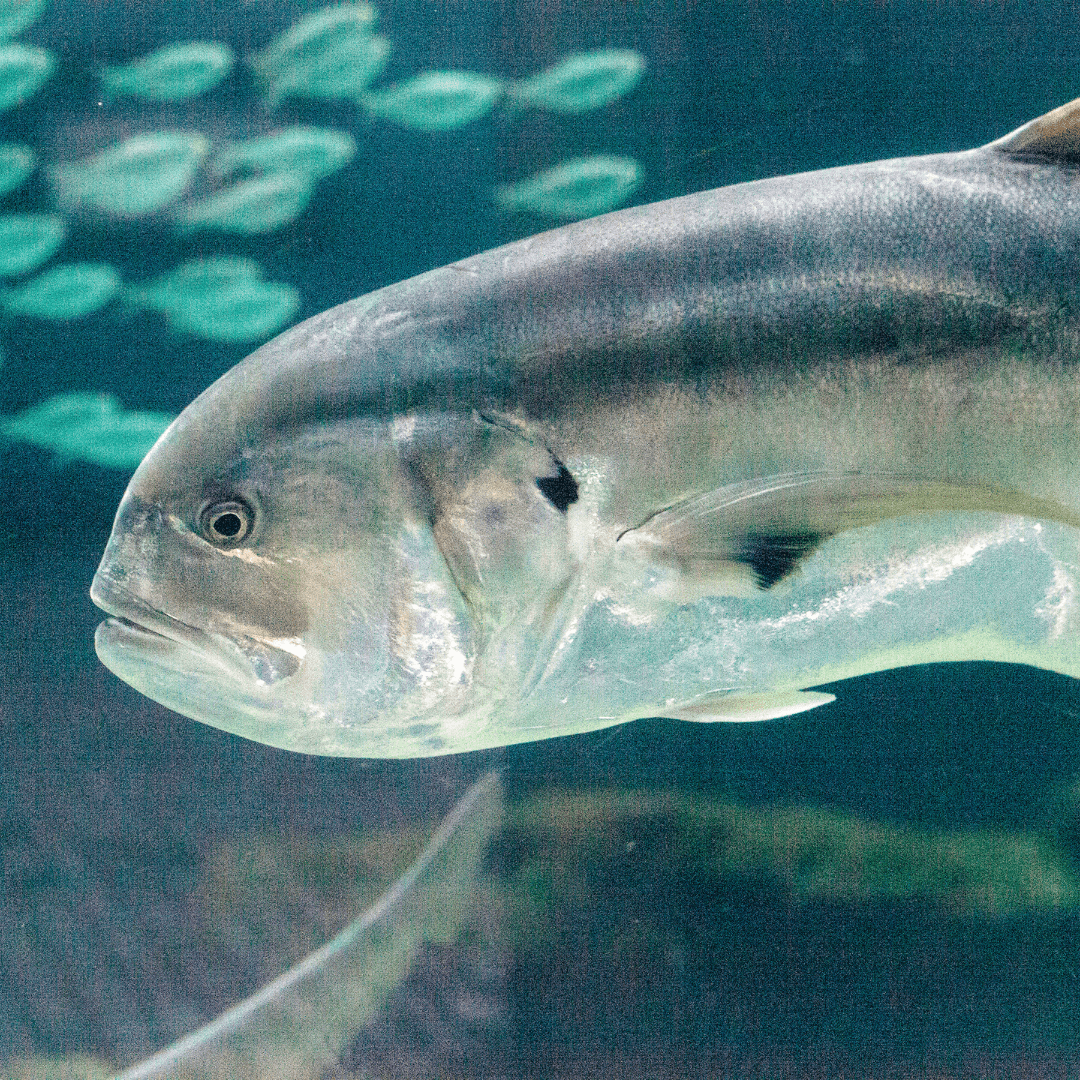
It is a species found in the Atlantic Ocean, with distribution in countries from Portugal to Angola and from Canada to Uruguay. It can live from estuarine environments, to the high seas, at depths up to 350 m. Adults are able to ascend rivers, while juveniles are more commonly found in sandy or muddy bottom estuaries. It feeds on small fish, shrimp and other invertebrates. Individuals of this species can reach up to 124 cm in length and weigh up to 32 kg. It is a commercial species, caught in sport fishing as well.
Queen Triggerfish
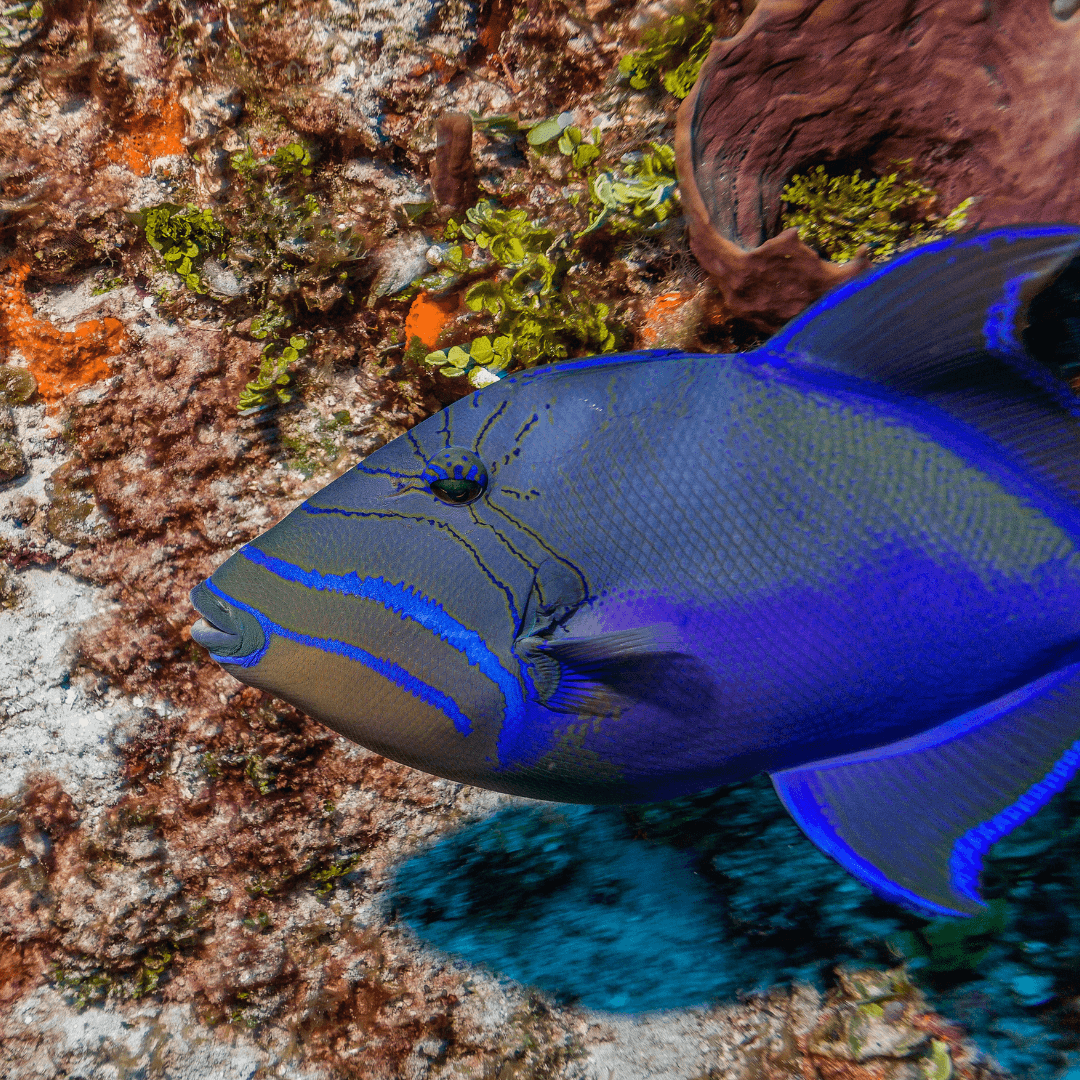
They are found in the Atlantic Ocean, from Canada to southeastern Brazil. Lives in a marine environment associated with reefs, at depths between 2 and 275 meters. It feeds on molluscs, crustaceans, sea urchins and other benthic invertebrates. Its small mouth has strong teeth to grind its fangs. It has a vivid and intense coloration, its body is grayish-yellowish and/or greenish-brown, has bluish lines radiating in the region of the eyes and around the mouth. Individuals can measure up to 60 cm and weigh up to 5.5 kg. It is a poisonous animal, and have a commercial interest in the aquarium market and sport fishing, having little interest in other types of fisheries.
Little Tunny
They are fish usually found on the surface of the water, largely on the continental shelves by the Atlantic Ocean, they are opportunistic predators that can eat everything in their reach, from crustaceans, squid and other smaller fish. They can reach a maximum size of 1 meter and 22 centimeters and weigh 16 kilograms and can live up to 10 years. It is a species that does not have high commercial value, but is routinely captured by industrial and artisanal fishing and sport fishing.
Black grouper
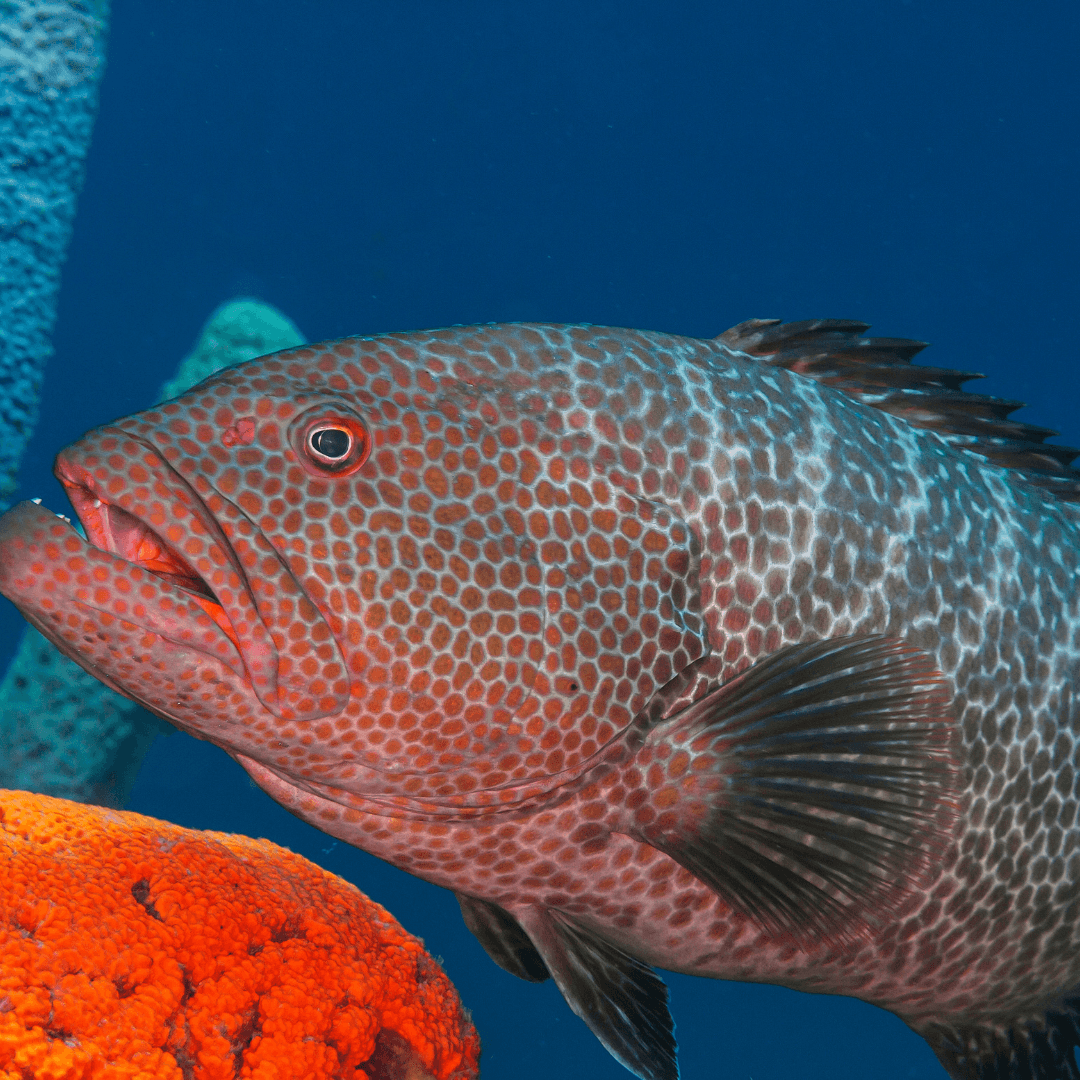
The square whiting is a large demersal fish (which despite being free swimming, spends most of its time associated with the bottom), which can reach up to 1 meter and 50 centimeters and weigh about 100 kg. It inhabits rocky bottoms and coral reefs, and is found in the Atlantic Ocean. It is a protogynous hermaphrodite fish, that is, the individuals are born female and when they reach adulthood, the male organs develop. They are oviparous and can form small groups, and despite being common in some places, they are difficult to contact with humans. It has high commercial value, because its meat is considered of extreme quality, but according to the International Union for Conservation of Nature and Natural Resources, this species is close to being considered at risk of extinction.
Spiny butterfly ray
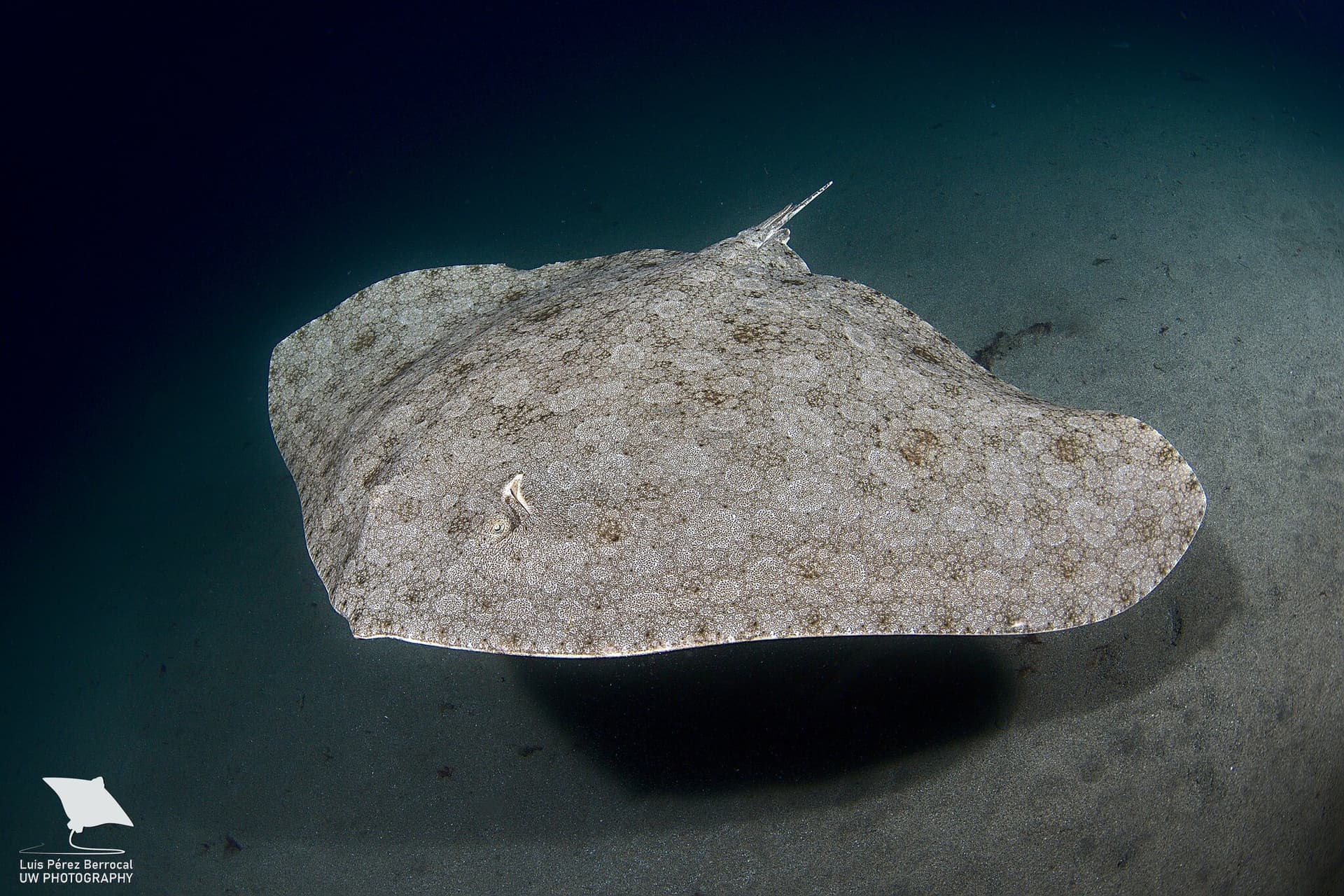
Gymnura altavela
It is a species of ray that inhabits tropical and subtropical regions of the Atlantic Ocean, living in sandy and muddy substrates. It can reach an average size of 2 meters in length, its diet includes small crustaceans, molluscs, fish and its main predators are medium and large sharks and marine mammals.