




Oceanic
Standardization of semen freezing for elasmobranchs and reproduction induced by artificial insemination in elasmobranchs
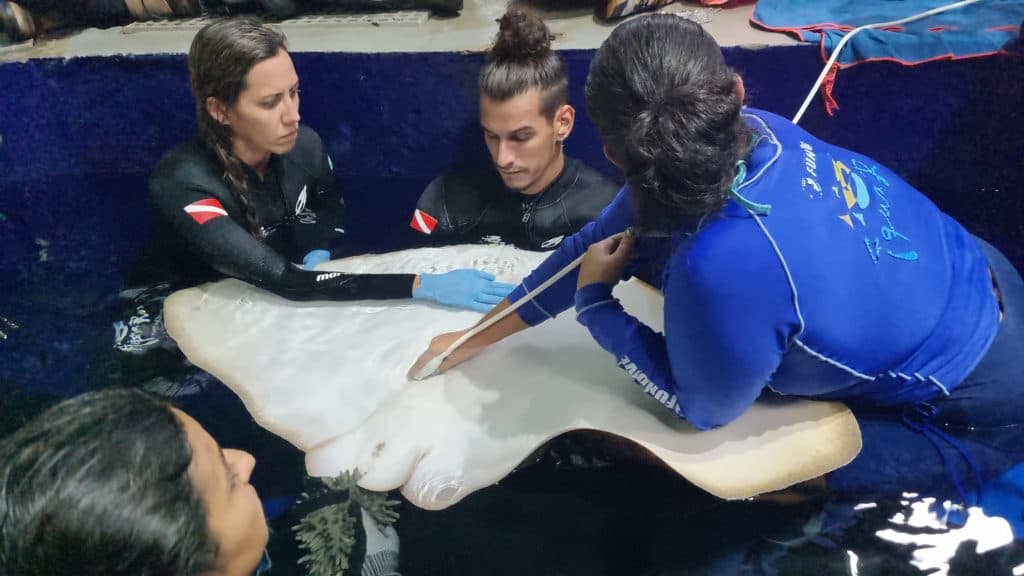
Maintaining a healthy population in an ex situ environment is a difficult problem to solve, especially for large organisms, as in the case of many sharks and rays, as no single institution would be able to maintain a squad with individuals from the same species. species, in sufficient numbers, to enable genetic variability that guarantees the constitution of a continuous population without the need for new captures in the wild. This task becomes possible with the exchange of genetic material that facilitates the exchange between the squad from different institutions, with the ultimate objective of creating a healthy and diverse population even if the individuals do not live in the same place. The third line of research aims to establish the best parameters that allow the extraction and freezing of semen from different species of elasmobranchs, ensuring their long-term viability, which will enable exchanges between aquariums and partner institutions. The line of research is developed in partnership with the Reprocon Institute (Reproduction 4 Conservation). Elasmobranchs represent a group of species characterized by low fertility and long life. The strategy allows for high energy investment in the development of a few offspring, but the advantage lies in introducing offspring into ecosystems that are already fully developed and readily capable of surviving without parental care. The impacts caused by human activities on the ecosystems where they live (i.e. fishing, navigation, habitat degradation) end up compromising this strategy since any population loss for these species, however small, is difficult to recover and the time needed to reestablish the populations to past levels is necessarily long. In this way, the extraction and freezing protocols developed are not only applicable in the ex situ environment of the aquarium network around the world, but can also be applied to free-living individuals, expanding knowledge about the reproductive biology of these species. In addition to the lines of research implemented throughout 2022, the development of studies produced by aquarists, veterinarians and biologists at the Rio de Janeiro Marine Aquarium also bore fruit in the form of participation in congresses and the publication of reproductive success for the big-tip shark. reef white Triaenodon obesus. Based on the knowledge accumulated since its inauguration in 2016, AquaRio professionals have gained experience on the biology of hundreds of species. Such observations are in many cases pioneering, given the academic community's lack of knowledge about the life history of many of the species on display. The possibility of disseminating to the scientific community and society in general the technical-scientific knowledge accumulated over the years enhances the role of IMAM-AquaRio as a center that produces scientific knowledge.
Back