





Rocky Shore: Rays
Inhabitants of the Rocky Shore: Rays
Because it presents a diversity of habitats, the rocky shore also shelters a wide variety of fish species. They use the areas near the rocky shore for different activities, including shelter, feeding, reproduction, or simply as a passage route. Many species have great economic importance, especially for artisanal fishing. A rocky shore is a coastal ecosystem formed by rocks of different sizes. These rocks provide a variety of habitats, allowing many animals to find suitable conditions for their survival. Physical factors such as light availability, temperature, tidal fluctuations, wave action, and salinity directly influence the vertical distribution of species along this rocky wall. Therefore, the environmental conditions acting on the rocky shore vary according to depth, and the animals that inhabit each depth are quite distinct. In Brazil, rocky shores are found mainly in the Southeast and South regions, and the main threats they face are pollution, trampling, selective removal of organisms, and the collection of ornamental fish.
Here is researchTank species
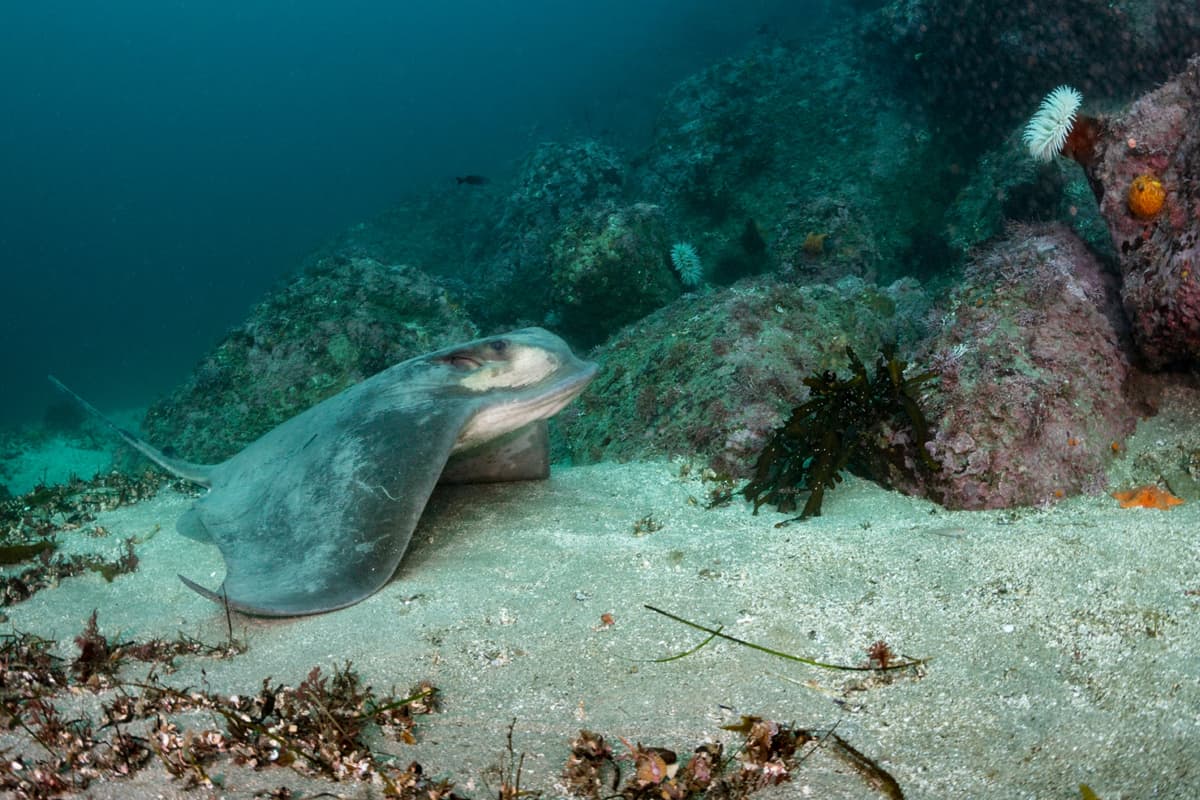
Butter Stingray
.webp&w=1920&q=75)
Dasyatis hypostigma
The butterfly ray is generally found on sandy bottoms, where it moves easily in search of food. It is a benthopelagic animal that feeds mainly on benthic invertebrates, such as mollusks, crustaceans, and worms, associated with both consolidated substrates (such as rocky shores) and unconsolidated bottoms. It can reach about 65 cm in disc width and is observed in marine and estuarine environments, including brackish waters. It lives at depths ranging from 5 to 80 meters, being more common between 5 and 40 meters. In addition to its important ecological role in controlling benthic invertebrate populations, the butterfly ray uses sandy bottoms as areas for resting and camouflage, partially burying itself in the sediment to protect itself from predators and to ambush its prey.