

Superpower Alert!
Superpowers
Here at AquaRio, many animals have real ‘superpowers’, such as camouflage, venom, regeneration, and amazing adaptations to survive in the ocean. In this activity, you will discover some of these fascinating abilities! And if you want to learn more, we have a complete list with details about all the animals and their special skills.
Tank species
Laced moray
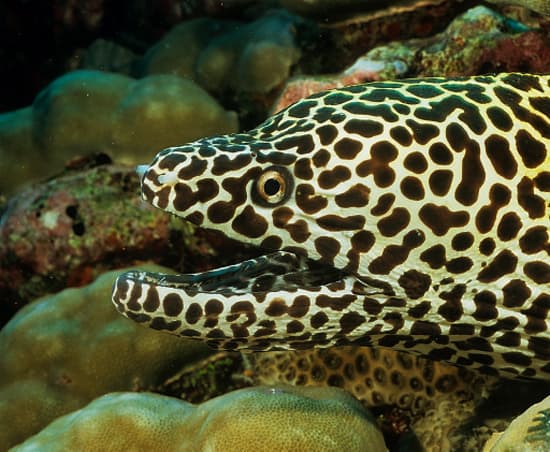
Gymnothorax favagineus
This is a species of moray found in the Indo-Pacific Ocean, living in coral reefs and estuarine areas, reaching a maximum depth of 50 m. It usually hides in burrows on rocks with cleaner wrasses or shrimp. It feeds on octopuses and small fishes, and can reach 250 cm in length. The laced moray are not very commercialized: some people consume their meat or keep it in aquariums. It is a territorial animal and can be aggressive when it feels threatened.
Scrawled cow fish
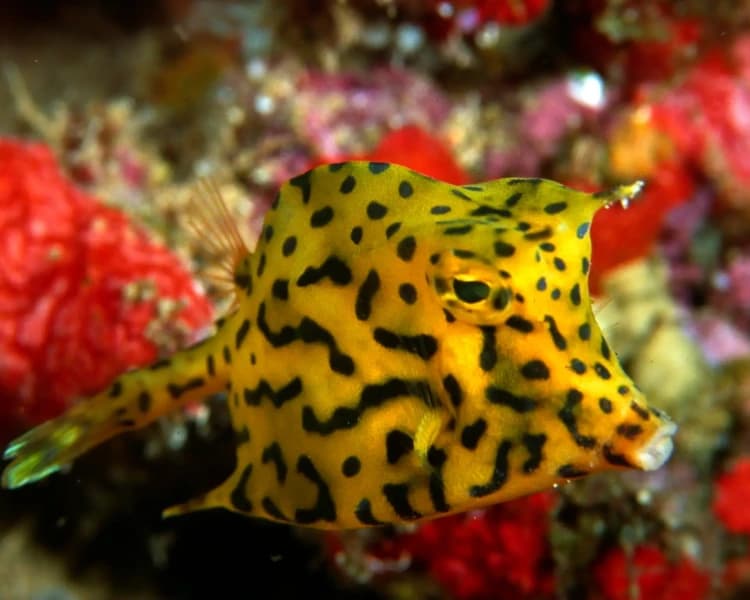
Acanthostracion quadricornis
Specie of fish from tropical and temperate waters of the Atlantic Ocean. Found in shallow waters up to 80 m, mainly in seaweed mats. It feeds on invertebrates such as anemones, sponges and hermit crabs. The body is delimited by a bony box, composed by hexagonal plates, leaving only the caudal fin outside. This cubic shape, along with the movement of your fins, improves its hydrodynamics, allowing it to move with little energy and can reach up to 50 cm in length.
Lamp Jellyfish
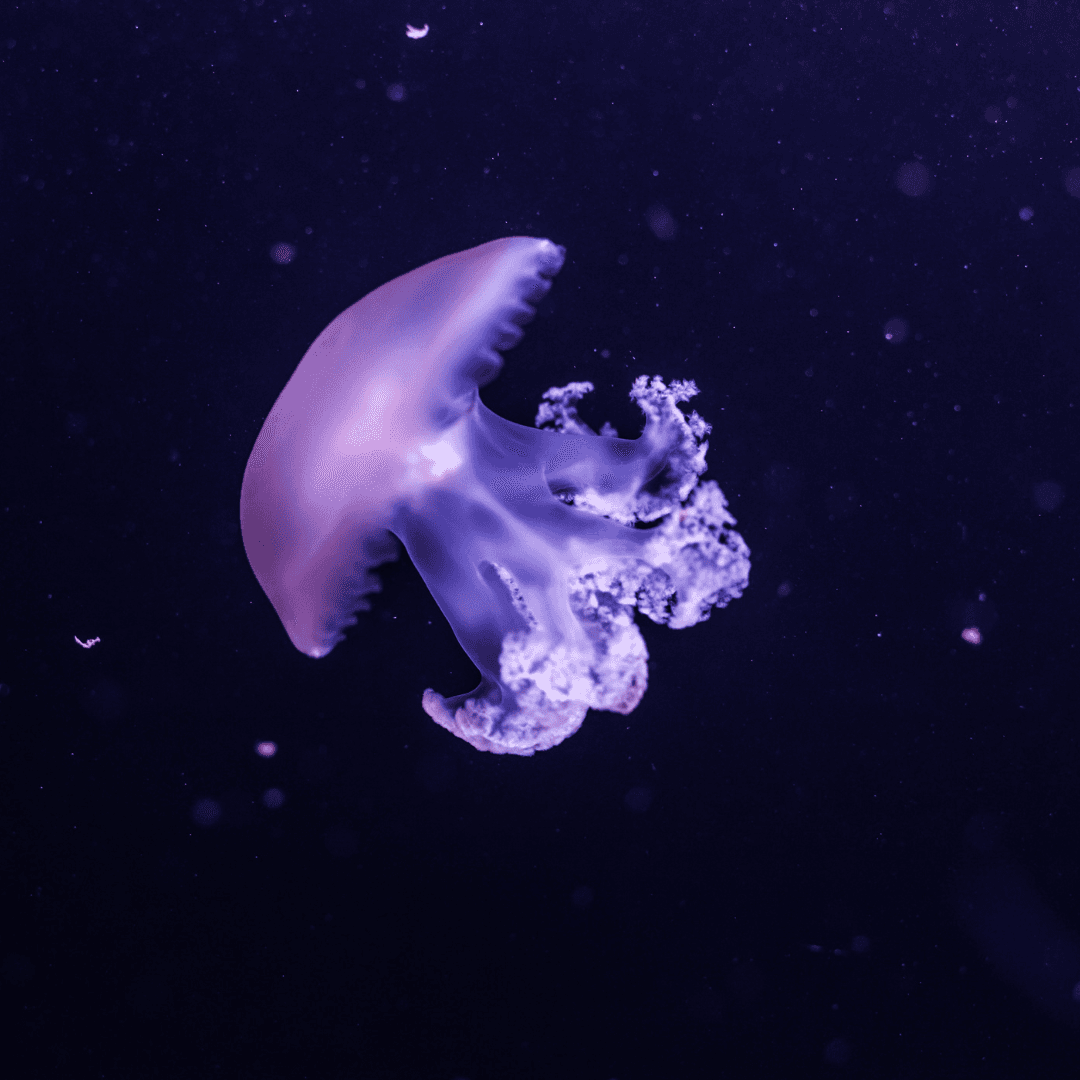
Lychnorhiza lucerna
The Lychnorhiza lucerna, commonly known as the "lamp jellyfish," gets its name because of its transparent body shape, which resembles a lamp. This jellyfish lives in partnership with other marine creatures, such as crabs and fish. It provides shelter and protection for these animals, and in return, they help the jellyfish with its feeding, as it takes advantage of food scraps left by them. Although it has cells that can cause a stinging sensation in its tentacles, the Lychnorhiza lucerna is not considered dangerous to humans. However, contact with it can cause small burns or skin irritations.
Long-snouted seahorse
.jpg&w=1920&q=75)
Hippocampus reidi
Seahorses have tube-shaped mouths and are carnivorous. Their diet consists of plankton, small mollusks, and crustaceans such as brine shrimp. In adulthood, their prehensile tail becomes more developed, allowing them to grasp algae and corals so they are not carried away by currents. They can change color and move their eyes independently. They are difficult to spot because they adapt to their environment and camouflage themselves. Seahorses are ovoviviparous! A peculiarity is that males “get pregnant.” The female deposits her eggs into the male’s brood pouch, where he fertilizes them and carries them until birth. The offspring are born looking like miniature adults. A single male can produce between 150 and 1,200 offspring per pregnancy, depending on the species. The maximum size can reach about 17 cm.
Fuzzy mushroom coral
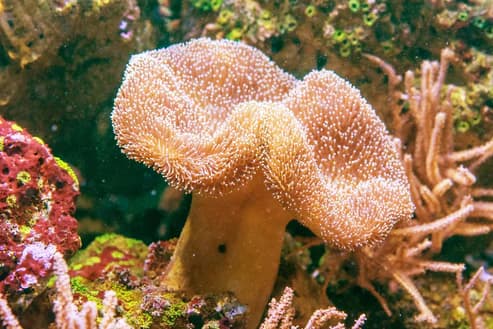
Sarcophyton spp.
Corals of the genus Sarcophyton spp. inhabit tropical and subtropical reef environments, with a wide distribution throughout the Indo-Pacific region. Their occurrence includes areas such as the Red Sea, the Great Barrier Reef in Australia, and the waters of Indonesia and Fiji. Species of this genus produce the toxic macrolide terpene known as sarcophytoxide, a substance that acts as an antifeedant and provides a competitive advantage over other corals, playing an important role in ecological interactions within reef environments.
Sand tiger shark
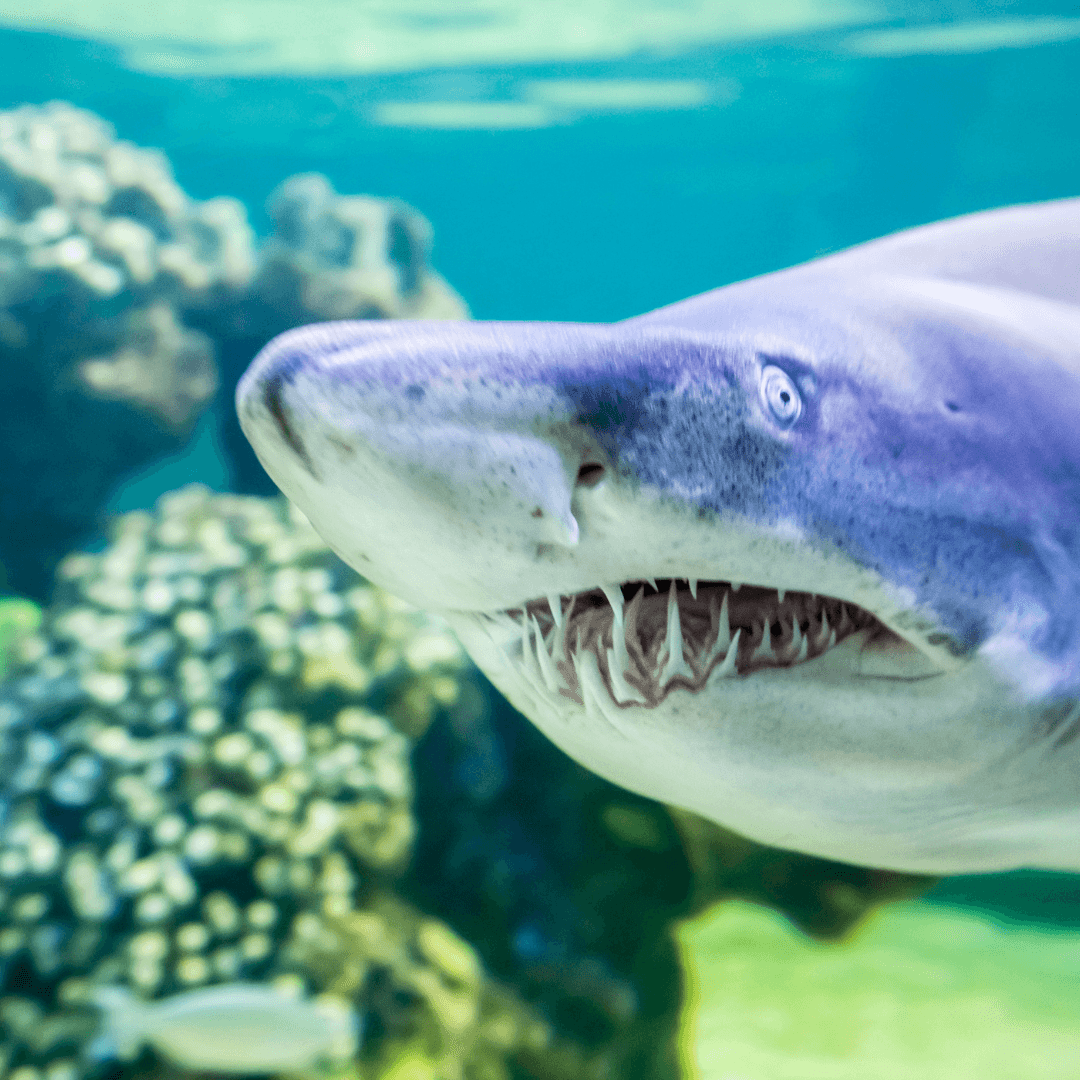
Carcharias taurus
Popularly known as the bull shark or sand tiger shark (Carcharias taurus), this species has a global distribution and can be found in tropical and temperate seas of the western Indo-Pacific, western and eastern Atlantic, except in the eastern Pacific. It inhabits the coastal region and can be found close to the coast at depths of 15 to 25 meters and up to 232 meters on continental shelves. They are viviparous animals, with up to 2 pups per litter and a gestation period of 9 months. When adults, they reach a maximum size of up to 3.5 meters in length and weight of up to 200 kg, with a lighter coloration on the belly and light gray-brown on the back. It is a top predator in the marine ecosystem, feeding on invertebrates and bony fish. However, it is vulnerable to threats such as habitat degradation, climate change and overfishing, which significantly reduce the population size in several regions of the world.
Axolotl
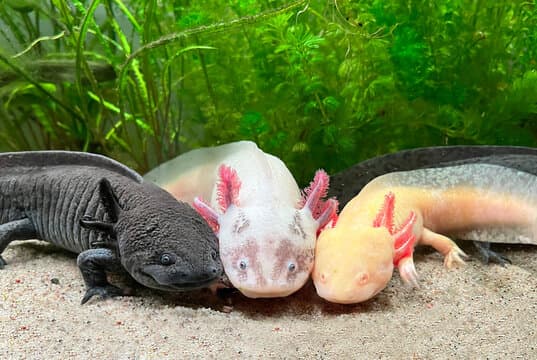
Who are you, Axolotl?
Hello! I’m the axolotl, an aquatic amphibian from the order of salamanders, species Ambystoma mexicanum. I’m considered neotenic, as I don’t complete my metamorphosis, retaining larval features in my adult phase. I’m native to the Xochimilco and Chalco lakes in Mexico and am classified as CRITICALLY ENDANGERED, as we suffer from pollution and predation by invasive species. I’m carnivorous, feeding mainly on small aquatic animals such as insects, fish, and crustaceans. I have an incredible ability to regenerate, capable of regrowing limbs and even organs— including my heart and brain! This happens thanks to cells called blastemas, which work similarly to stem cells, recreating tissues without fibrosis (scarring). Although I’m considered beautiful and friendly, it’s important to remember that I cannot be considered a pet. In Brazil, my breeding and commercialization are considered an environmental crime.
Butter Stingray
.webp&w=1920&q=75)
Dasyatis hypostigma
The butterfly ray is generally found on sandy bottoms, where it moves easily in search of food. It is a benthopelagic animal that feeds mainly on benthic invertebrates, such as mollusks, crustaceans, and worms, associated with both consolidated substrates (such as rocky shores) and unconsolidated bottoms. It can reach about 65 cm in disc width and is observed in marine and estuarine environments, including brackish waters. It lives at depths ranging from 5 to 80 meters, being more common between 5 and 40 meters. In addition to its important ecological role in controlling benthic invertebrate populations, the butterfly ray uses sandy bottoms as areas for resting and camouflage, partially burying itself in the sediment to protect itself from predators and to ambush its prey.
Spotted scorpionfish
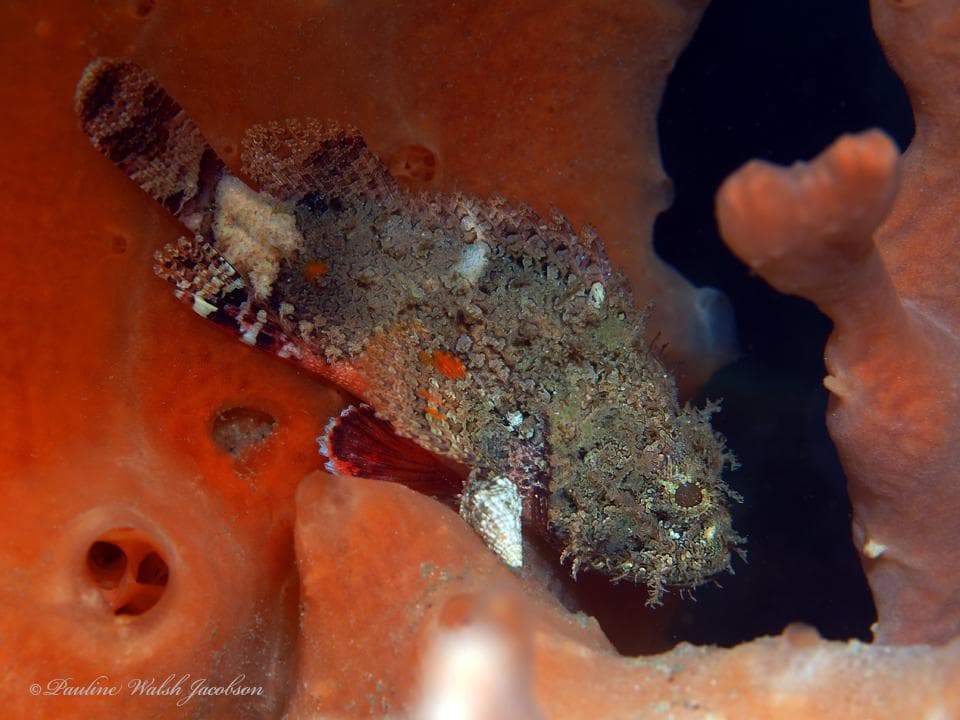
Scorpaena plumieri
A species of fish found from the Bermuda region to the south of Brazil in the western Atlantic Ocean, and in a few regions in the eastern Atlantic. It inhabits regions with coral reefs and rocky shores at depths ranging from 1 m to 60 m. It stays close to the bottom, camouflaging itself with the environment, thus avoiding predators (like some morays, rays and sharks) and can eat fish and crustaceans that pass by unsuspecting in front of them. It can reach a maximum size of 45 cm and 1.6 kg. It is one of the most venomous fish in the Atlantic Ocean, it has venom on its dorsal, pelvic and anal spines. Symptoms of the poisoning caused by these fish generally include local and systemic manifestations, with pain, edema, erythema and necrosis, fever, sweating, agitation, diarrhea and respiratory disorders.
Clown anemonefish
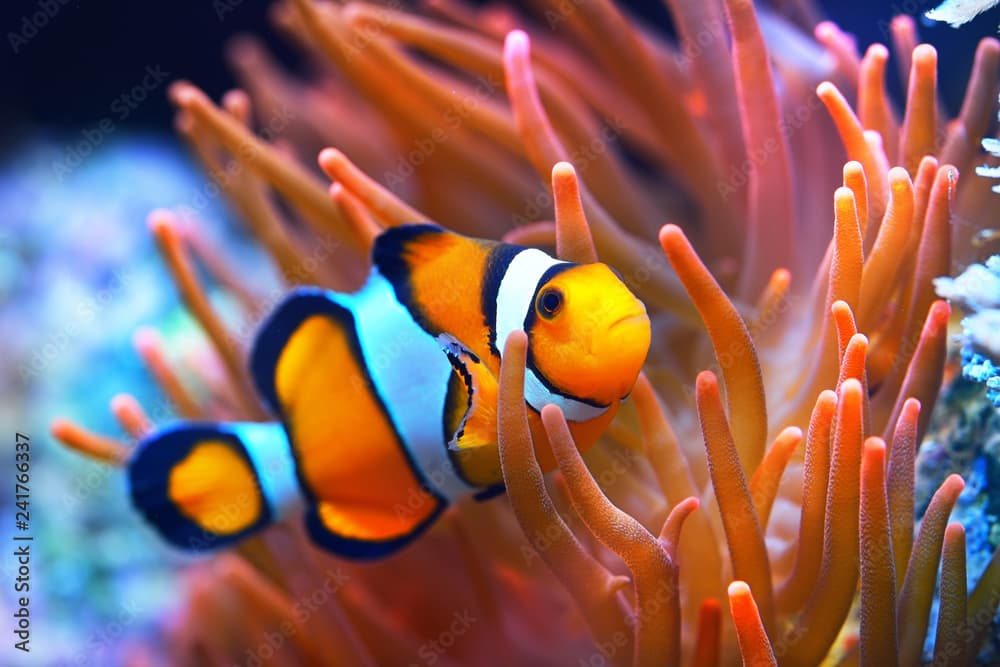
Peixe-palhaço
The clown anemonefish, known by the famous children's film "Finding Nemo", is a very popular species among aquarists for their attractive colors. Its distribution is exclusive of tropical waters, occurring in the Indian Ocean, Pacific Ocean and the Red Sea. It feeds on microalgae, macroalgae and small crustaceans. It can reach a maximum size of 11 cm length. This species live in social groups, dominance is based on body size, the largest animal in the group is usually a female and the remainder are males. It is classified as hermaphrodites, and during reproduction, the clown anemonefish produce spawns that are adhesive to the substrate, with external fertilization and incubation. Males are responsible for taking care of the eggs during the incubation period, promoting its oxygenation.
Spot-fin porcupinefish
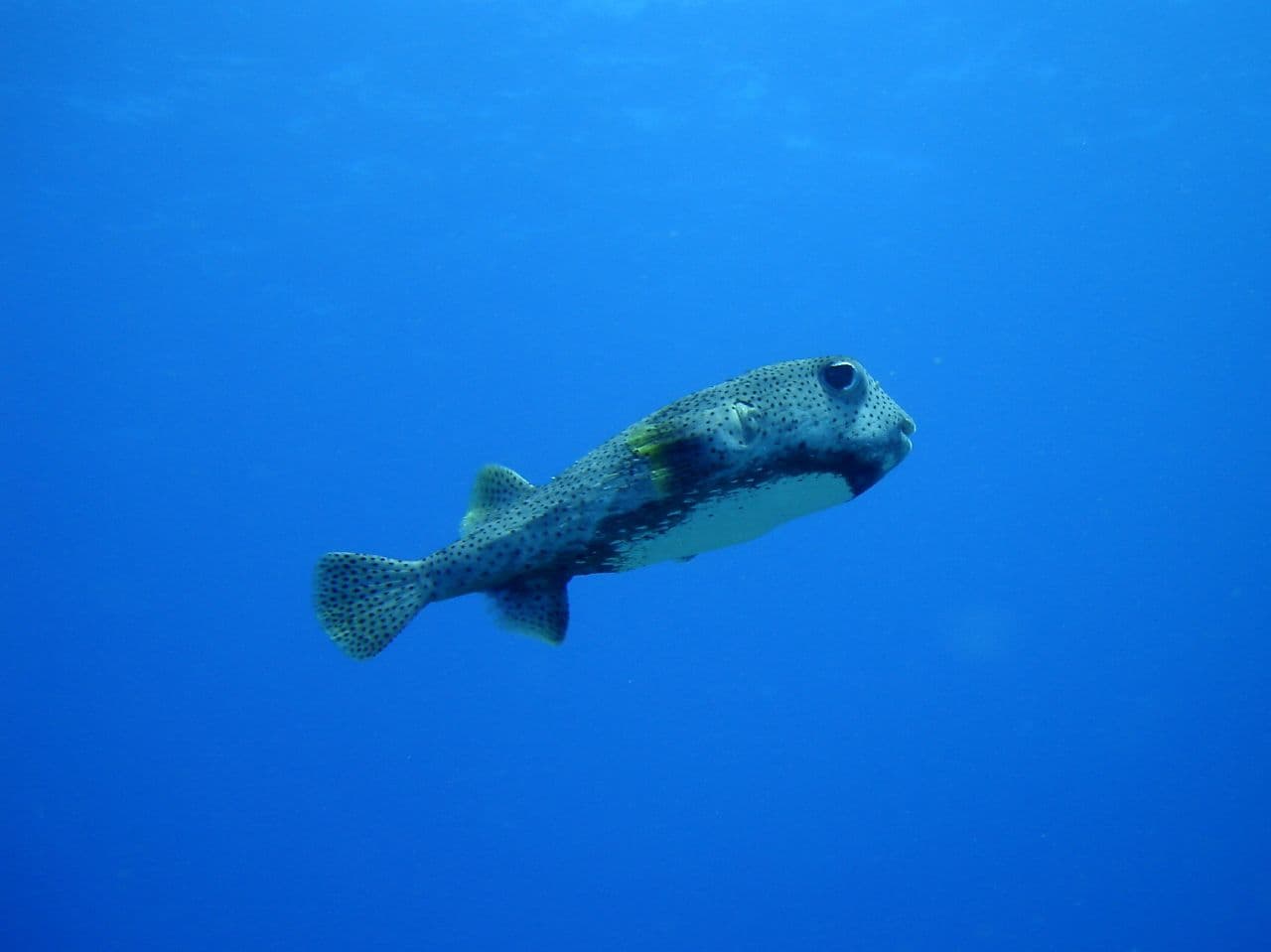
Diodon sp.
It can be found in lagoons and reefs, at a depth of up to 50m towards the sea. Younger ones can be found near the surface, and adults closer to the bottom. It has solitary and nocturnal habits. Its diet is based on invertebrates, gastropods and sea urchins. It is poisonous so it is not used in food.
Zebra turkeyfish
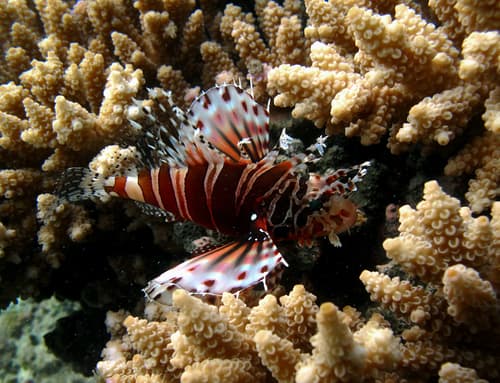
Dendrochirus zebra
Found in the Indo-West Pacific. It lives on rocky bottoms and among coral reefs, feeding on fish and crustaceans. They can reach 20 cm in length. It travels long distances and lives in small groups. Remembering that the species of lionfish that became known for starting to invade the Brazilian coast at the end of 2021 is Pterois volitans.
Sea star
.jpeg&w=1920&q=75)
Echinaster brasiliensis
They live in the western Atlantic, at a depth of up to 9 m. It feeds on zooplankton, anemones and sponges and its maximum size is 6 cm. It is a species that has not been much studied.
Atlantic Mudskipper
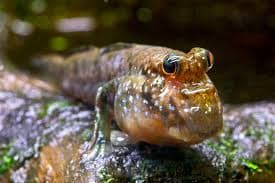
Periophthalmus barbarus
Usually found in muddy regions and in brackish waters, mangroves and estuaries. They are fish capable of breathing air, so they can go in search of food by jumping or walking on mud and/or sand. Its diet consists of crabs, insects, among others arthropods and white mangroves.
Common octopus
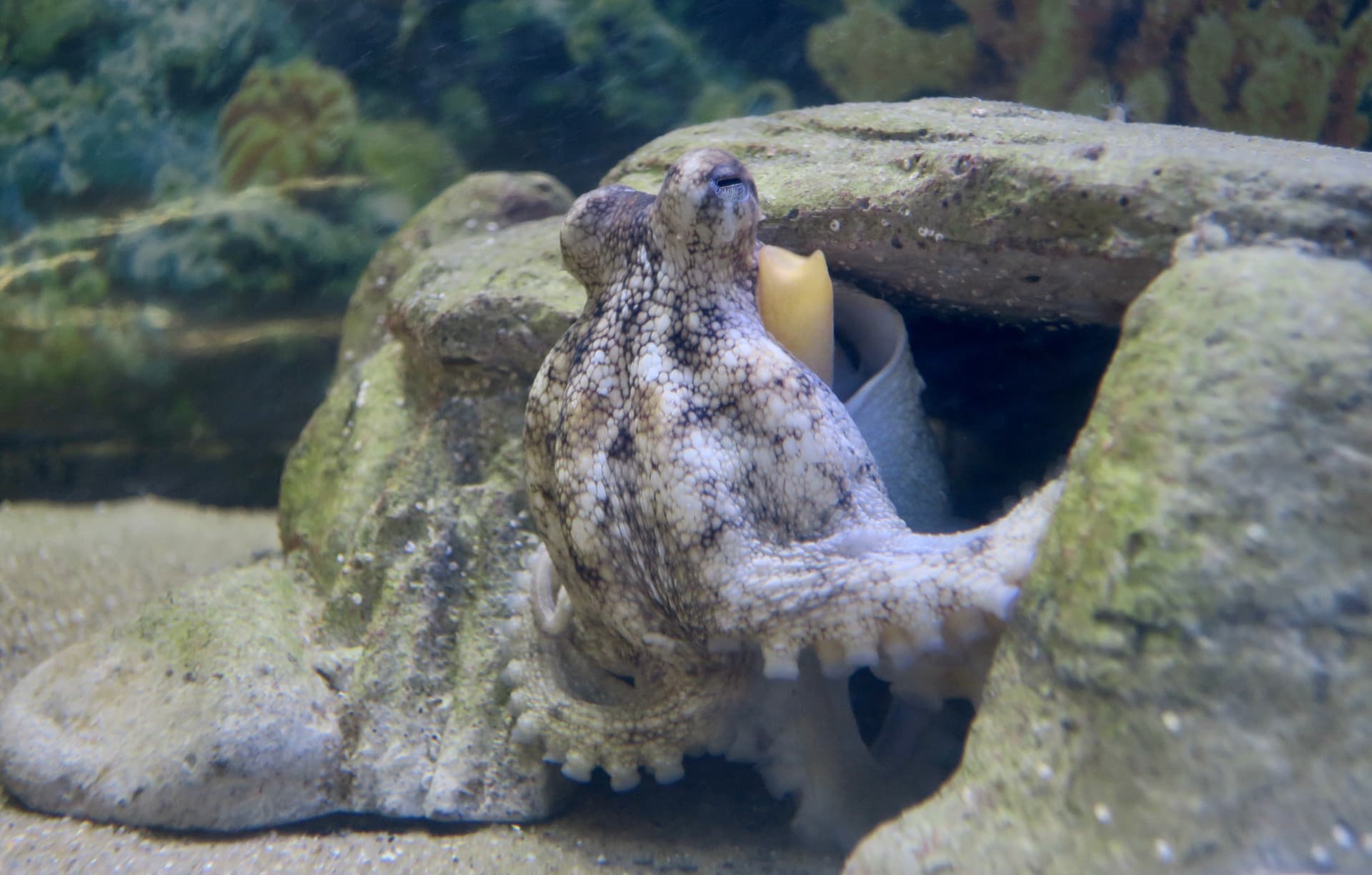
Octopus americanus
This species has a global distribution and can be found in all tropical and subtropical regions of the world. Octopuses are active predators, feeding mainly on crustaceans and other mollusks, but they can also eat small fish. They can reach a maximum size of 1.4 m and their life span revolves around 12 to 24 months. It has great economic importance, as it is one of the most consumed marine animals in several countries, especially in Asian countries. They are semelparous animals: the female, when spawning, takes care of the eggs, protecting, cleaning and oxygenating them until they hatch, then she becomes very weak and ends up dying.
Blind Cave Tetra
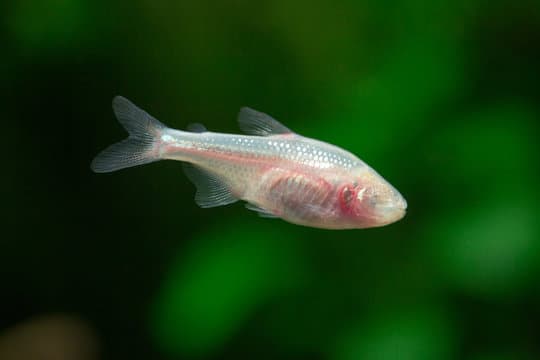
Astyanax mexicanus
Found in Mexico, this species inhabits small to large rivers, and rocky and sandy bottoms. Their diet is based on worms, insects and crustaceans. There are two variations of this species, the ones that live on the surface, so they have color and good eyesight; and those who inhabit caves, who throughout evolution have lost their vision and pigmentation (therefore, they are albino), as they are indifferent characteristics in the dark environment in which they live. Richard Borowsky did a study where, from genetic crosses, he managed to produce individuals with rudimentary “eyes”, and, in one of the crosses, 40% of the pups were born with sight. "If you were to hybridize two separate populations of blind cave fish and place them in a place with light, I suspect that [natural] selection pressure would be enough to restore sight to the entire population in a relatively short time, less than a hundred generations", said the researcher in an interview with Folha. Source: https://www1.folha.uol.com.br/fsp/ciencia/fe1201200801.htm
Anemone long tentacle
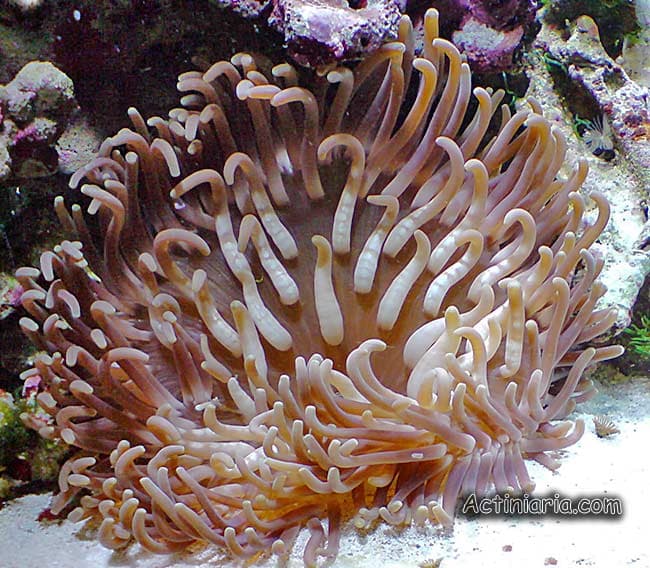
Macrodactyla doreensis
Found in the Pacific Ocean, this species can be found up to 5 meters deep. It can reach 40 cm in length. It can harbor clownfish but is not normally found with fish. It feeds on invertebrates.
Long spine urchin
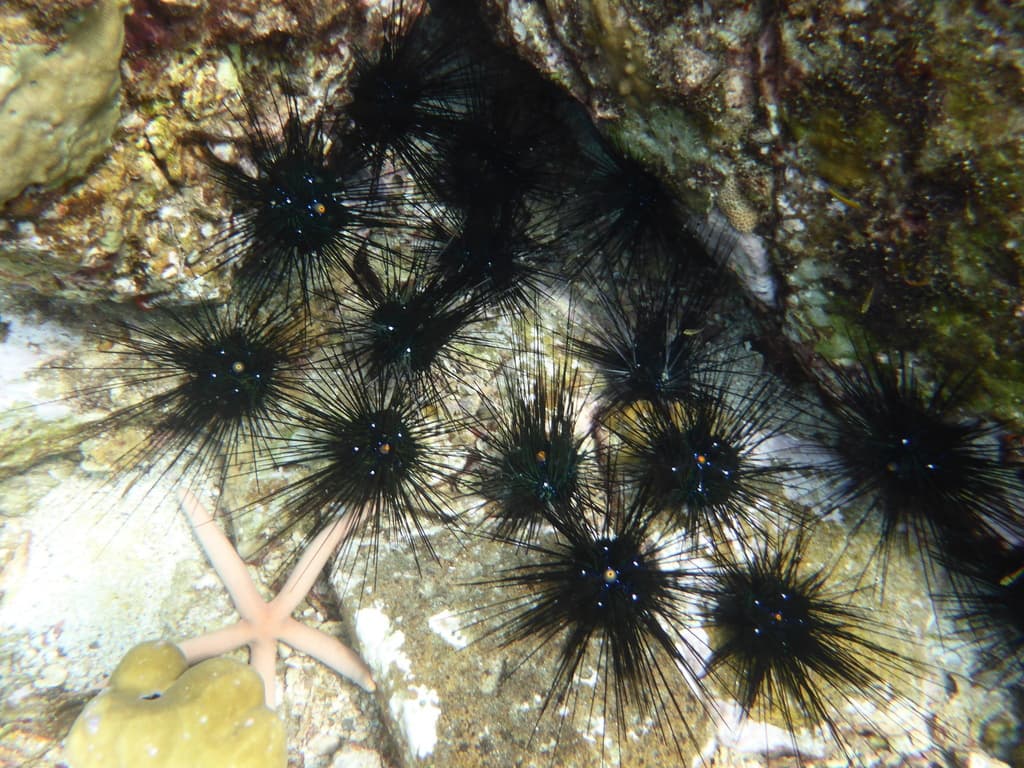
Diadema setosum
It is an animal, from the same group of starfishes and sea cucumbers, the Echinoderms. It is found in the Mediterranean Sea and the Indo-Pacific Ocean, from the Red Sea to the islands of the South Pacific and Japan. It is benthic, that is, it lives associated with the marine substrate, at depths between 0 and 70 m. It is usually associated with coral reef environments with many dead corals, feeding on algae that grow there. Individuals have external fertilization (they release their gametes in the water) and can measure up to 60 cm in length.