





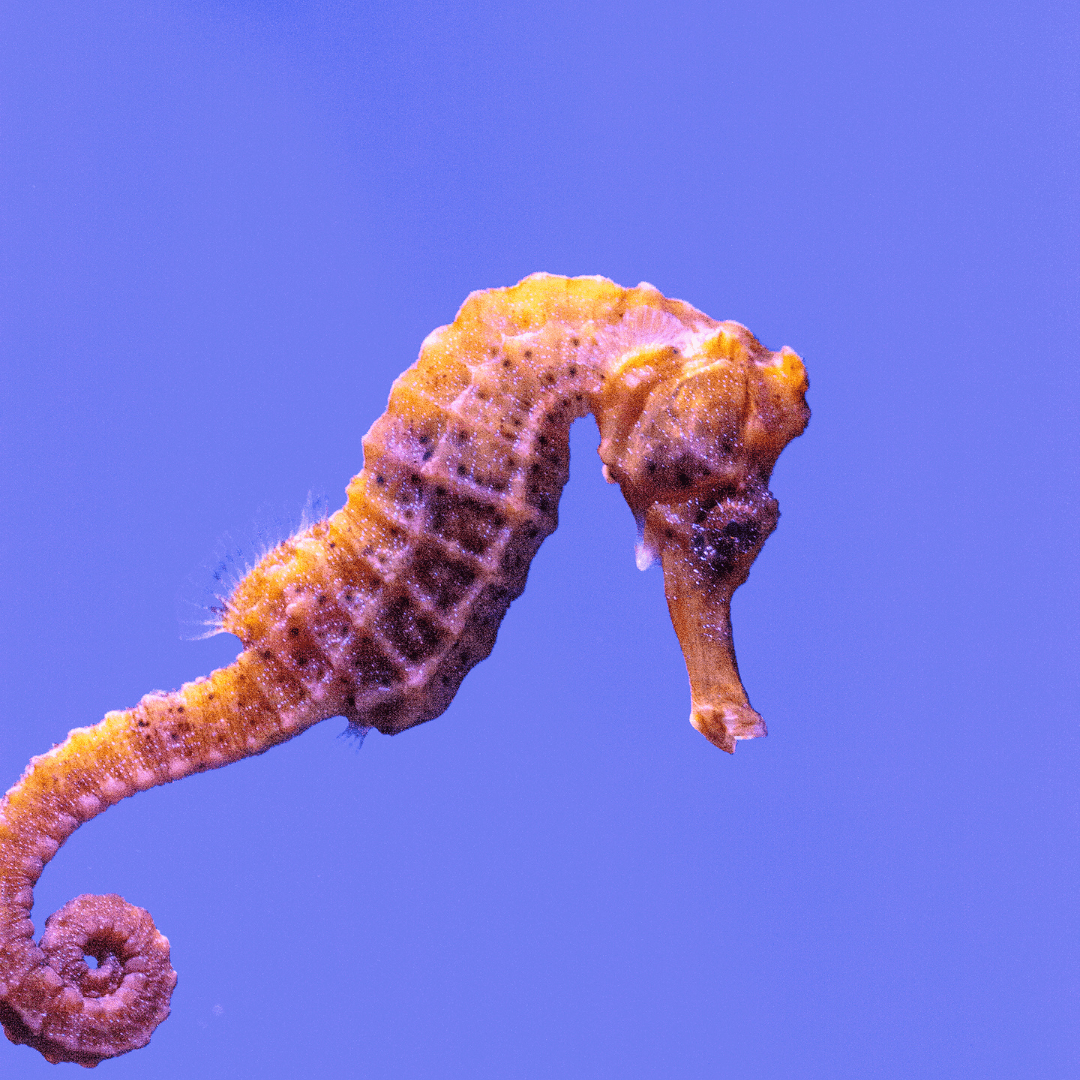
Longsnout seahorse
Seahorses are fish that have a tube-shaped mouth and prehensile tail, with which they attach to surfaces, such as algae and corals. A peculiarity is that the males “get pregnant” and the young are born the same as the adults.
Despite their body being different from most of the fish we know, seahorses are part of the bony fish group. Its body is made up of small bony plates and lacks scales. They can change color and move their eyes independently. They are difficult to find, as they adapt to the environment in which they live by camouflaging themselves among algae and corals. They have a prehensile tail, which they use to attach themselves to the substrate, preventing them from being carried away by currents. They are ovoviviparous! The female deposits her eggs in the male's incubator bag, which fertilizes and carries them until birth. A single male can give birth to 150 to 1,200 pups per gestation depending on the species.
Here is researchTank species
Long-snouted seahorse
.jpg&w=1920&q=75)
Hippocampus reidi
Seahorses have tube-shaped mouths and are carnivorous. Their diet consists of plankton, small mollusks, and crustaceans such as brine shrimp. In adulthood, their prehensile tail becomes more developed, allowing them to grasp algae and corals so they are not carried away by currents. They can change color and move their eyes independently. They are difficult to spot because they adapt to their environment and camouflage themselves. Seahorses are ovoviviparous! A peculiarity is that males “get pregnant.” The female deposits her eggs into the male’s brood pouch, where he fertilizes them and carries them until birth. The offspring are born looking like miniature adults. A single male can produce between 150 and 1,200 offspring per pregnancy, depending on the species. The maximum size can reach about 17 cm.