

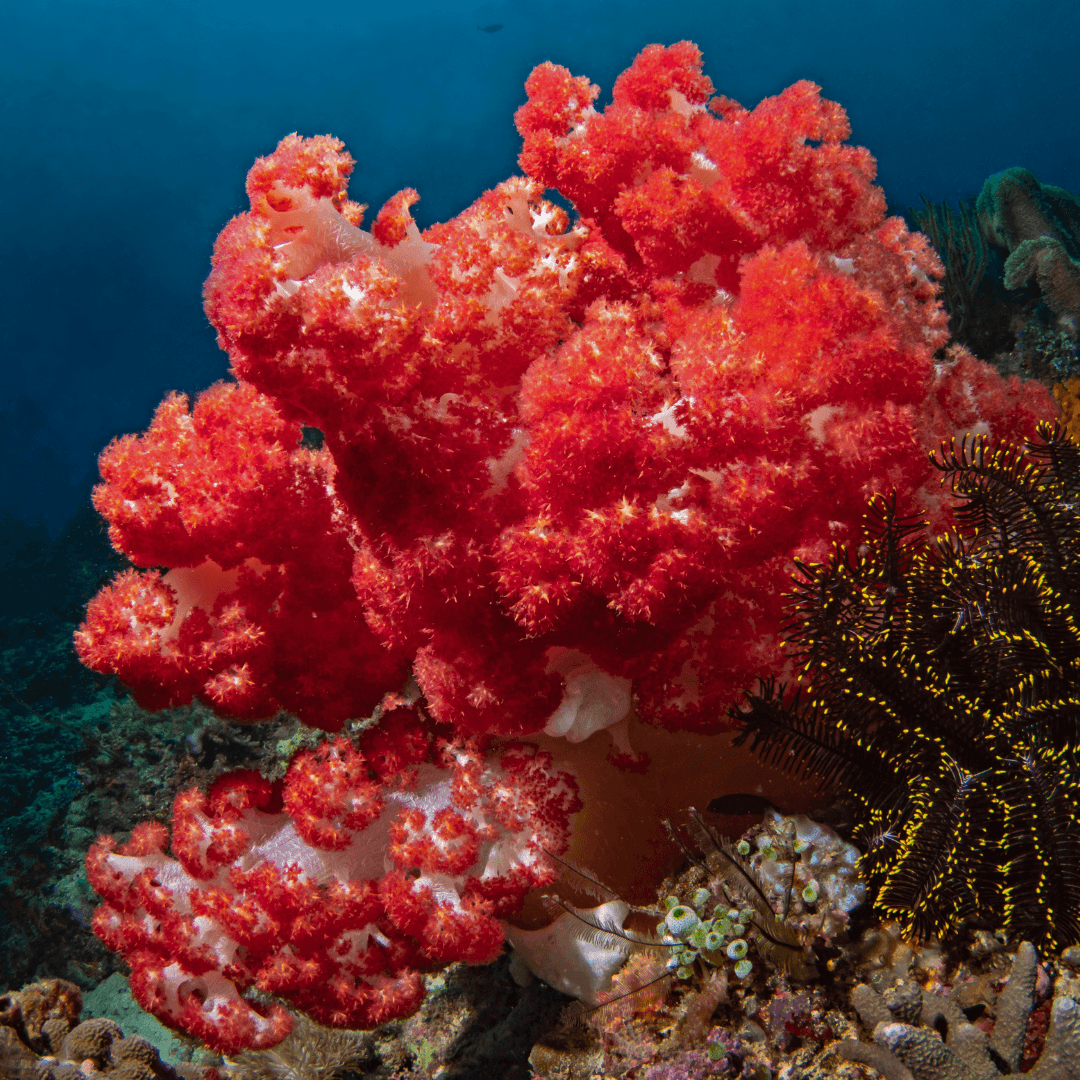
Soft Corals
Coral reefs are important environments for the animals that live there, as they serve as a reproduction, food, shelter and protection area. And they are also important for us, the population that lives close to the coast, as they provide protection from storms and the impact of waves. The beauty of these environments makes them tourist spots, generating more income and jobs.
They can be considered large neighborhoods, having many important inhabitants to maintain the balance of this environment, an example that we can mention is the herbivorous fish that act in the control of the growth of algae, giving the corals more space for growth.
Tank species
Okinawa goby
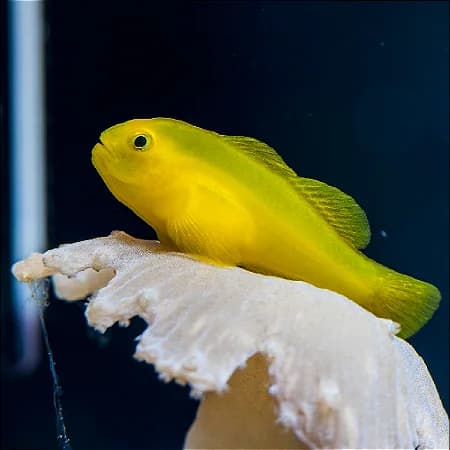
The smallest fish at AquaRio
This small fish, with a delicate appearance and discreet behavior, reaches a maximum length of 3.5 cm. Commonly known as “Okinawa,” its name is associated with the Japanese region of Okinawa, considered its place of origin. The species primarily inhabits coral reef areas, where it finds shelter and food, integrating harmoniously into this complex and biodiverse marine ecosystem. Unlike many other fish, it does not possess scales. As a defense mechanism, it produces a secretion through its skin, which makes it less appealing to natural predators. This characteristic contributes to its survival in an environment where camouflage and chemical strategies play a fundamental role. Adapted to reef conditions, this fish stands out not only for its small size but also for its biological particularities, which reflect the diversity and sophistication of marine organisms
Spaghetti Finger Leather Coral
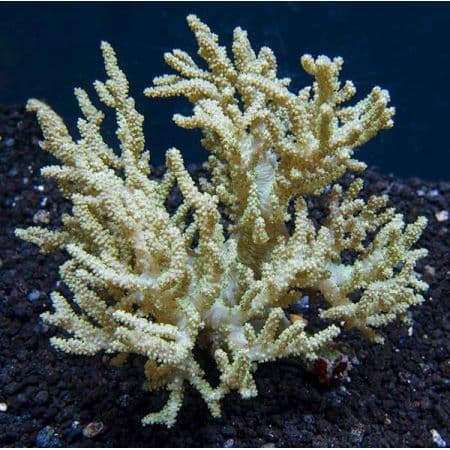
Sinularia flexibilis
This species is widely distributed throughout the western Pacific and the eastern Indian Ocean. It is usually found in large colonies at depths ranging from one to fifteen meters. Soft corals are common in tropical and subtropical seas. They contain a wide diversity of marine natural compounds, with cembrane-type diterpenes being the most common.
Fuzzy mushroom coral
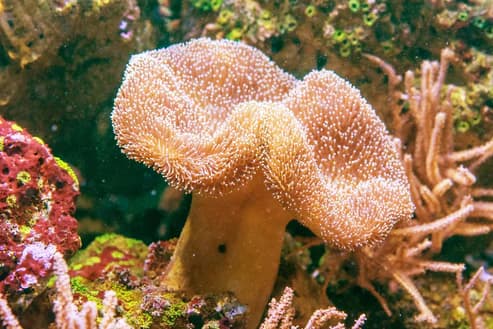
Sarcophyton spp.
Corals of the genus Sarcophyton spp. inhabit tropical and subtropical reef environments, with a wide distribution throughout the Indo-Pacific region. Their occurrence includes areas such as the Red Sea, the Great Barrier Reef in Australia, and the waters of Indonesia and Fiji. Species of this genus produce the toxic macrolide terpene known as sarcophytoxide, a substance that acts as an antifeedant and provides a competitive advantage over other corals, playing an important role in ecological interactions within reef environments.
Wrasse yellow coris
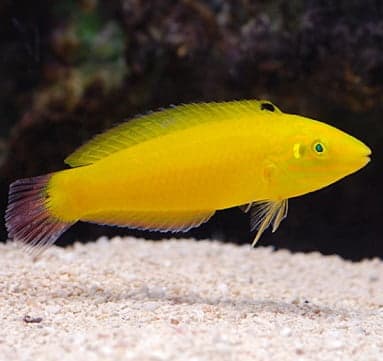
Found in the Indian Ocean, at a depth of 15 to 60 meters. They usually live in groups and are protogynous hermaphrodites (they are born female and after some time become male), if the male of the group dies, the dominant female becomes male. They feed on molluscs, worms and crustaceans. Its maximum size is 12 cm.
Sixline wrasse
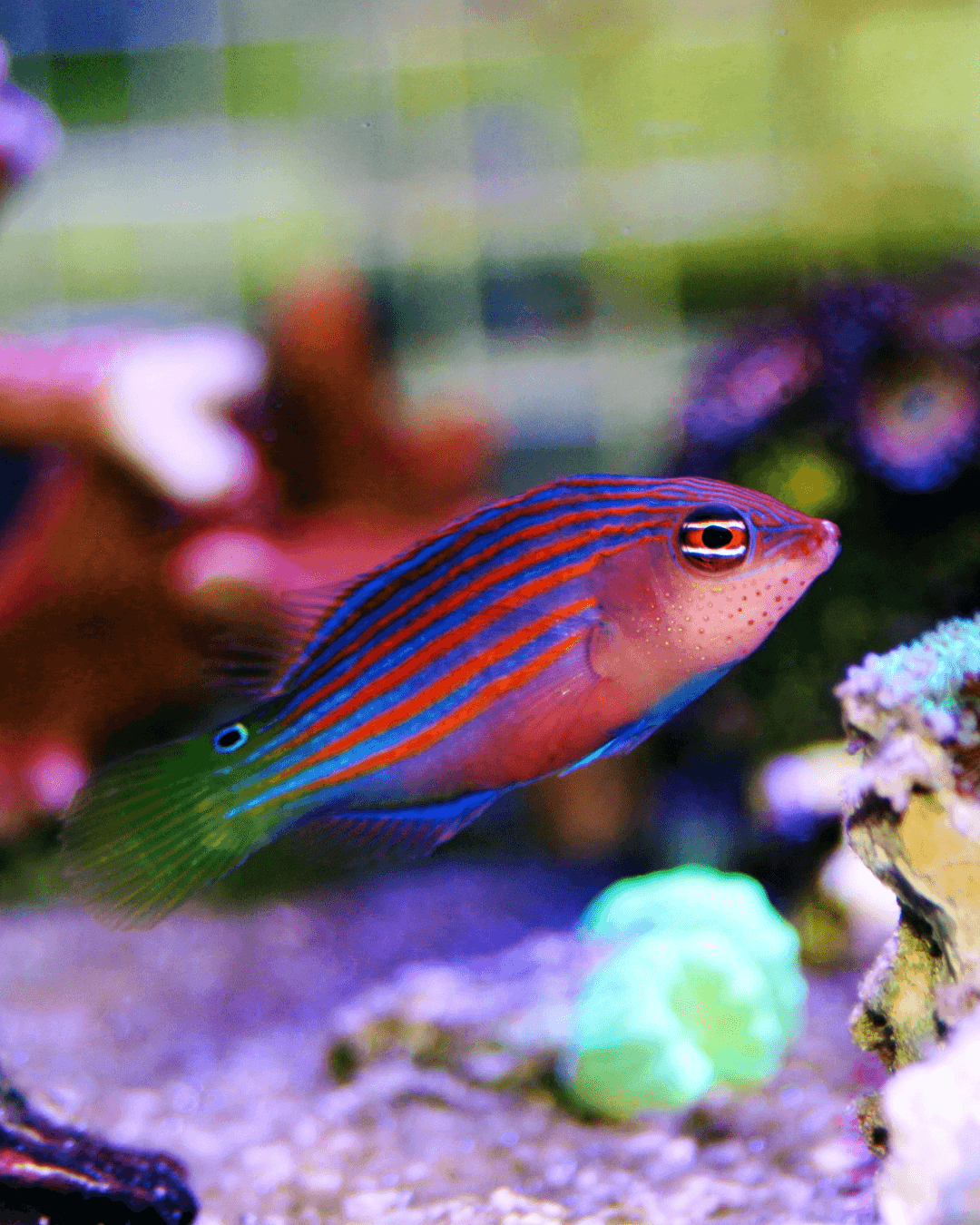
These individuals inhabit the Indo-Pacific. Taking shelter and swimming among the branches of coral reefs and coastal environments with clear water up to 20 meters deep. They can reach 10 cm and feed mainly on small crustaceans.
Jewelled blenny
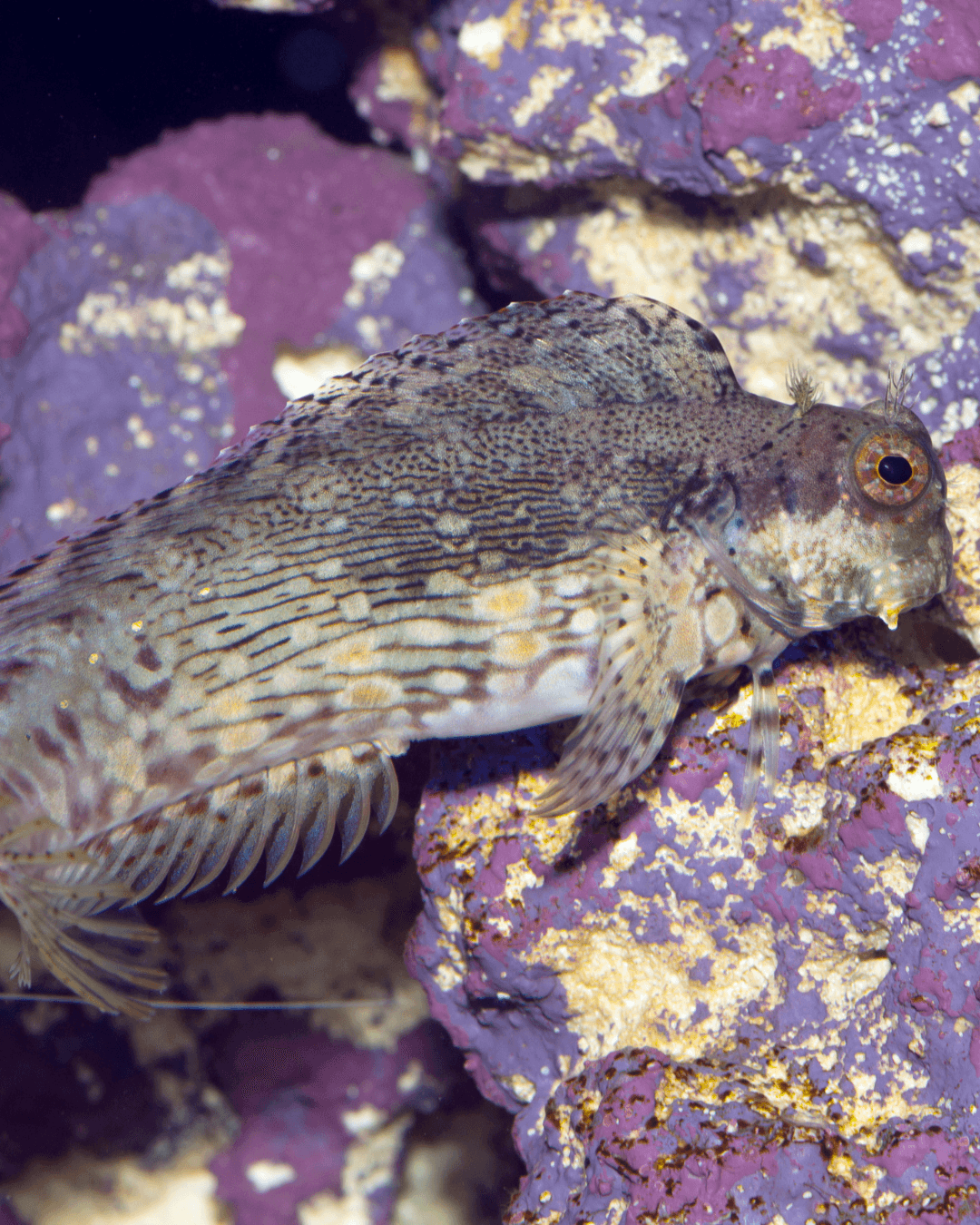
This species is found in the Indo-Pacific: in the Red Sea and East Africa to Samoa, north to the Ryukyu Islands, south to the Great Barrier Reef and New Caledonia. They inhabit coral reefs, shallow lagoons and estuaries rich in algae, as this is their diet. They can be found solitary in up to 8 meters of depth, after much observation because they camouflage themselves very well. Its maximum size is 14 cm.