




Brazilian Corals
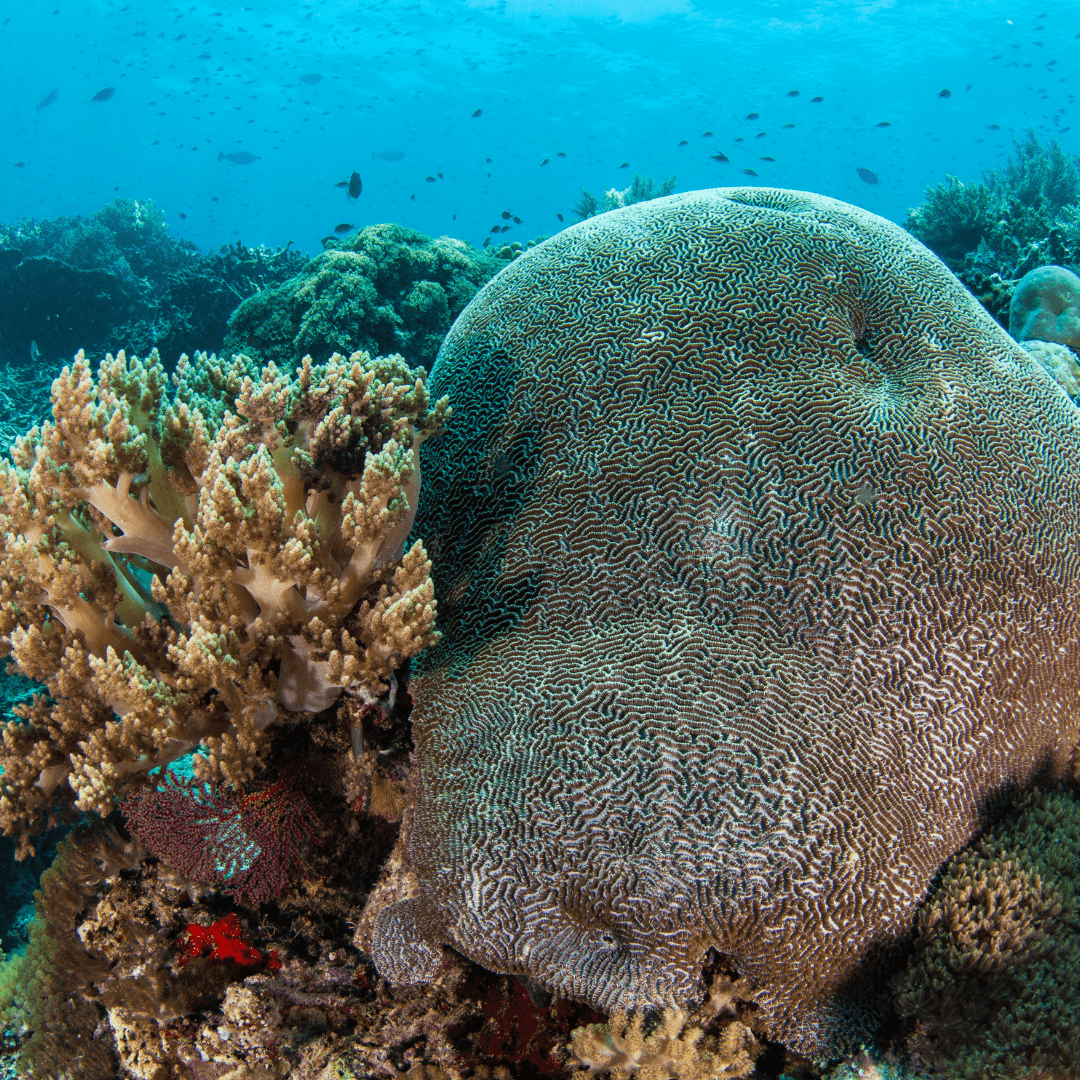
Brazilian corals form an ecosystem with unique characteristics of the South Atlantic Ocean, with the Abrolhos reef standing out. Our variety of species is low, with only 23 species, and 46% of these are found only here (endemic), such as the Mussismilia braziliensis, popularly called the Brain Coral.
Usually groups of reefs are about 5 km away from the coast, ours are located very close to the coastline, which has conditions that are not considered ideal for these animals. In our waters there is a lot of availability of nutrients, the high turbidity makes access to light difficult, which is essential for microalgae to carry out photosynthesis; and the sediments that reach the sea through the rivers, make these animals spend a lot of energy cleaning themselves. Research was carried out, and when Brazilian coral species were exposed to higher temperatures, there was an increase of up to seven times in the amount of zooxanthellae in their tissue. Thus demonstrating a high resistance, compared to corals that live in crystalline waters and low levels of nutrients and organic matter. In the south of Bahia, mainly in the Abrolhos region, there are very characteristic coral formations, the so-called Chapeirões. These formations grow vertically on the ocean floor and expand to the sides, forming different designs, sometimes similar to mushrooms.
Tank species
Clown anemonefish
Peixe-palhaço
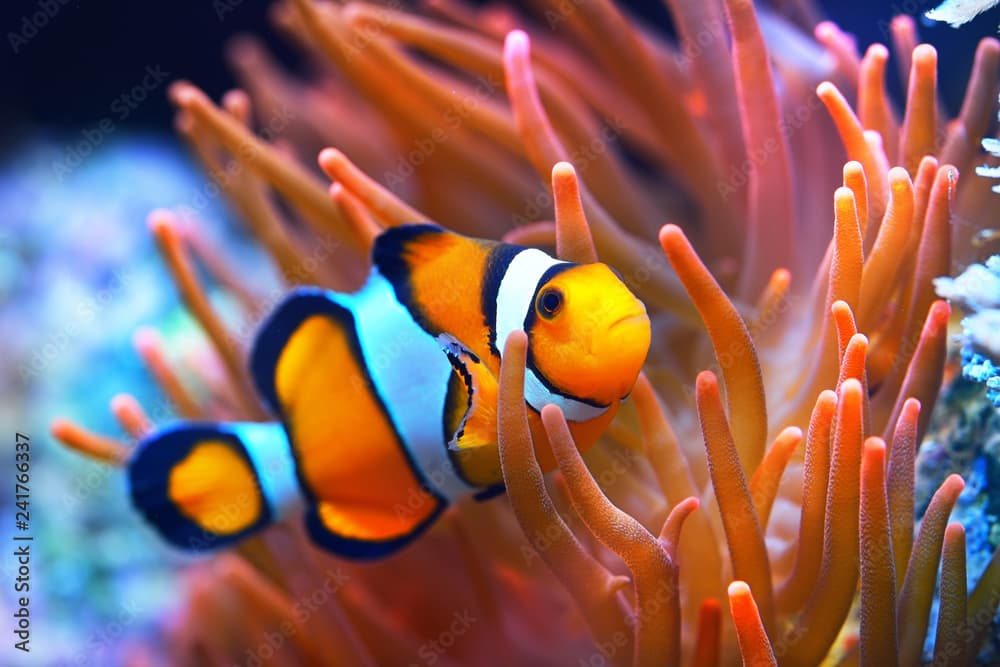
The clown anemonefish, known by the famous children's film "Finding Nemo", is a very popular species among aquarists for their attractive colors. Its distribution is exclusive of tropical waters, occurring in the Indian Ocean, Pacific Ocean and the Red Sea. It feeds on microalgae, macroalgae and small crustaceans. It can reach a maximum size of 11 cm length. This species live in social groups, dominance is based on body size, the largest animal in the group is usually a female and the remainder are males. It is classified as hermaphrodites, and during reproduction, the clown anemonefish produce spawns that are adhesive to the substrate, with external fertilization and incubation. Males are responsible for taking care of the eggs during the incubation period, promoting its oxygenation.