

Protocooperation
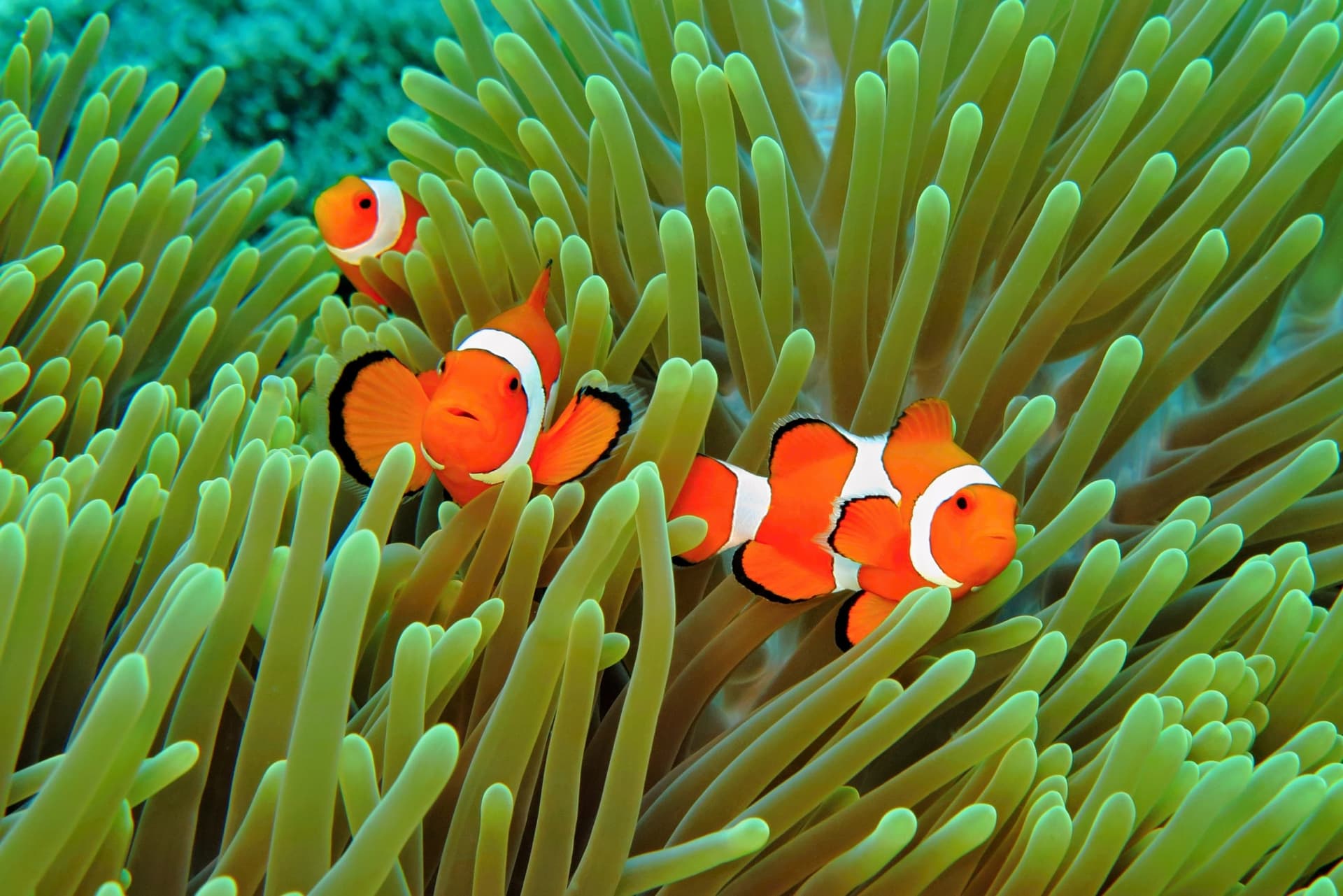
It is the relation of experience or cooperation between two organisms, with the possibility of separation of individuals. There may be a physical connection, such as between corals and algae (zooxanthellae). There are 3 types of symbiosis: mutualism, commensalism and parasitism. The relation between clownfish and anemones is a relation of facultative mutualism, which is when the survival of these animals does not depend on the relation between them.
Clown fish are immune to the stinging actions of anemones and can live in their tentacles. Thus, these fish protect themselves from predators and benefit the anemones by providing food for them. Anemones are animals that have a stinging substance in their tentacles, which serves to capture fish as food. Clownfish are animals native to the Indo-Pacific Ocean, which are resistant to the stinging action of anemones. Thus, clownfish and anemones live in an association that is advantageous for both, where the fish gets protection, while the anemone receives food brought by it.
Tank species
Clown anemonefish
Peixe-palhaço
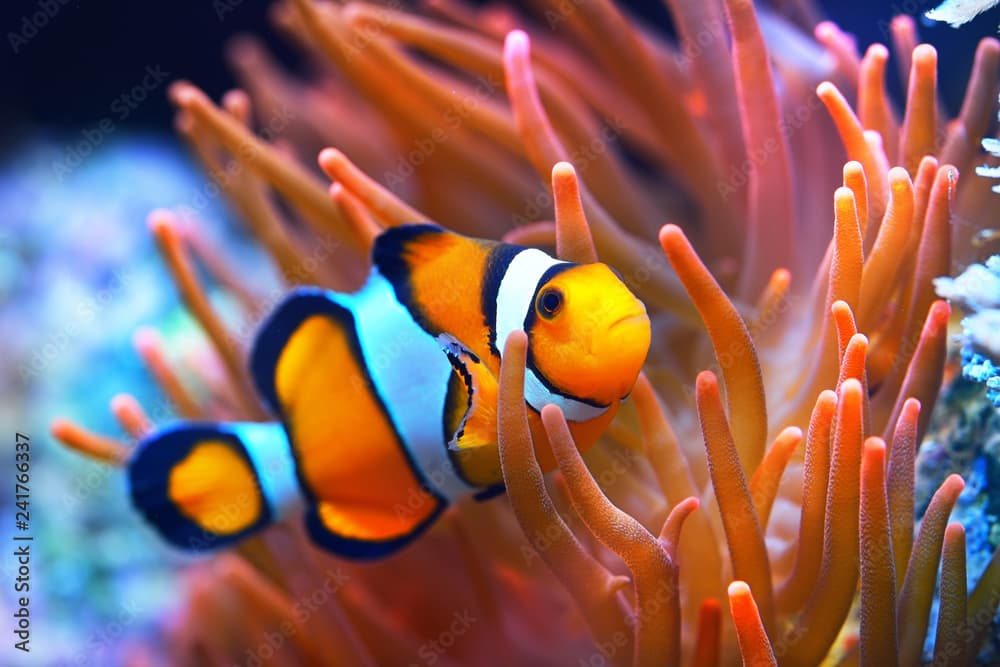
The clown anemonefish, known by the famous children's film "Finding Nemo", is a very popular species among aquarists for their attractive colors. Its distribution is exclusive of tropical waters, occurring in the Indian Ocean, Pacific Ocean and the Red Sea. It feeds on microalgae, macroalgae and small crustaceans. It can reach a maximum size of 11 cm length. This species live in social groups, dominance is based on body size, the largest animal in the group is usually a female and the remainder are males. It is classified as hermaphrodites, and during reproduction, the clown anemonefish produce spawns that are adhesive to the substrate, with external fertilization and incubation. Males are responsible for taking care of the eggs during the incubation period, promoting its oxygenation.
Bubbletip anemone
Entacmaea quadricolor
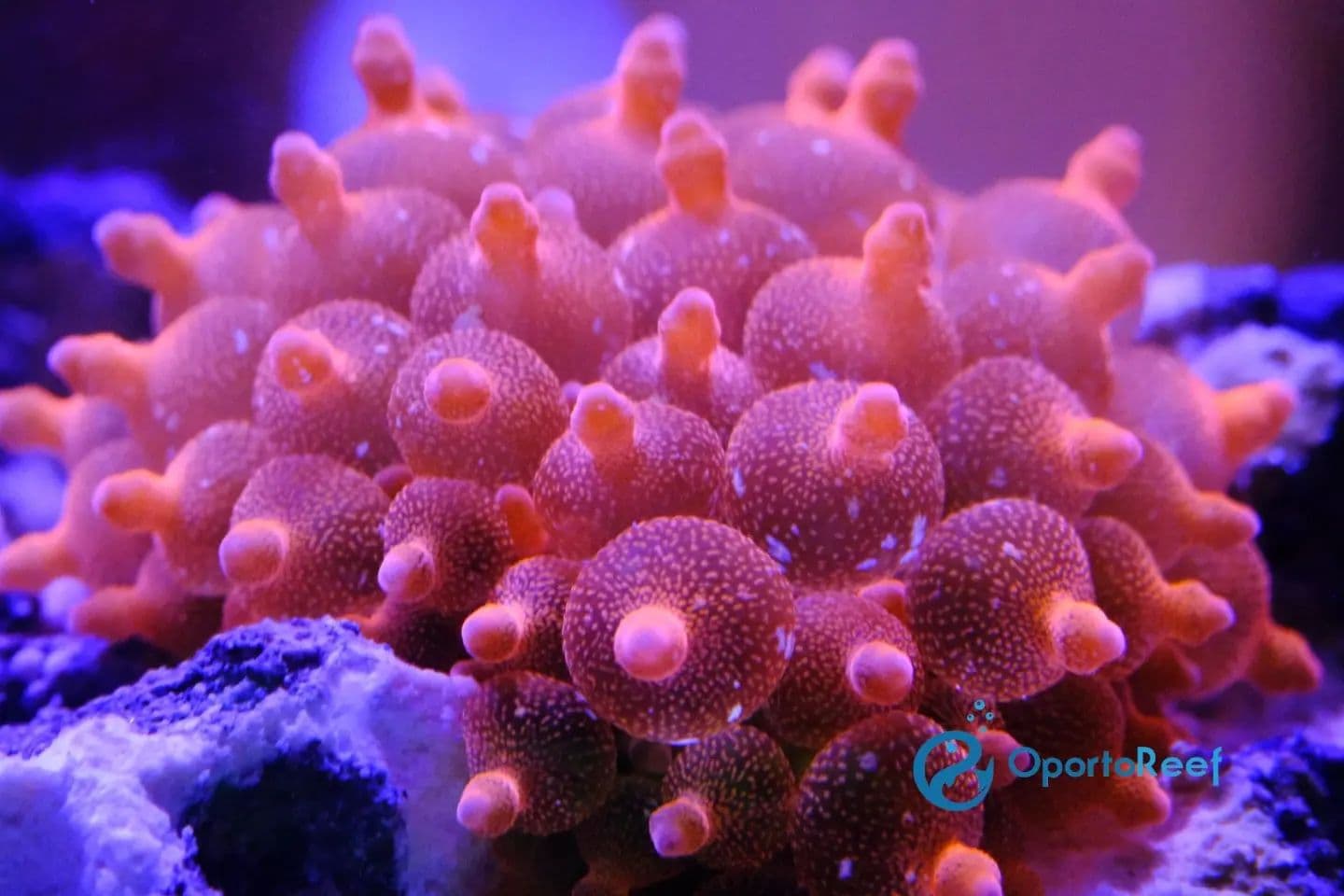
It lives in the Indo-Pacific, fixed in cracks in coral reefs, at depths between 0 and 200 meters. It is a solitary animal, which can reach 40 cm in diameter, with tentacles of up to 10 cm. It feeds on invertebrates and can shelter clownfish through a proto-cooperation relation.
Giant anemone

Found in the Indo-Pacific in shallow areas. It can reach 80 centimeters in diameter and like corals, this species is associated with microalgae (zooxanthellae). It lives fixedly but can come loose and go to another point. It is an animal that can house 7 species of clownfish. It feeds on small fish and invertebrates.
Anemone long tentacle
Macrodactyla doreensis
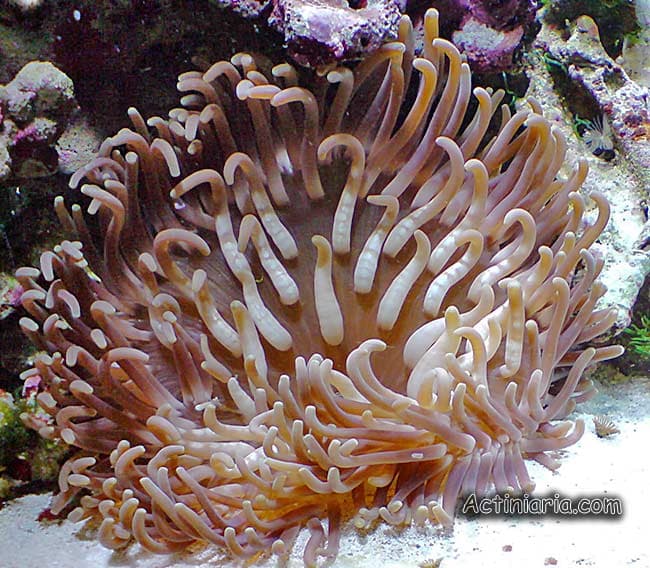
Found in the Pacific Ocean, this species can be found up to 5 meters deep. It can reach 40 cm in length. It can harbor clownfish but is not normally found with fish. It feeds on invertebrates.