

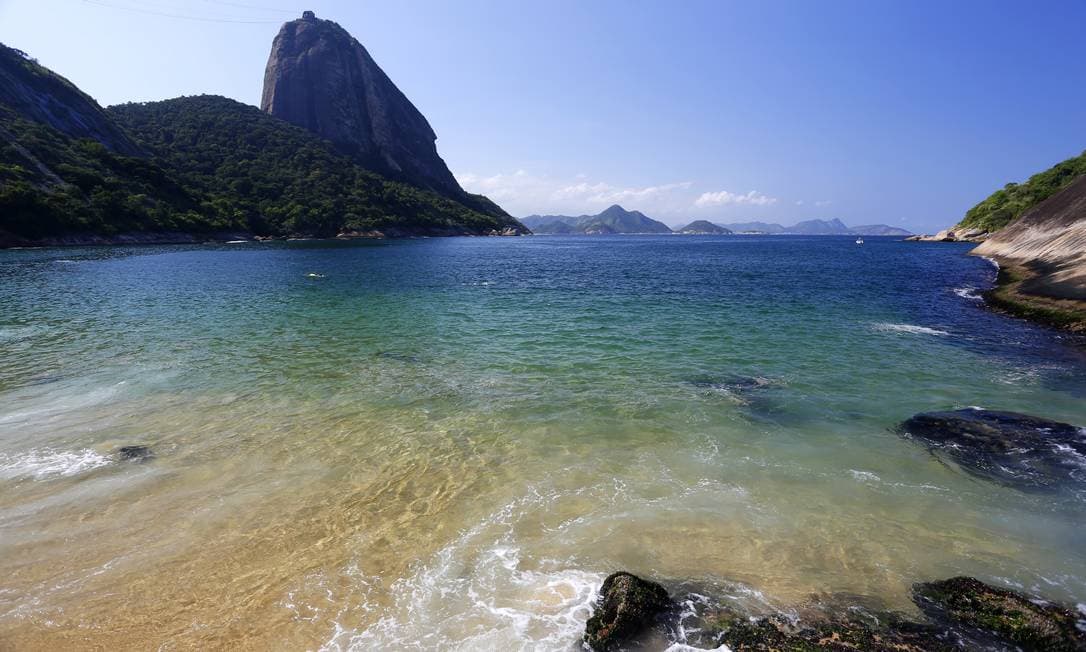
Rochy Shore
The rocky shore is an environment that creates a connection between the forest and the ocean. Formed by large rocky walls, it presents a vast diversity of species adapted to live in different areas, according to the tidal variation. This connection allows the flow of organic matter between ecosystems, enriching them and making them shelter, feeding and reproduction areas.
Supralittoral it is the region that is out of the water and receives splashes from the waves. In these areas live: barnacles, mussels and sea cockroaches. Mesolittoral is the region that is exposed at low tide and covered at high tide. In this area, in addition to barnacles and mussels, we find green algae and gastropods. Infralittoral is the region always covered by sea water. In this place live species of starfish, sea urchin and octopus.
Tank species
Squirrelfish
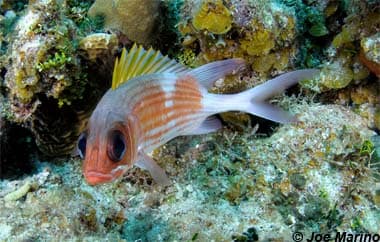
Holocentrus adscensionis
A species of fish found in the tropical and subtropical seas of the Atlantic Ocean. In Brazil, it occurs mainly in the Northeast and Southeast. It lives from environments of rocky shores and coastal reefs, in shallow waters, to the open sea with depths of up to 180 m. It feeds mainly on small crustaceans and algae. It has large reddish eyes, a dark red back with golden highlights, and can reach up to 61 cm in length. It is a commercial fish and capable of producing sounds.
Giant Hermit Crab
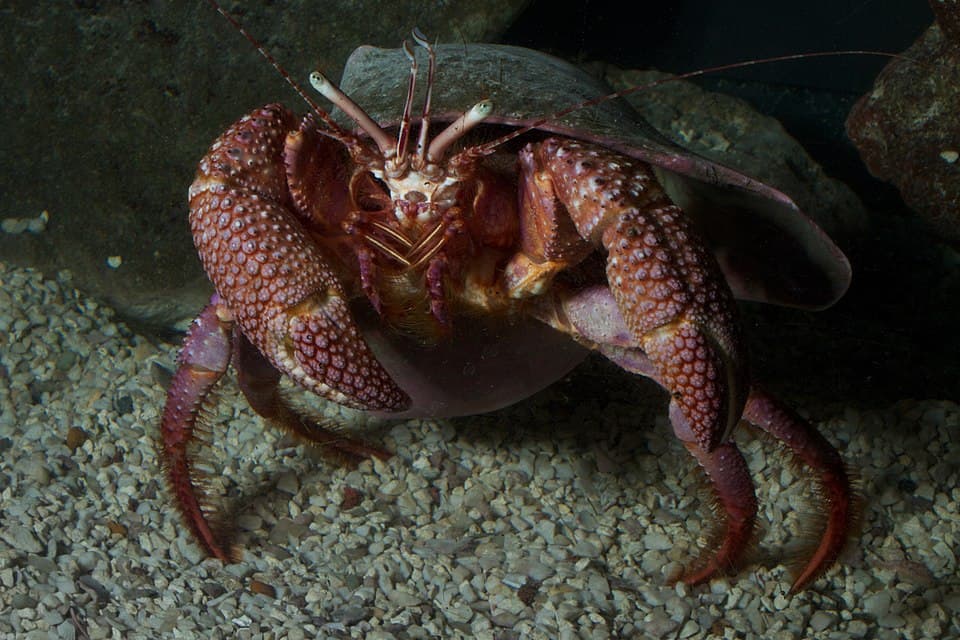
Petrochirus diogenes
Like all crustaceans, they are invertebrates with the skeleton on the outside (exoskeleton), but their abdomen does not have a very rigid structure like the rest of their exoskeleton, being therefore extremely sensitive, so they use mollusc shells as protection. As they grow, they look for bigger shells in order to be more comfortable and protected. Most are detritivores, meaning they feed on the remains of other dead animals. However, they also include some molluscs, small crustaceans and various larvae in their diet. Some hermit crabs associate with anemones, which prey in their shells act as a shield against possible predators, since anemones have stinging cells in their tentacles, on the other hand, hermit crabs provide displacement for the anemones and often leftover food.
Yellow sea chub
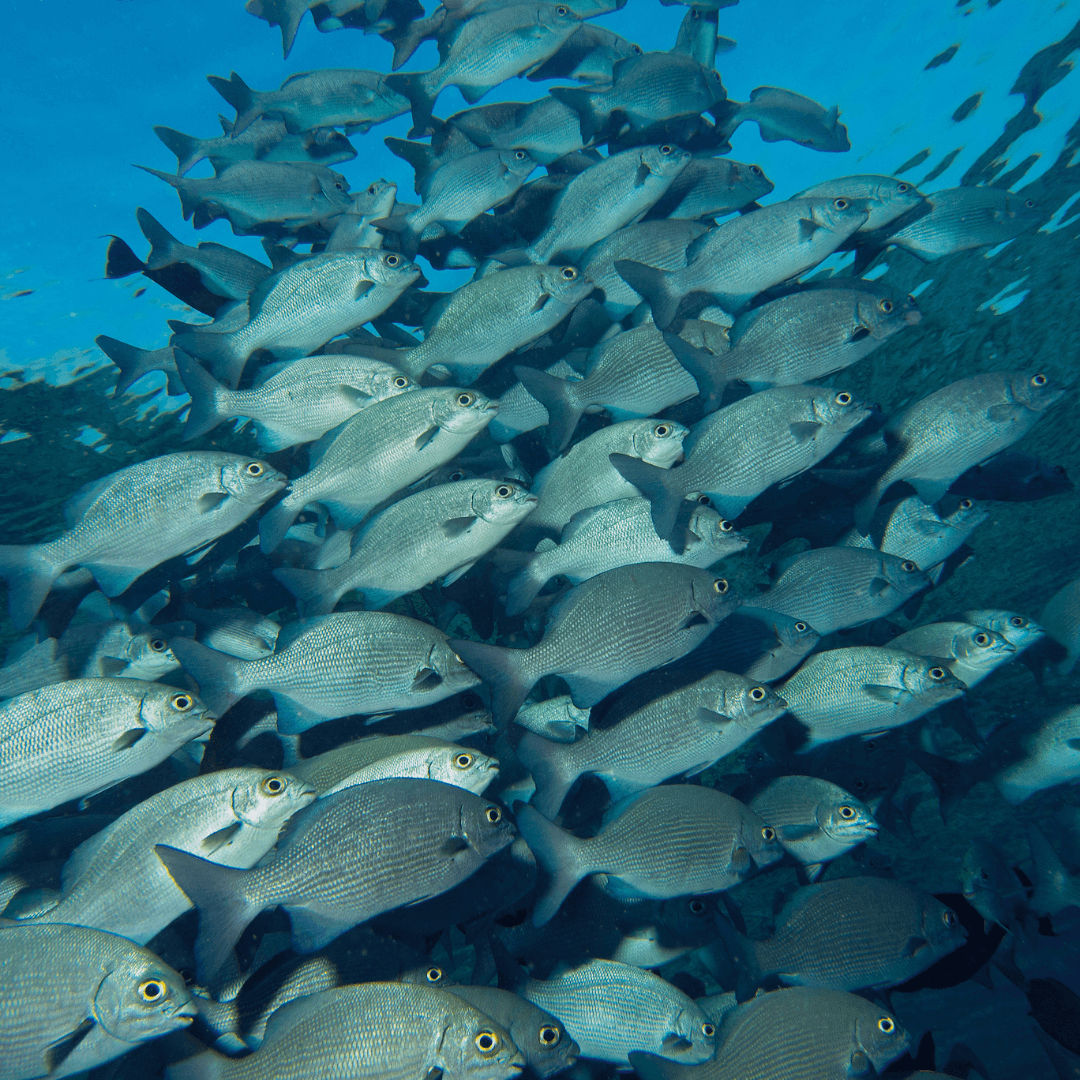
Kyphosus incisor
Common fish in the Western and Eastern Atlantic, they can live up to 15 meters deep. They live in rocky environments and coral reefs, reaching up to 90 cm in length. They feed on algae, also eating Sargassum algae, which is the same as the scorpionfish (Rhinopias frondosa) camouflages itself.
South american silver porgy
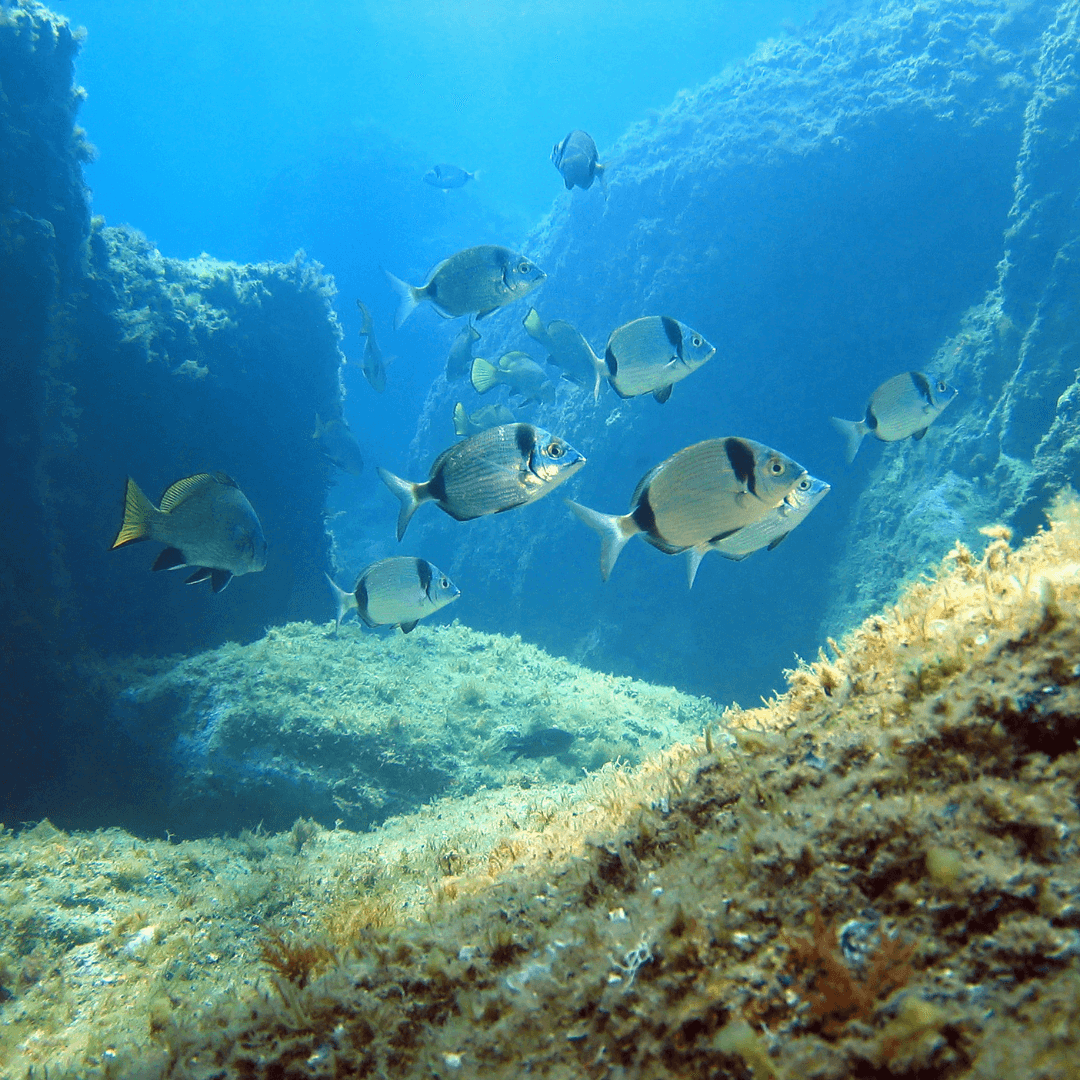
Diplodus argenteus
A species that occurs along the entire coast of the American Atlantic Ocean and in the Mediterranean Sea. It is found in turbulent coastal environments with shallow water, close to coral, rocky and/or sandy bottoms. It feeds on algae, mollusks, crustaceans and other invertebrates. Its body is oval and compressed, silver in color and has a dark rounded spot called ocellus, next to the tail, used to confuse predators. It can measure up to 37.8 cm in length. It is a little commercial fish.
Spotted Moray

Gymnothorax moringa
This species is found in the Atlantic Ocean, mainly in coral reefs, being able to live from the surface to great depths. With diurnal habits, it feeds mainly on fish and crustaceans, and can reach 200 cm length.