

Small Richness
The marine world is also home to very small beings, but they are extremely remarkable for their coloring, body shapes and survival strategies.
In this fascinating place, there are creatures with a wide variety of strategies to ensure their survival. Some have different types of respiration, allowing them to move through various environments and even breathe outside of water. Others are true walking shields, covered in spines that may contain venom to keep predators away. There are those who have adapted to complete darkness, where sunlight never reaches—so they never even developed eyes! Some communicate through delicate body movements, almost like an underwater dance. And in some curious cases, it is the male who carries the offspring, while the female only lays the eggs.
Tank species
Brownbanded bambooshark
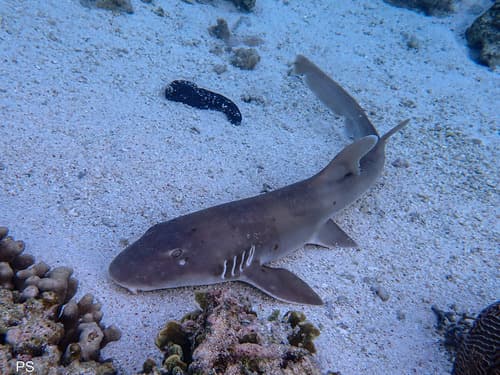
Chiloscyllium punctatum
It is a species of shark found in the Indo-Pacific Ocean, mainly in the region that extends from Japan to northeast Australia. It lives near coral reefs, but is also found in tidal pools, at depths between 0 and 85 m. It feeds on small invertebrates and fishes. It is considered a small shark, reaching a maximum of 130 cm in length. It is oviparous and its babies have a different coloration than adults, and as they get bigger they lose this colour. As it inhabits places that are subject to sudden tidal changes, it can survive out of water for up to 12 hours. It is a commercial species in the aquarium market and for other purposes.
Spotted scorpionfish
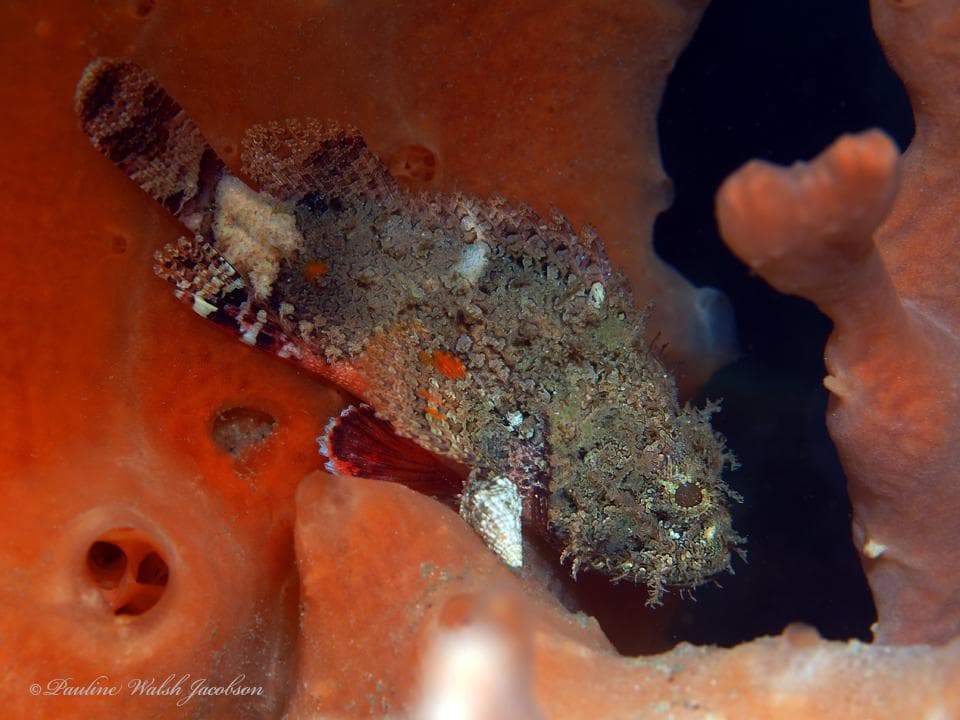
Scorpaena plumieri
A species of fish found from the Bermuda region to the south of Brazil in the western Atlantic Ocean, and in a few regions in the eastern Atlantic. It inhabits regions with coral reefs and rocky shores at depths ranging from 1 m to 60 m. It stays close to the bottom, camouflaging itself with the environment, thus avoiding predators (like some morays, rays and sharks) and can eat fish and crustaceans that pass by unsuspecting in front of them. It can reach a maximum size of 45 cm and 1.6 kg. It is one of the most venomous fish in the Atlantic Ocean, it has venom on its dorsal, pelvic and anal spines. Symptoms of the poisoning caused by these fish generally include local and systemic manifestations, with pain, edema, erythema and necrosis, fever, sweating, agitation, diarrhea and respiratory disorders.
Spot-fin porcupinefish
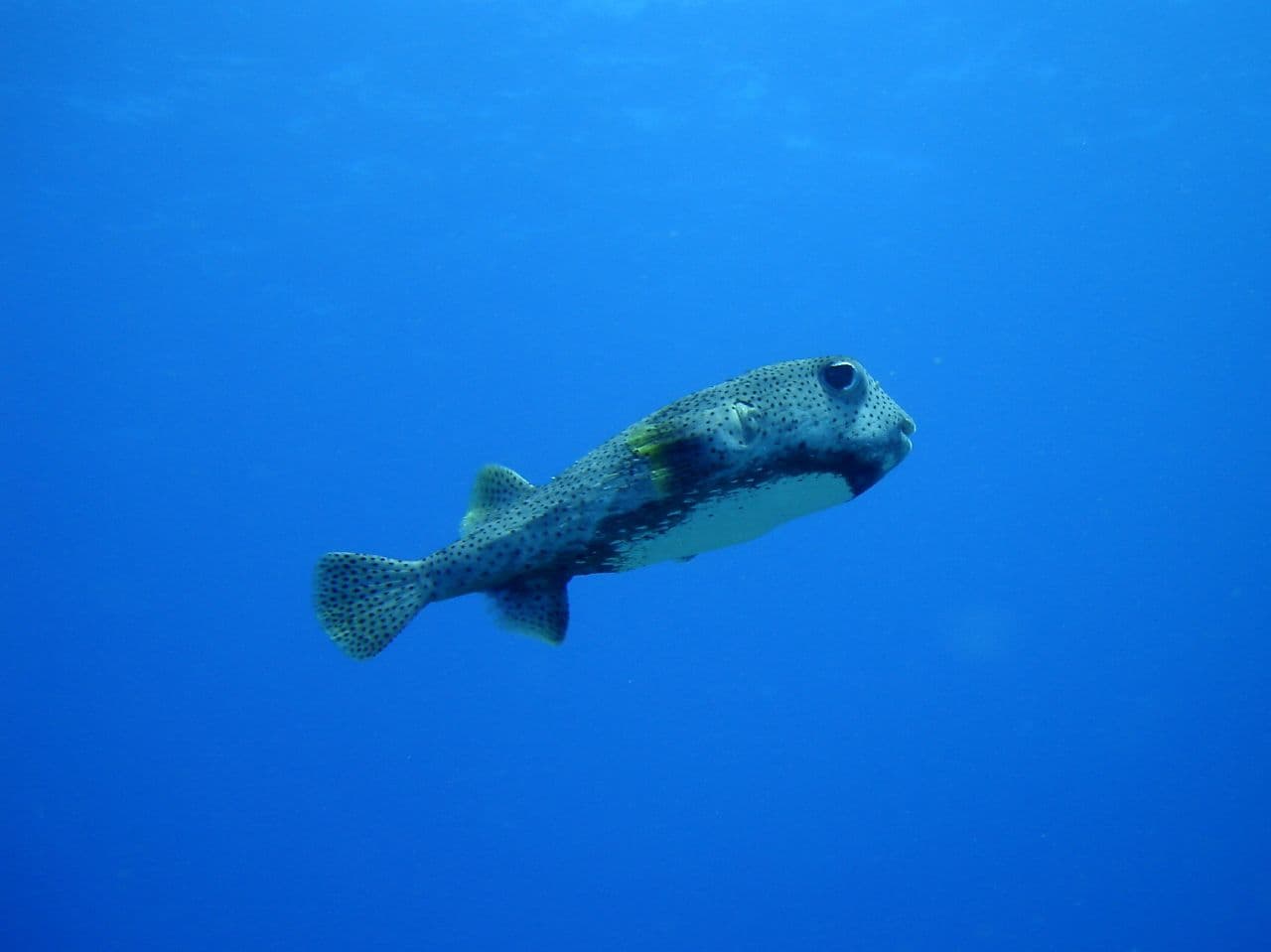
Diodon sp.
It can be found in lagoons and reefs, at a depth of up to 50m towards the sea. Younger ones can be found near the surface, and adults closer to the bottom. It has solitary and nocturnal habits. Its diet is based on invertebrates, gastropods and sea urchins. It is poisonous so it is not used in food.
Zebra turkeyfish
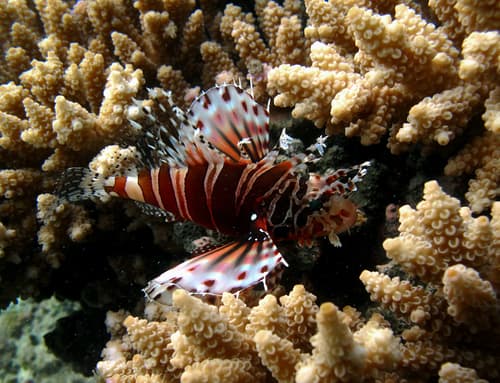
Dendrochirus zebra
Found in the Indo-West Pacific. It lives on rocky bottoms and among coral reefs, feeding on fish and crustaceans. They can reach 20 cm in length. It travels long distances and lives in small groups. Remembering that the species of lionfish that became known for starting to invade the Brazilian coast at the end of 2021 is Pterois volitans.
Brazilian flounder

Paralichthys brasiliensis
They are coastal fish with benthic habits. They have curious features like their two eyes on the same side of the body and swimming horizontally. They spend much of their time buried as a form of camouflage to capture possible prey and protect themselves.
Sea star
.jpeg&w=1920&q=75)
Echinaster brasiliensis
They live in the western Atlantic, at a depth of up to 9 m. It feeds on zooplankton, anemones and sponges and its maximum size is 6 cm. It is a species that has not been much studied.
Brons corydoras
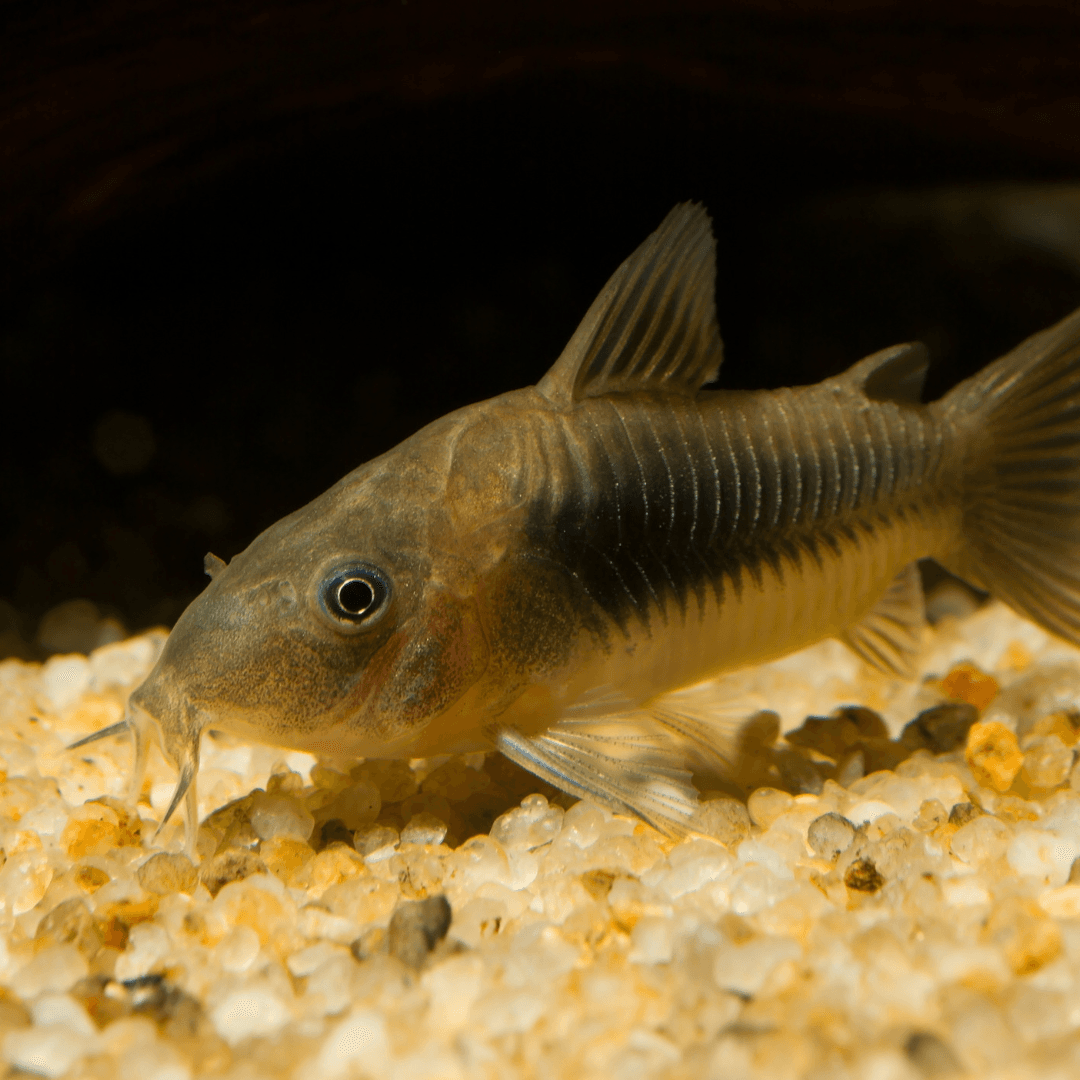
Corydoras aeneus
Found in Colombia and Trinidad, from the bottom of the Río de la Plata to the east of the Andes. Both in calm waters and running waters. They feed on worms, crustaceans, insects and plant matter. They are nocturnal and live in shoals of 20 to 30 individuals.
Green sea urchin

It is a species found in tropical waters of the Atlantic Ocean, from the United States to Brazil. It lives on rocky reefs, on sandy or muddy substrates and on seagrass beds, at depths of up to 50 m. It can occur in large numbers, with up to 15 individuals being found per square meter. The individuals are mostly herbivores, feeding on seaweed, and can reach up to 11 cm in length.
Atlantic Mudskipper
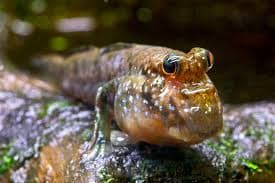
Periophthalmus barbarus
Usually found in muddy regions and in brackish waters, mangroves and estuaries. They are fish capable of breathing air, so they can go in search of food by jumping or walking on mud and/or sand. Its diet consists of crabs, insects, among others arthropods and white mangroves.
Blind Cave Tetra
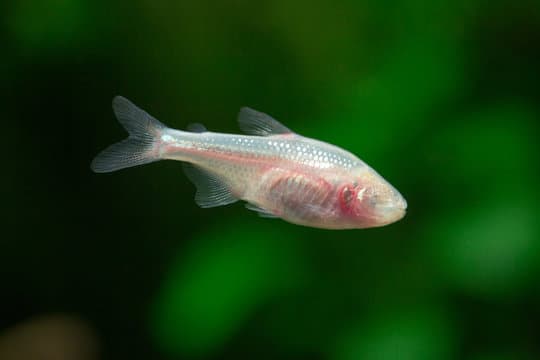
Astyanax mexicanus
Found in Mexico, this species inhabits small to large rivers, and rocky and sandy bottoms. Their diet is based on worms, insects and crustaceans. There are two variations of this species, the ones that live on the surface, so they have color and good eyesight; and those who inhabit caves, who throughout evolution have lost their vision and pigmentation (therefore, they are albino), as they are indifferent characteristics in the dark environment in which they live. Richard Borowsky did a study where, from genetic crosses, he managed to produce individuals with rudimentary “eyes”, and, in one of the crosses, 40% of the pups were born with sight. "If you were to hybridize two separate populations of blind cave fish and place them in a place with light, I suspect that [natural] selection pressure would be enough to restore sight to the entire population in a relatively short time, less than a hundred generations", said the researcher in an interview with Folha. Source: https://www1.folha.uol.com.br/fsp/ciencia/fe1201200801.htm
Heckel Discus
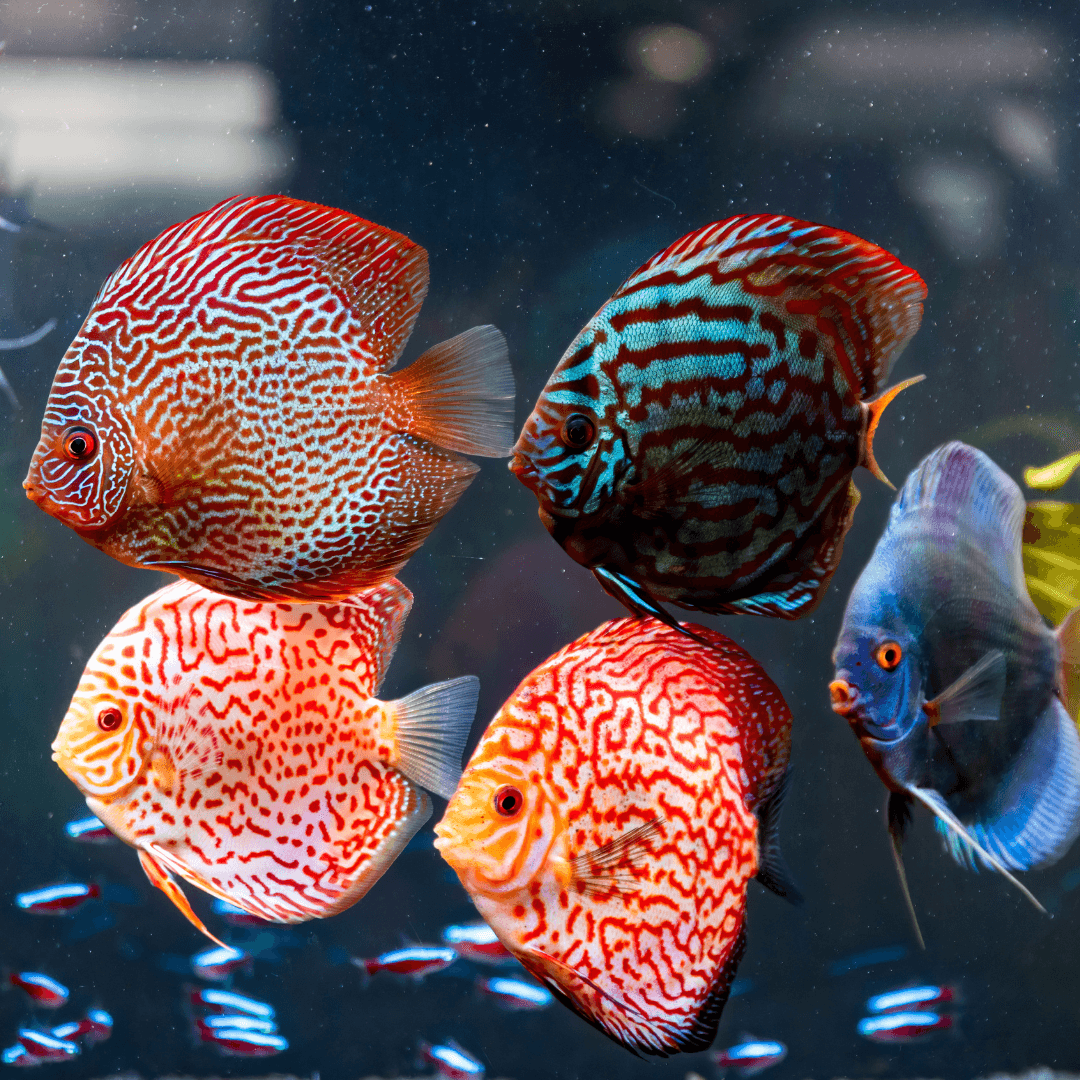
Symphysodon discus
It is an endemic species of Brazil, lives in dark waters in the Amazon river basin, and is found among roots and rock crevices. It is peaceful to live together with other individuals. It has parental care for the offspring and produces a mucus to nourish the fry in the first days of life. It feeds on insects, insect larvae, plankton and eventually fruits.
Blue discus
It lives in South America, in rocky crevices between roots, in the Amazon, Negro and Solimões rivers. It usually lives in shoals, but during the reproductive period it becomes territorial. They feed on planktonic invertebrates, insects and insect larvae.
Red knob sea star
.jpg&w=1920&q=75)
Protoreaster linckii
Found in the western Indian Ocean, off the coast of Africa and Madagascar, north of India and Sri Lanka. It lives alone or in groups on sandy or muddy bottoms, reaching depths of up to 100 m. They can reach a maximum size of 30 cm, are nocturnal and have a body covered with red spines. They are omnivorous, feeding on everything that has organic origin.
Long spine urchin
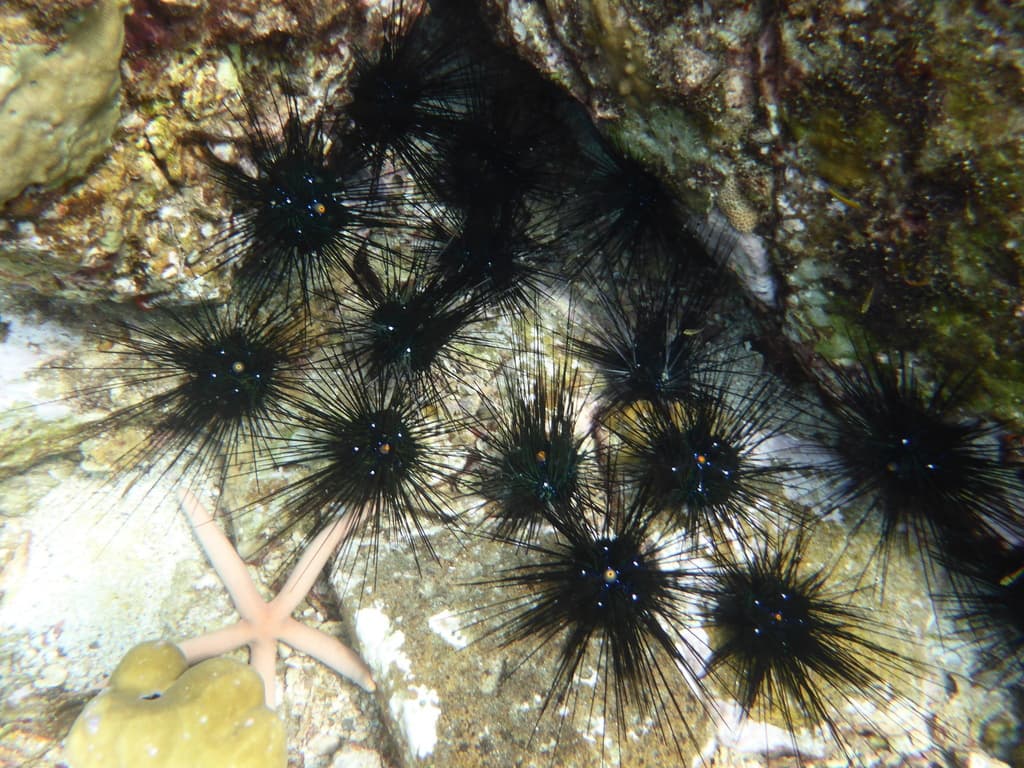
Diadema setosum
It is an animal, from the same group of starfishes and sea cucumbers, the Echinoderms. It is found in the Mediterranean Sea and the Indo-Pacific Ocean, from the Red Sea to the islands of the South Pacific and Japan. It is benthic, that is, it lives associated with the marine substrate, at depths between 0 and 70 m. It is usually associated with coral reef environments with many dead corals, feeding on algae that grow there. Individuals have external fertilization (they release their gametes in the water) and can measure up to 60 cm in length.