

Cartilaginous fish: sharks and rays
This tank is home to butterfly rays and small sharks: the horn shark and the bamboo shark, which can measure approximately 95 cm to 1.3 m. The reproduction of these fish occurs through internal fertilization and they may be viviparous, oviparous, or ovoviviparous. In other words, some hatch from eggs!
In the case of these sharks, the male wraps his body around the female’s body and maintains this position by biting her on the back or fin, keeping her immobilized until the end of copulation. This form of reproduction is clearly visible in this tank with the bamboo sharks and may be mistaken for fights. The butterfly ray is ovoviviparous; the number of offspring can vary from one to eight, and gestation lasts from four to nine months. The pups are born ready to live independently. However, its population has declined by 30% in recent decades and it is among the ray species at greatest risk of extinction. Among the causes is the illegal hunting of these animals, as they are sold commercially as “cação” (a general term used for shark meat).
Here is researchTank species
Whitetip reef shark
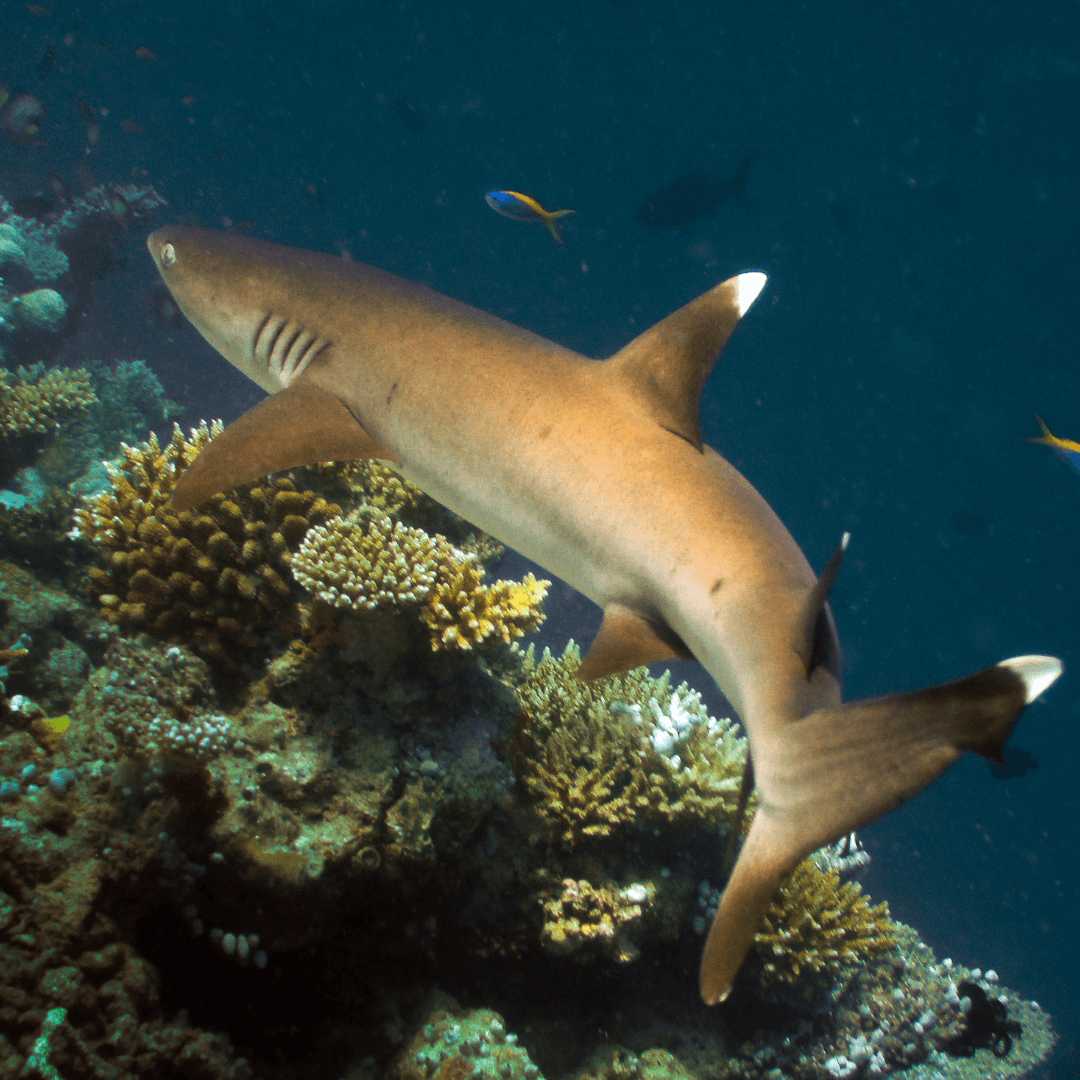
Considered a small shark, the white tip reef, can reach 200 cm in length, are very common sharks in the Indo-Pacific Ocean, but have also been found in South Africa and Central America living near coral reefs . They spend most of the day resting inside caves and at night they go out to hunt bony fish, crustaceans and some molluscs. They are viviparous sharks with the total gestation period lasting between 10 and 14 months, ending with the birth of up to 6 young. Although they can approach curious divers, they rarely present any kind of risk to humans. Because they have a relatively long gestation period, with few offspring, and eating habits restricted to a few habitats, these animals may be vulnerable to overfishing.
Horn shark
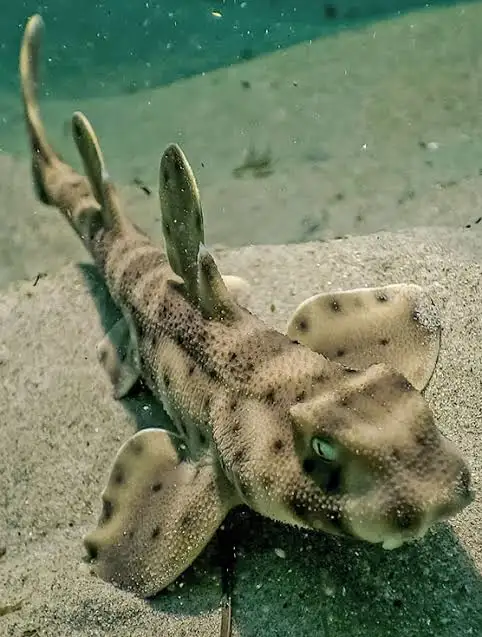
Heterodontus francisci
A species of shark endemic to the western coastal region of North America in the Pacific Ocean. While hatchlings live in flat sandy regions, adults prefer shallow rocky reef regions, thus there is a spatial separation between juveniles and adults. Slow moving, they are usually solitary predators that hunt at dusk, looking for a shelter to hide most of the day. Adults feed on molluscs, echinoderms, crustaceans and small fish, while juveniles feed on polychaetes and some species of anemones. Reaching a maximum of 122 cm in length, they are considered small sharks. They are oviparous, with the female laying around 24 eggs per pregnancy. During this process, she looks for a suitable place to protect the eggs, such as crevices present in the coral reef.