





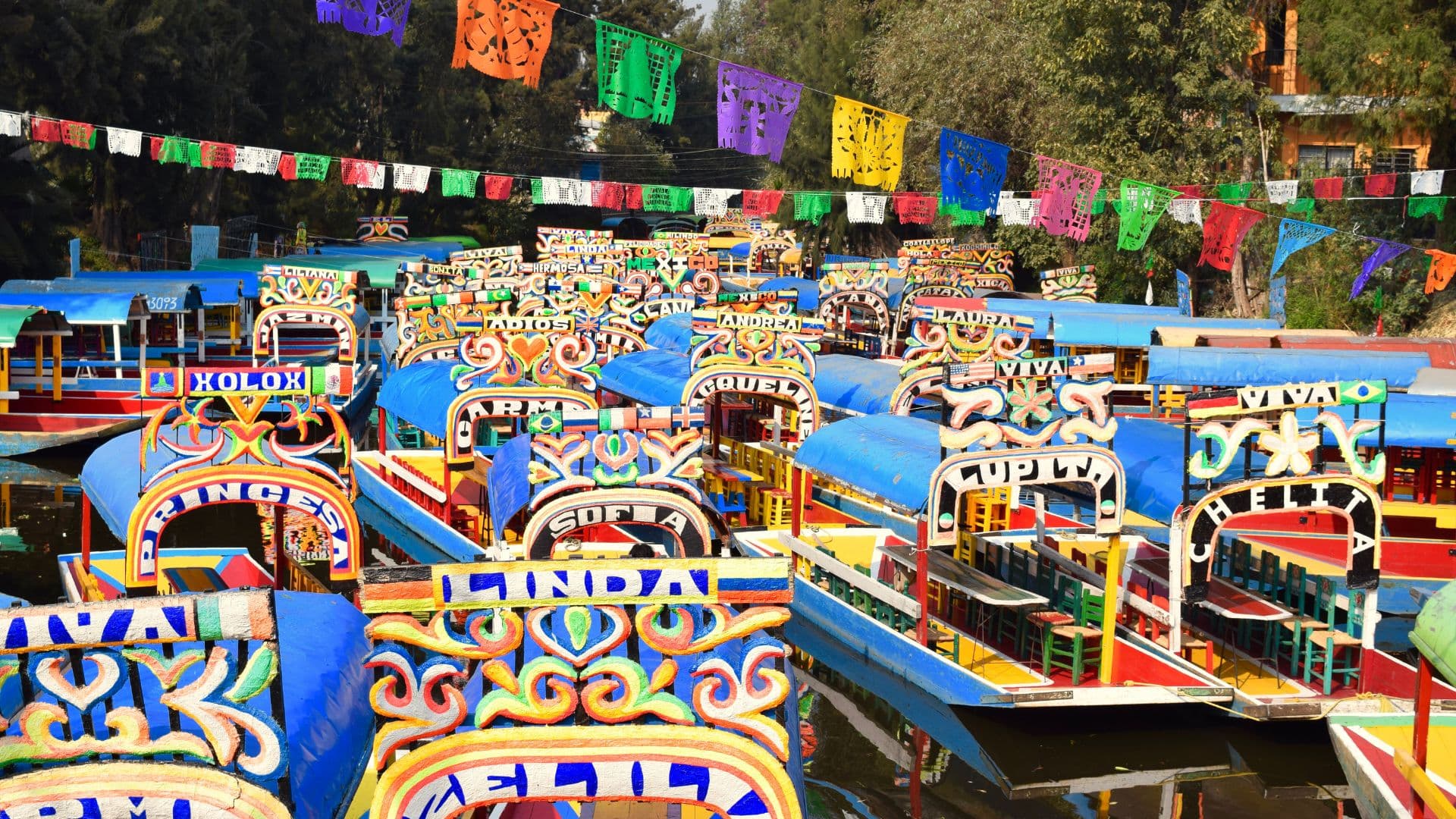
Axolotl
Who are you, Axolotl?
Meet the animal considered a legend and a symbol of conservation and resilience in Mexico! With fewer than 1,000 individuals left in the wild, these incredible beings need our help to keep persevering and enchanting the world!
Tank species
Pokémon Wooper

In Pokémon Gold and Silver, Generation II (year 1999), Wooper was introduced — a Water/Ground-type Pokémon inspired by me: the axolotl.
🇺🇸 English: Wooper retains larval characteristics even in its adult stage, with external gills on the sides of its head, regenerative abilities, and it inhabits freshwater areas such as ponds and swamps. Discrepancies: 🔹It has a transparent membrane covering its body; if touched with bare hands, it causes tingling and numbness. 🔹Wooper is a Pokémon that resembles an upright axolotl, without arms and predominantly blue. 🔹There’s also the Paldean Wooper, from Pokémon Scarlet and Violet (Generation IX, released in 2022). This version is Poison/Ground-type, with hardened gills for surviving on land and a brown body, reflecting its adaptation to new living conditions. That is, even though Wooper is appealing to its target audience and shares some similarities with me, it cannot be used to describe real axolotls, as there are many inaccuracies and discrepancies regarding my unique features.
Axolotl
Who are you, Axolotl?
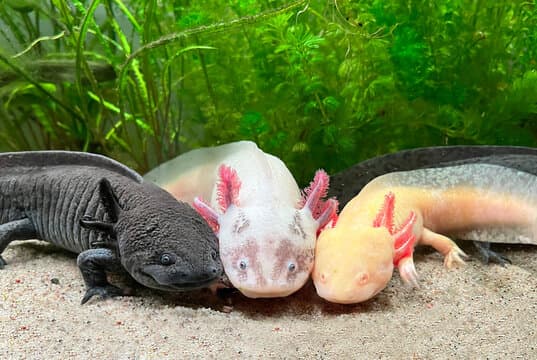
Hello! I’m the axolotl, an aquatic amphibian from the order of salamanders, species Ambystoma mexicanum. I’m considered neotenic, as I don’t complete my metamorphosis, retaining larval features in my adult phase. I’m native to the Xochimilco and Chalco lakes in Mexico and am classified as CRITICALLY ENDANGERED, as we suffer from pollution and predation by invasive species. I’m carnivorous, feeding mainly on small aquatic animals such as insects, fish, and crustaceans. I have an incredible ability to regenerate, capable of regrowing limbs and even organs— including my heart and brain! This happens thanks to cells called blastemas, which work similarly to stem cells, recreating tissues without fibrosis (scarring). Although I’m considered beautiful and friendly, it’s important to remember that I cannot be considered a pet. In Brazil, my breeding and commercialization are considered an environmental crime.
Diet
What’s on their menu?
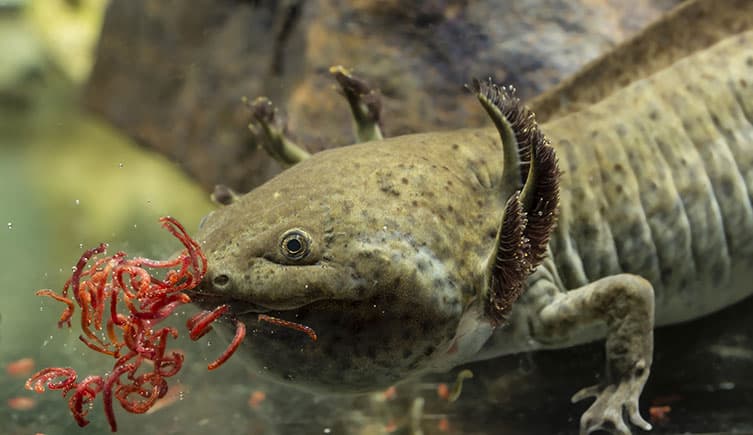
➡️Axolotls eat everything they find in front of them. We are carnivores, and in the wild our diet includes: 🔹Small fish 🔹Crustaceans (such as daphnia and shrimp) 🔹Mollusks 🔹Worms and semi-aquatic insect larvae. ➡️ Suction: We hunt by ambush and capture our prey through suction. When we visually detect our prey, we quickly open our mouths and suck in the food along with water. ➡️ In conservation units, such as AquaRio, we are also fed with: 🔹Earthworms 🔹Small pieces of fish 🔹Special amphibian food 🔹Mosquito larvae ➡️Juvenile larvae mainly consume zooplankton and worms. Frequency: Larvae eat daily, but adults need to be fed 2 to 4 times per week.
God Xolotl
So, are you a God?
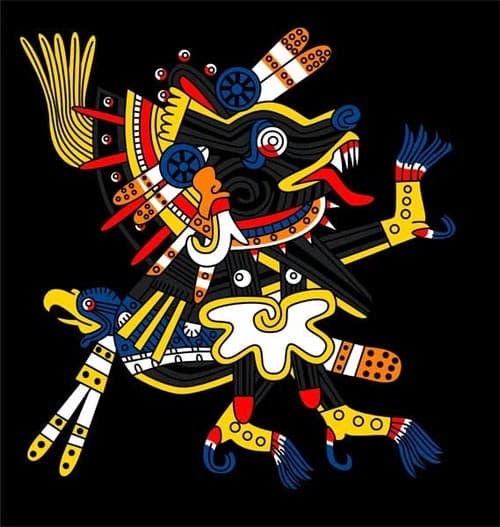
Bien, déjame explicar… Mi nombre proviene del náhuatl, en azteca significa “monstruo acuático”, “perro de agua”, “espíritu del agua”, “esclavo del agua” y “gemelo del agua”. Pues, en la mitología azteca, se cree en el dios Xólotl, que es: 🔹 Representado con cabeza de perro de la raza Xoloitzcuintli 🔹 Hermano gemelo del dios Quetzalcóatl 🔹 Guía de las almas hacia el inframundo ¿Cuál es mi relación con esta creencia? Además de todos sus poderes, él se transformó en ajolote y se escondió en las aguas de los lagos, para escapar de ser sacrificado por los demás dioses. Por eso, soy considerado la encarnación de ese dios, que está asociado con el fuego, el rayo, los muertos y la transformación.
Fifty pesos
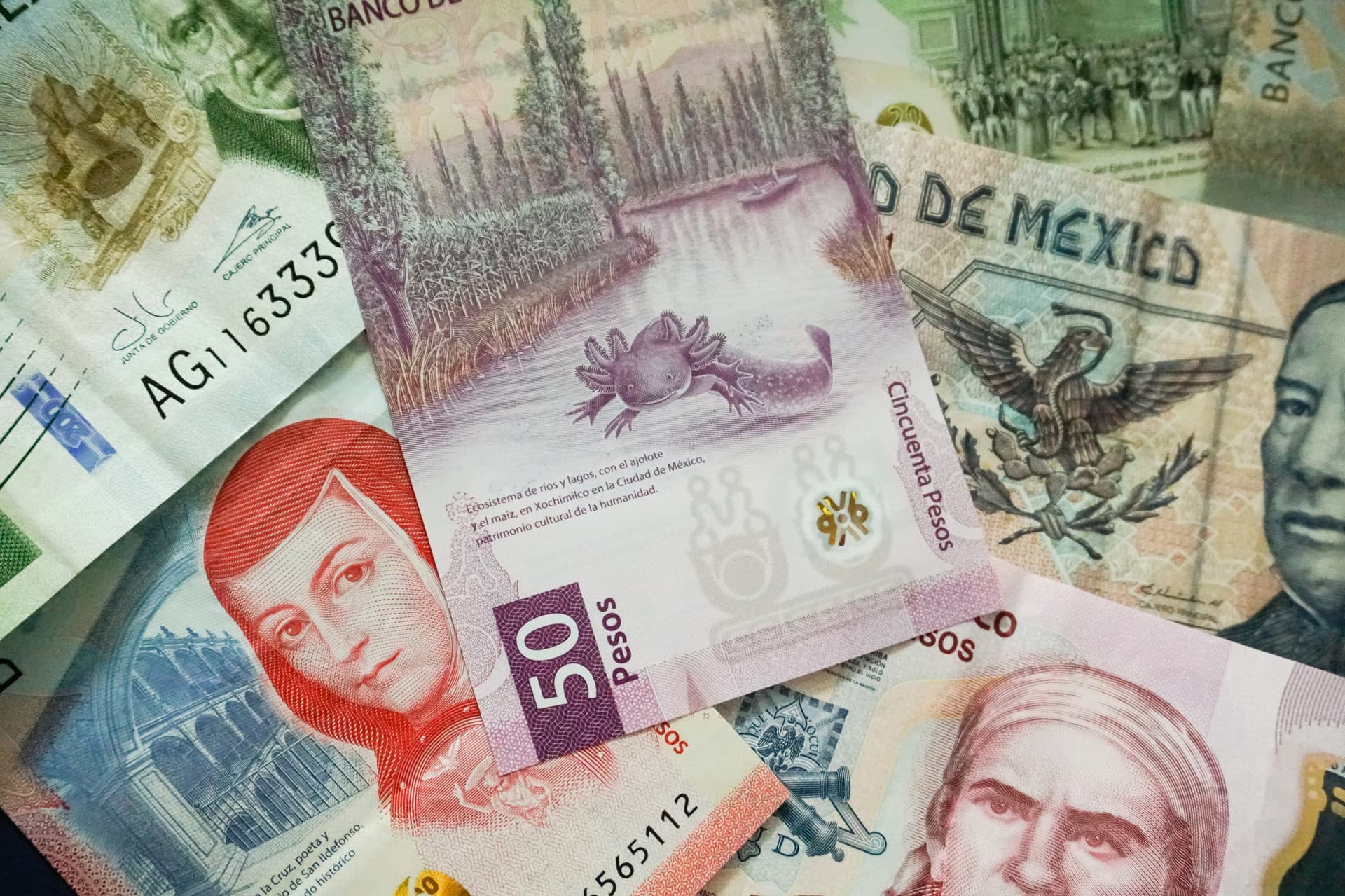
In October 2021, the 50 Mexican peso banknote was released, and it was awarded “Banknote of the Year” by the International Bank Note Society.
The animal depicted on the banknote was the axolotl. On the front, it features an underwater mural created by Diego Rivera (in 1951) to celebrate the completion of a system of aqueducts that brought drinking water to Mexico City. On the back, the banknote displays a scene of an axolotl’s ecosystem in Xochimilco, highlighting its cultural and ecological importance for Mexico. ➡️Fun fact: One month after its release, the Bank of Mexico realized that the banknote was not circulating as expected. A brief investigation revealed that people were keeping the notes because they were so beautiful.