

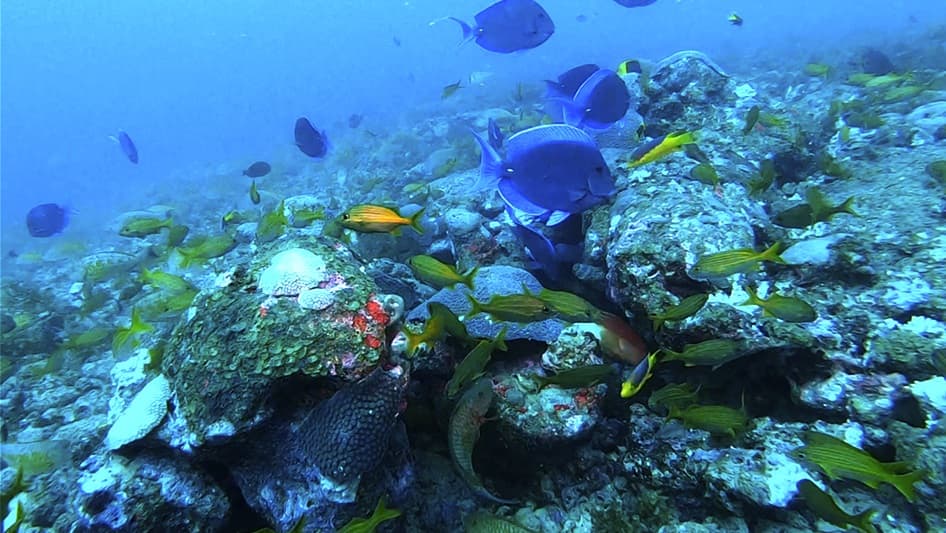
Reef fish
Ecological importance
Reef fish live among corals and form one of the most colorful and diverse ecosystems in the ocean. They help maintain the balance of the reef by controlling algae and participating in the food chain. In addition to their beauty, these fish are essential to the health of coral reefs and marine life as a whole.
Tank species
Giant Hermit Crab
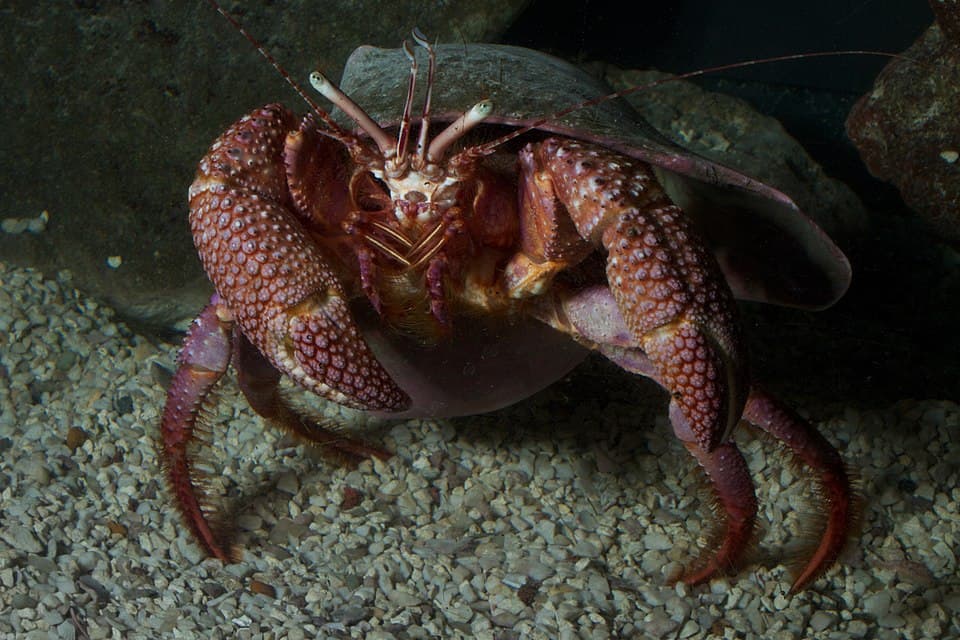
Petrochirus diogenes
Like all crustaceans, they are invertebrates with the skeleton on the outside (exoskeleton), but their abdomen does not have a very rigid structure like the rest of their exoskeleton, being therefore extremely sensitive, so they use mollusc shells as protection. As they grow, they look for bigger shells in order to be more comfortable and protected. Most are detritivores, meaning they feed on the remains of other dead animals. However, they also include some molluscs, small crustaceans and various larvae in their diet. Some hermit crabs associate with anemones, which prey in their shells act as a shield against possible predators, since anemones have stinging cells in their tentacles, on the other hand, hermit crabs provide displacement for the anemones and often leftover food.
Redspotted hawkfish
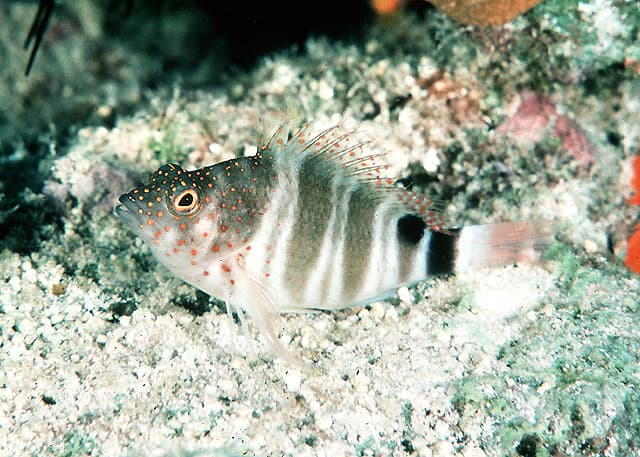
Amblycirrhitus pinos
Specie of fish characteristic of the western Atlantic Ocean until Rio de Janeiro; in the eastern Atlantic it occurs on the Santa Helena island. In the Indian Ocean this fish occurs in the Indonesian region. It inhabits rocky and coral bottoms, from 2 to 46 m deep. It feeds on zooplankton. In adulthood it reaches up to 10 cm in length. It has ten dorsal spines with small tufts similar to hair, used for protection, and numerous red spots on the head and on the dorsal and lateral region of the body, a characteristic that gives the brazilian popular name of "little measles", referring to the symptom of a viral infection that occurs in Brazil and other countries.
French angelfish
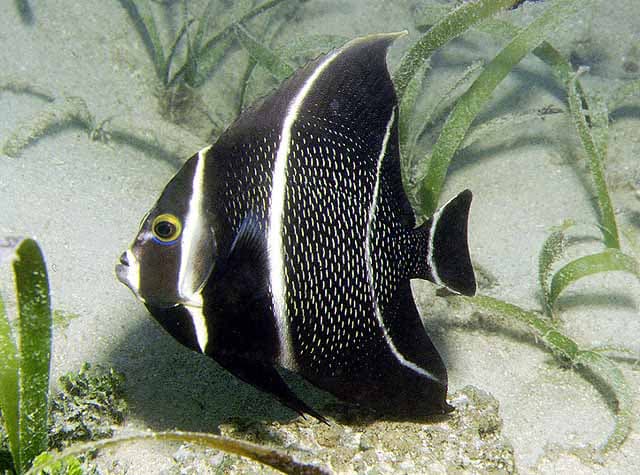
Pomacanthus paru
Species that lives in the Atlantic Ocean and can be observed along the entire Brazilian coast, close to reefs and rocky shores. Adults can swim up to about 30 m deep. They can be territorial when they establish a cleaning station where they eat parasites from other fish. In addition to these parasites, they also feed on sponges, worms, algae and small crustaceans. When juvenile, it has yellow vertical stripes and a blue pelvic fin. When adults lose their stripes, and their predominant color is navy blue and black, with yellow lateral scales. They can reach a maximum size of 40 cm, and they are very curious animals and usually allow divers to approach them.
Spotted scorpionfish
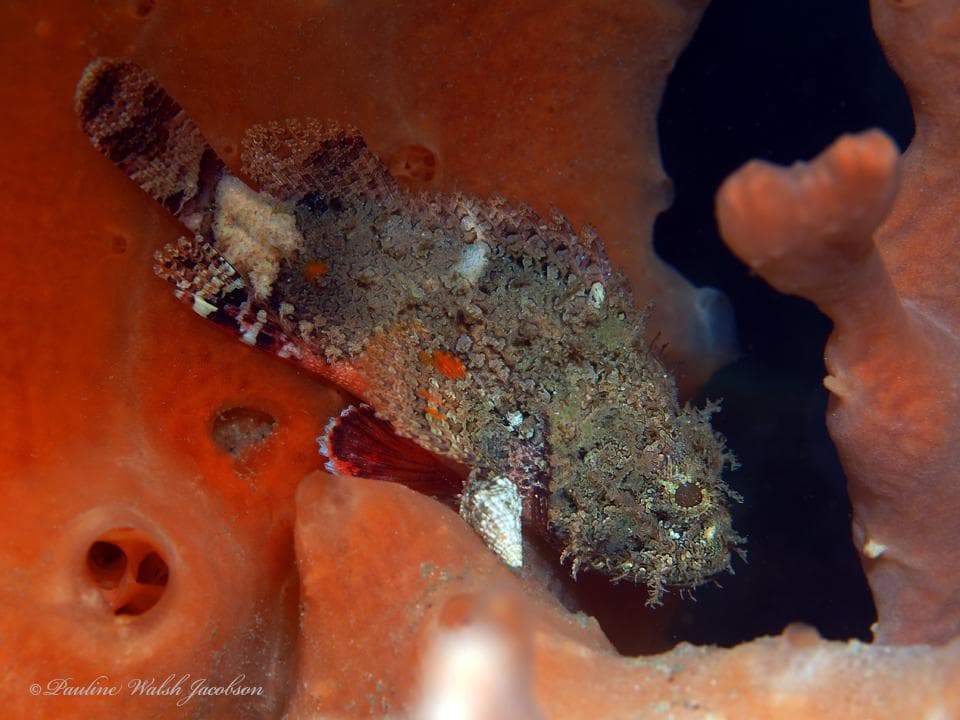
Scorpaena plumieri
A species of fish found from the Bermuda region to the south of Brazil in the western Atlantic Ocean, and in a few regions in the eastern Atlantic. It inhabits regions with coral reefs and rocky shores at depths ranging from 1 m to 60 m. It stays close to the bottom, camouflaging itself with the environment, thus avoiding predators (like some morays, rays and sharks) and can eat fish and crustaceans that pass by unsuspecting in front of them. It can reach a maximum size of 45 cm and 1.6 kg. It is one of the most venomous fish in the Atlantic Ocean, it has venom on its dorsal, pelvic and anal spines. Symptoms of the poisoning caused by these fish generally include local and systemic manifestations, with pain, edema, erythema and necrosis, fever, sweating, agitation, diarrhea and respiratory disorders.
South american silver porgy
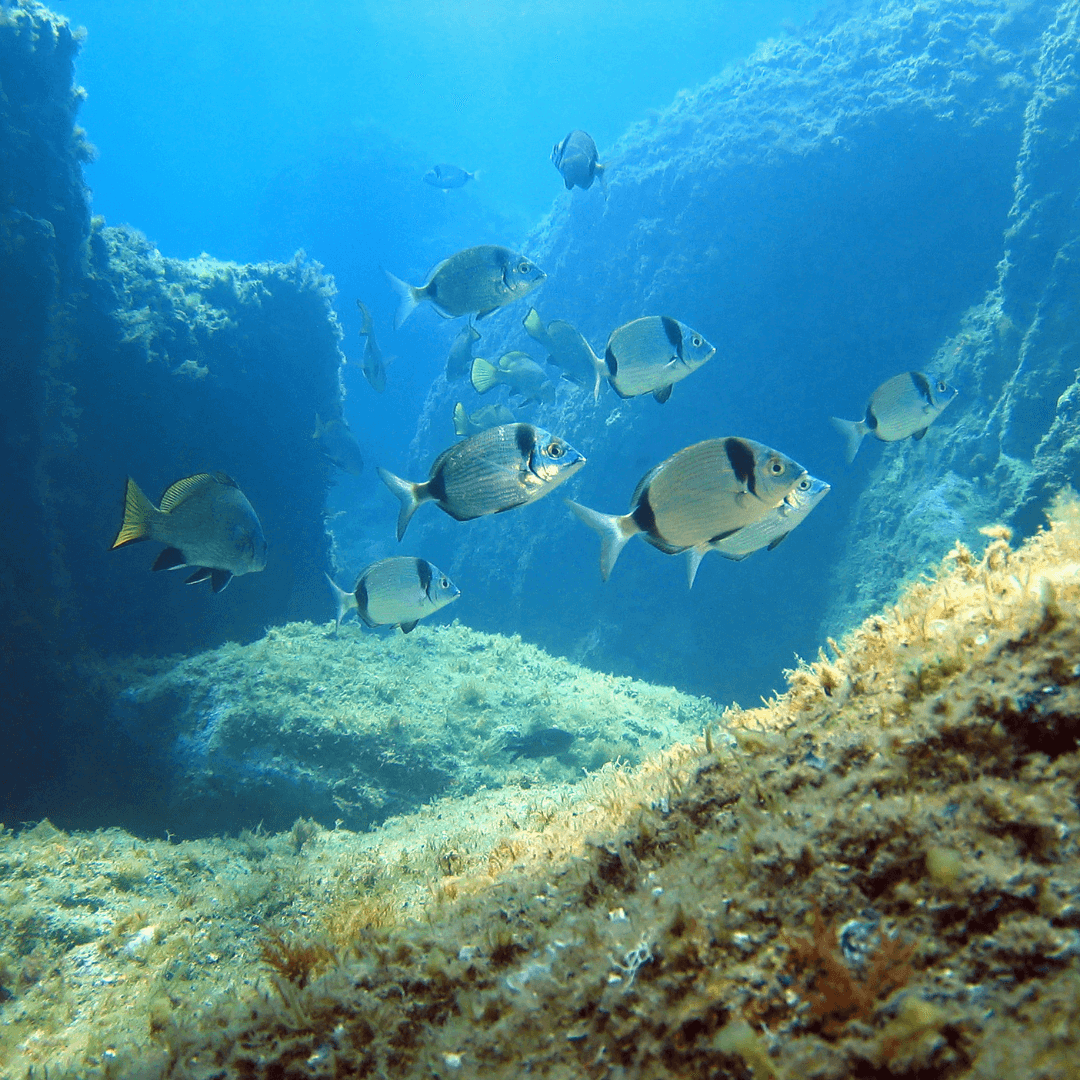
Diplodus argenteus
A species that occurs along the entire coast of the American Atlantic Ocean and in the Mediterranean Sea. It is found in turbulent coastal environments with shallow water, close to coral, rocky and/or sandy bottoms. It feeds on algae, mollusks, crustaceans and other invertebrates. Its body is oval and compressed, silver in color and has a dark rounded spot called ocellus, next to the tail, used to confuse predators. It can measure up to 37.8 cm in length. It is a little commercial fish.
Brazilian flamefish
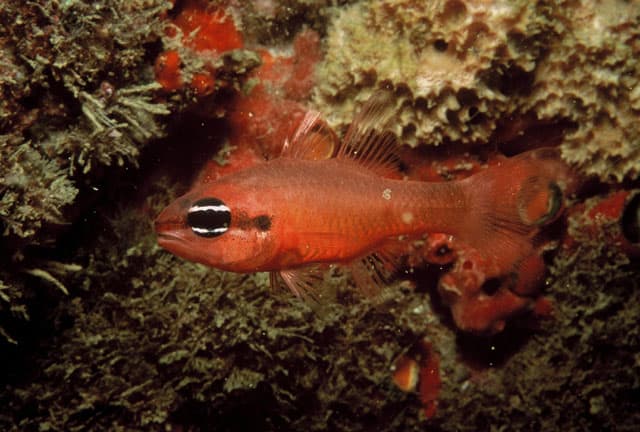
Apogon americanus
It is an endemic species of the brazilian coast, that is, it is only found in brazilian waters, and lives in coastal environments, gravel bottoms, close to banks of algae and reefs, corallines or not. It feeds at night from small crustaceans and zooplankton. It has a maximum size of 10cm long and has the habit of remaining still in the water column. The males keep the eggs in their mouths and remain without feeding until hatching.
Greater soapfish
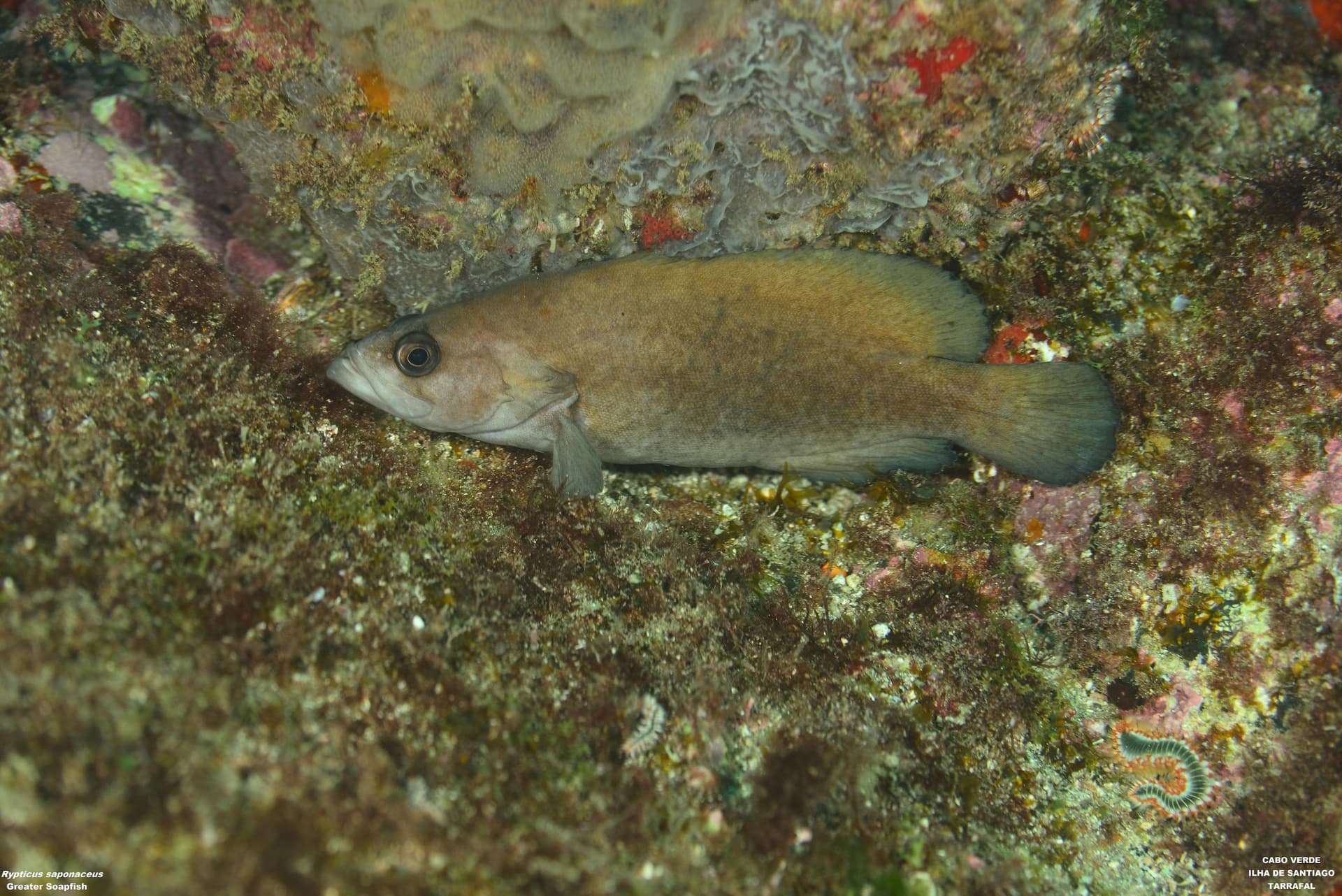
Rypticus saponaceus
It lives in the Atlantic, and can be found from the United States to Brazil and from Mauritania to Angola, in the Eastern Atlantic. It lives associated with coral reefs in shallow waters and feeds on small fish and invertebrates. It secretes mucus on the skin, when stressed, this mucus turns into soapy foam, which contains a toxic protein.