

Shipwreck
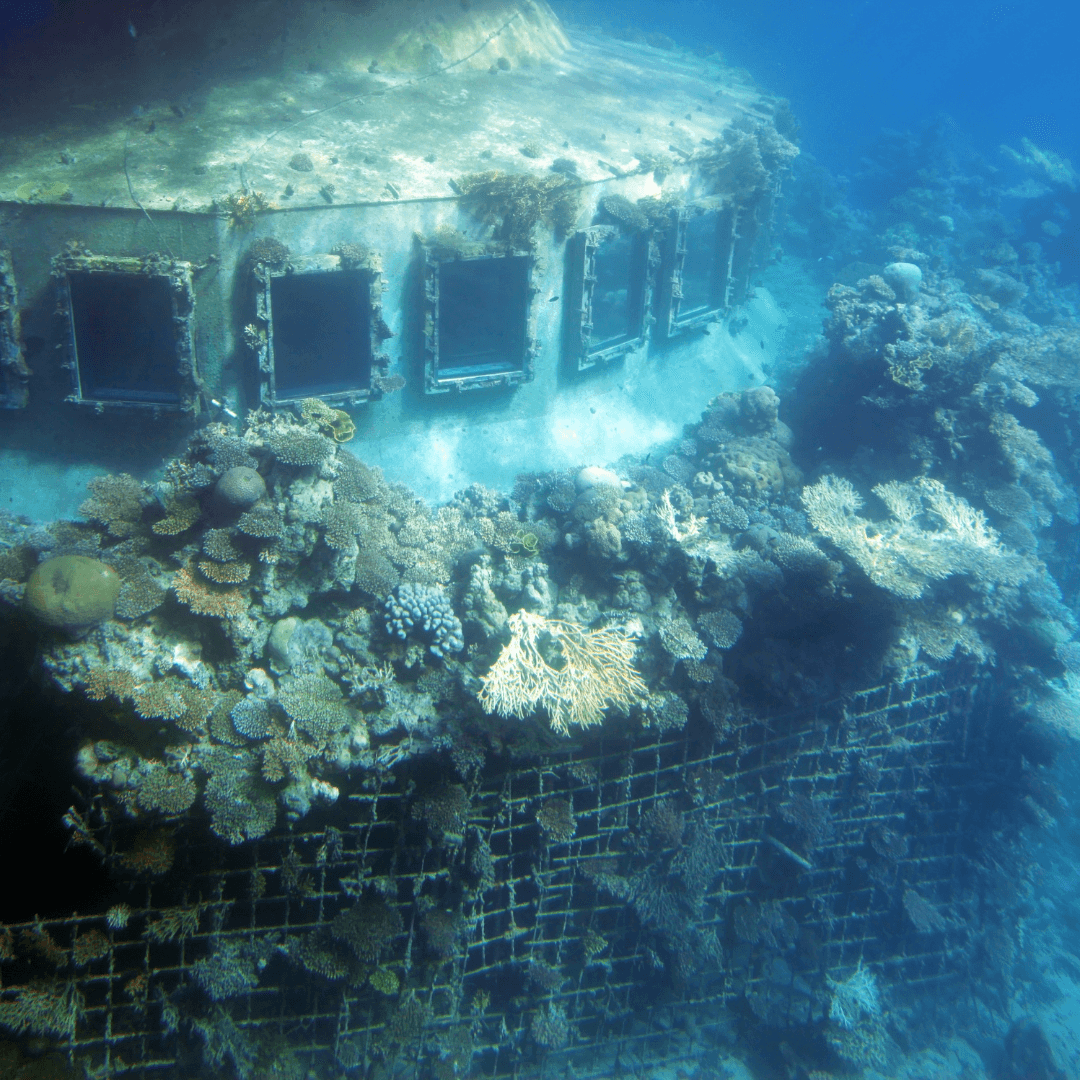
Reefs are environments that protect the coast and are home to many different species of marine life. When a shipwreck occurs, an artificial reef is created, which is inhabited by different fish, marine algae and invertebrates. Thus, a great space for protection and feeding of these animals.
The intentional shipwreck near areas with natural reefs is harmful to nature, as it causes an imbalance in that environment. Therefore, the ideal for planned shipwrecks is to be in environments that only have sand, so there will be no competition with natural reefs. Whether natural or artificial, they are very important environments for fishing and tourism, as long as these acts do not destroy the ecosystem.
Tank species
Barber surgeonfish
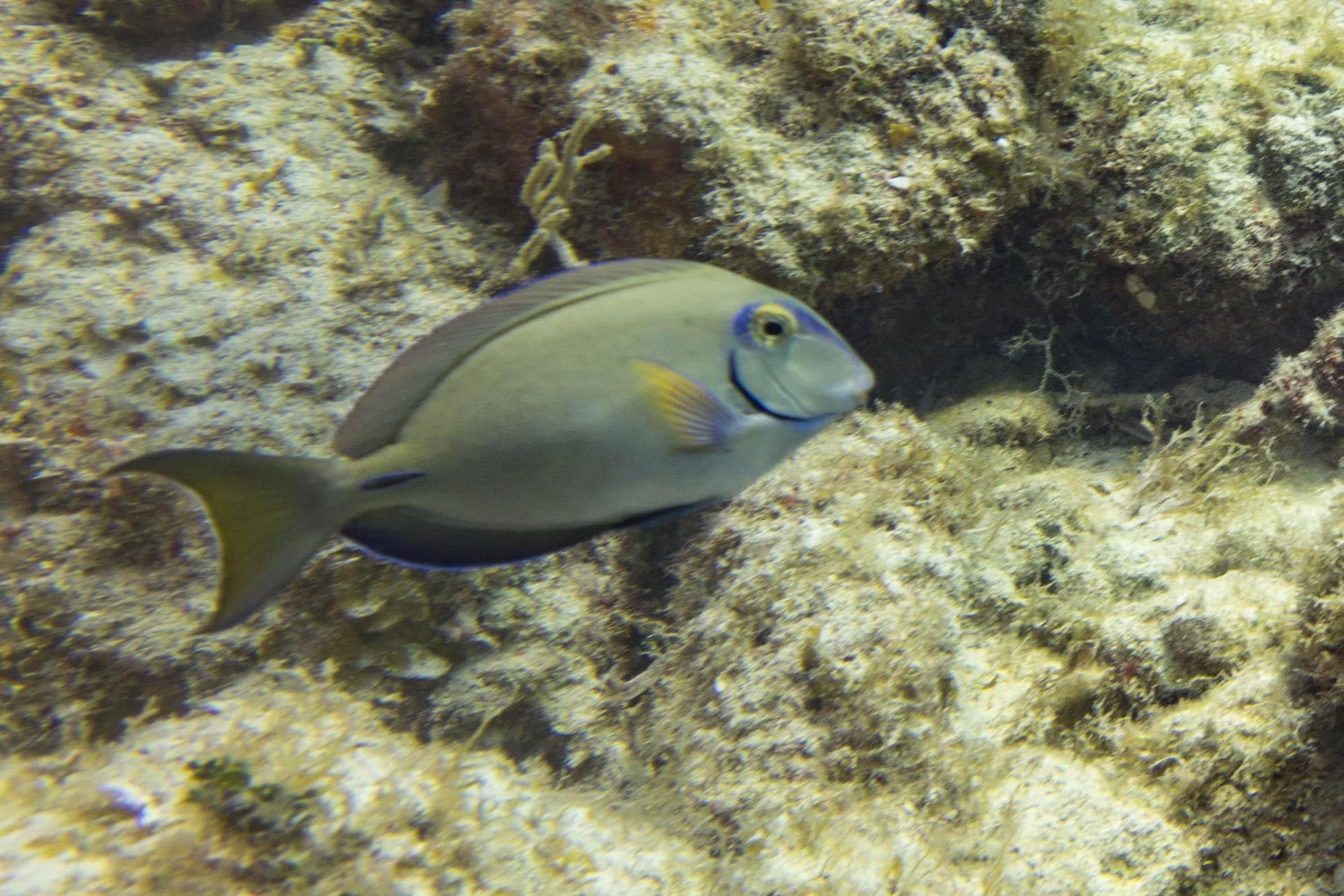
Acanthurus bahianus
It is one of the most characteristic surgeonfish of the Atlantic Ocean, living close to coral reefs in tropical regions at depths of up to 40 meters. It can reach a maximum size of 12 centimeters and its longest recorded lifespan is 31 years. It can be found in small groups of just over five individuals. It has diurnal habits and feeds almost exclusively on algae, sometimes eating small crustaceans. It has a pair of spines, located on the side of the tail, and used for defense. This characteristic is present in all species of the surgeon group.
Porkfish
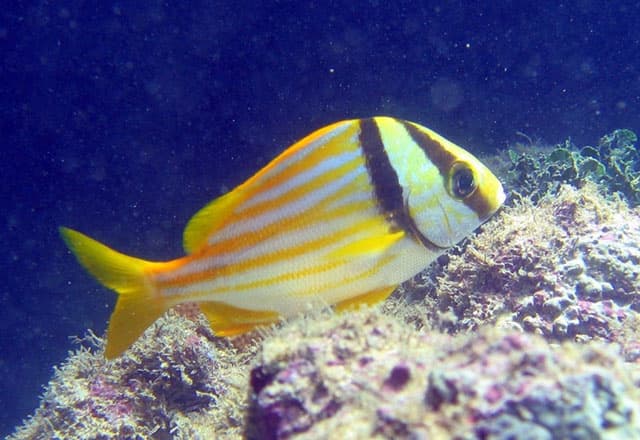
Anisotremus virginicus
A species of fish that can be found in tropical waters across the western Atlantic Ocean. It lives on coral and/or rocky bottoms, usually solitary. Despite being an omnivorous fish, juveniles usually feed on small parasites found in larger fish, and adults on small crustaceans, mollusks and annelids. This species can reach 40 cm in length. In the mating period, large aggregations can be formed. It has yellowish color with white bands along the body.
White grunt
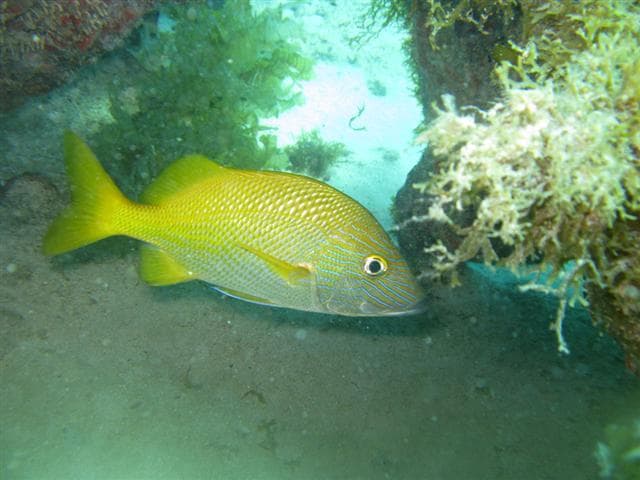
Haemulon plumierii
It lives in the Western Atlantic, on coral reefs, at depths of up to 40 meters. They can reach 53 cm in length. They feed on molluscs, crustaceans and fish. When juveniles go out at night looking for food on the sandy bottom of regions with sea grass and return to the reefs during the day to protect themselves. When adult individuals are in schools, they rest more and eat less. To find their food, adults bury their mouths in the substrate (sand) in search of their food and gradually release the substrate through the operculum (structure on the side of the head that protects the gills). Because they are territorial, we can observe, at times, one facing the other opening their mouths, challenging each other (it may look like a kiss but it's not).
Queen angelfish
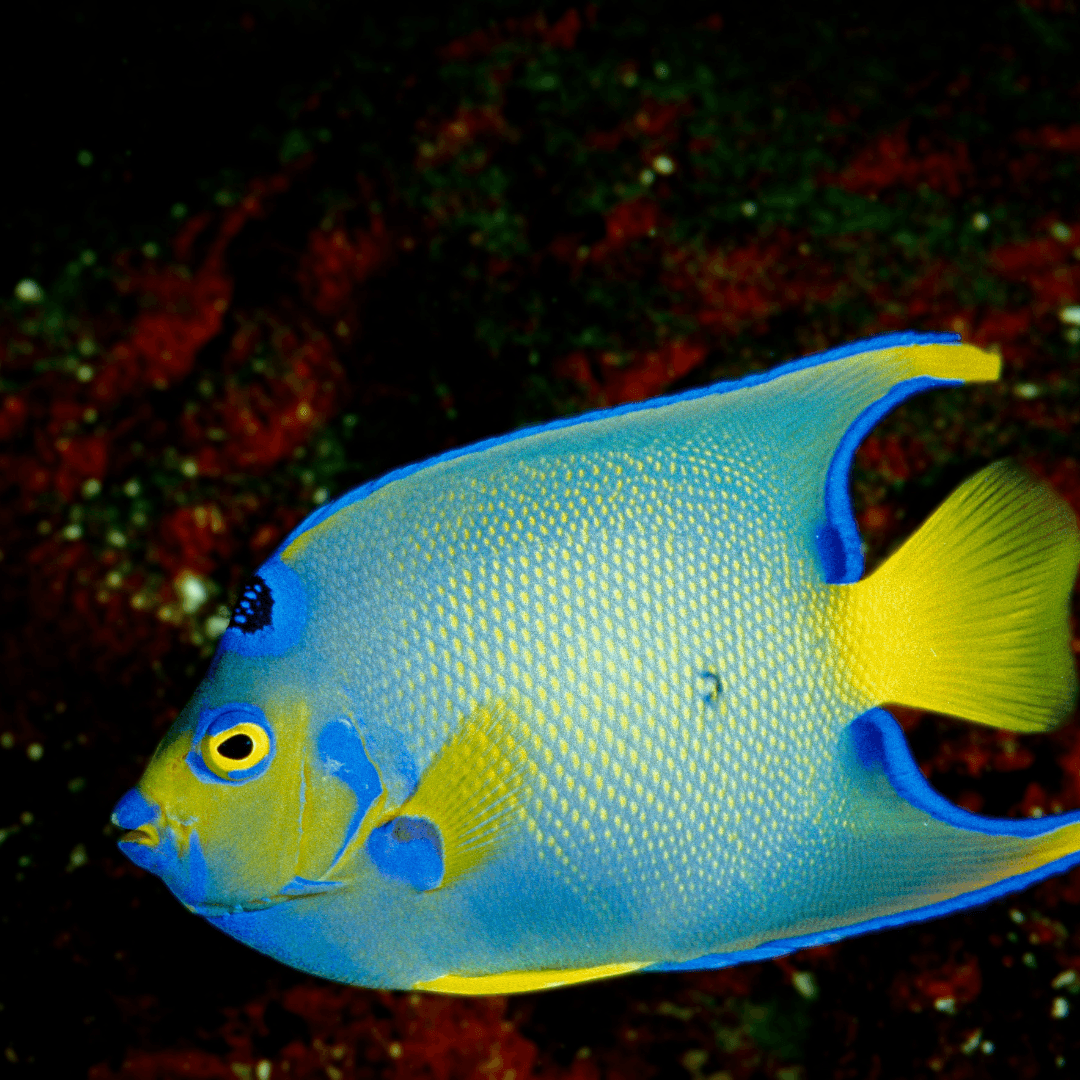
Holacanthus ciliaris
Found in the Western Atlantic, it lives alone or in pairs associated with coral reefs, at a depth of up to 70 meters. These are fish that, when adults, can reach up to 45 cm in length. Along with the Frade (Pomacanthus paru) it is one of the largest angelfish we have in Brazil. They swim slowly near rocks in search of food, eating sponges and small pieces of algae. They are shyer than the Friars, they rarely allow themselves to be approached. It is a commercial species in the aquarium market, being little commercial for other purposes.
Hairy blenny
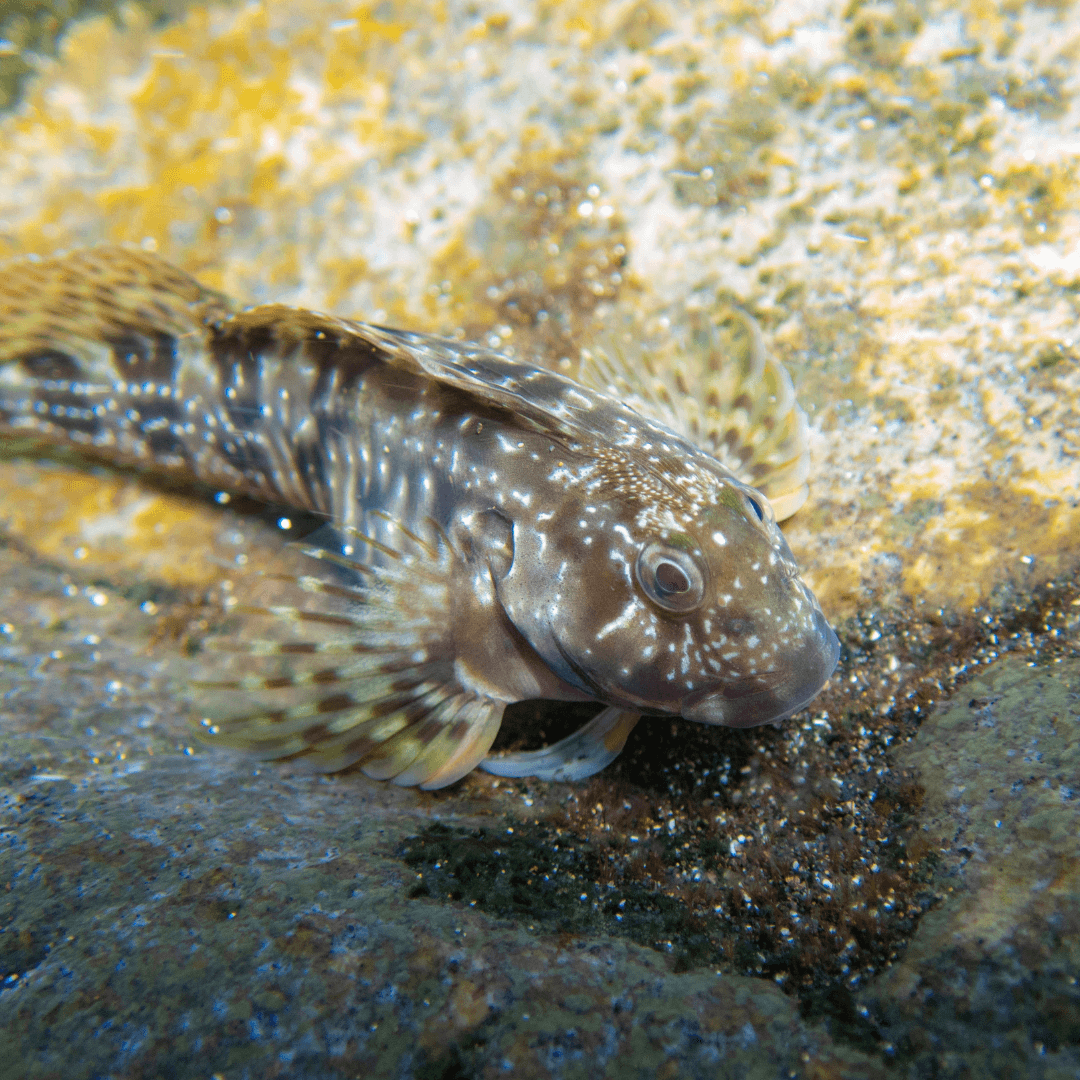
Labrisomus nuchipinnis
Found in the Atlantic Ocean, in coral reefs generally a few centimeters deep. It lives by hiding in holes or crevices at the bottom, feeding on crustaceans, snails, small fish and even stars and sea urchins. It presents paternal care, the father takes care of the eggs until they hatch.
Doctorfish
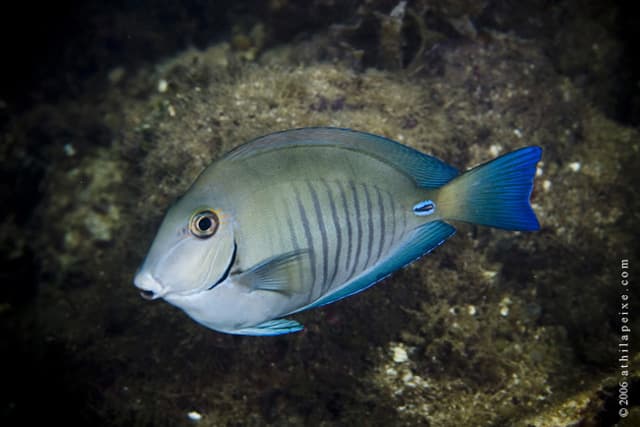
Acanthurus chirurgus
They live in the Western and Eastern Atlantic, at depths of up to 70 meters. Inhabits coral reefs and rocky areas. It feeds on algae, always looking for its food in sandy bottoms. It also cleans green turtles (Chelonia mydas) that are on the coral reefs next to the Blue Surgeon (Acanthurus coeruleus) and the Sargentinho (Abudefduf saxatilis). It is common to be confused with the Barber Surgeon (A. bahianus), as the only physical difference is the slight vertical lateral lines that A. chirurgus has.
Yellow sea chub
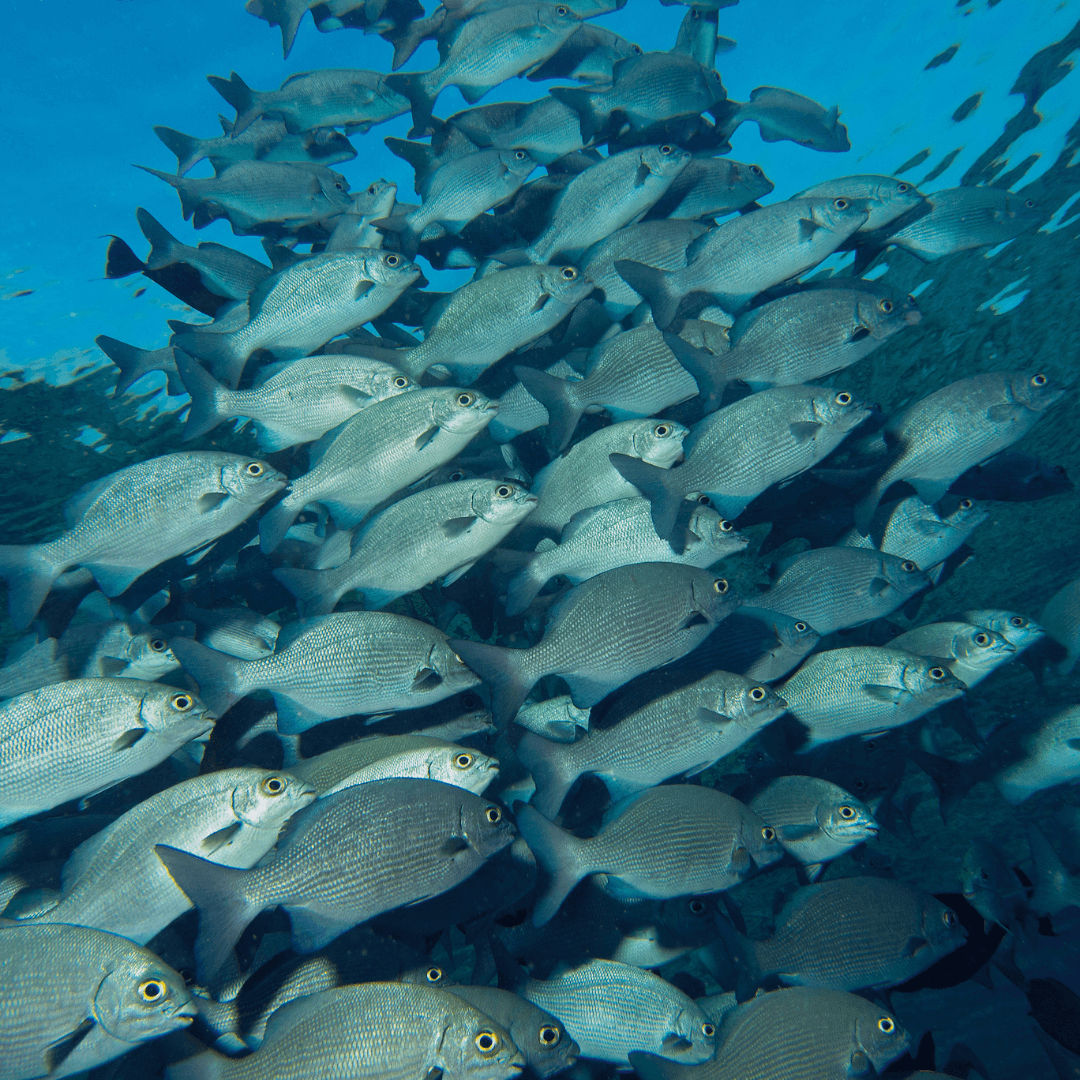
Kyphosus incisor
Common fish in the Western and Eastern Atlantic, they can live up to 15 meters deep. They live in rocky environments and coral reefs, reaching up to 90 cm in length. They feed on algae, also eating Sargassum algae, which is the same as the scorpionfish (Rhinopias frondosa) camouflages itself.
French angelfish
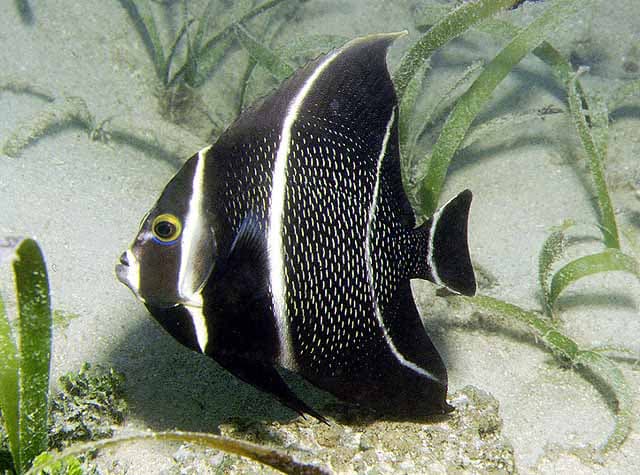
Pomacanthus paru
Species that lives in the Atlantic Ocean and can be observed along the entire Brazilian coast, close to reefs and rocky shores. Adults can swim up to about 30 m deep. They can be territorial when they establish a cleaning station where they eat parasites from other fish. In addition to these parasites, they also feed on sponges, worms, algae and small crustaceans. When juvenile, it has yellow vertical stripes and a blue pelvic fin. When adults lose their stripes, and their predominant color is navy blue and black, with yellow lateral scales. They can reach a maximum size of 40 cm, and they are very curious animals and usually allow divers to approach them.
South american silver porgy
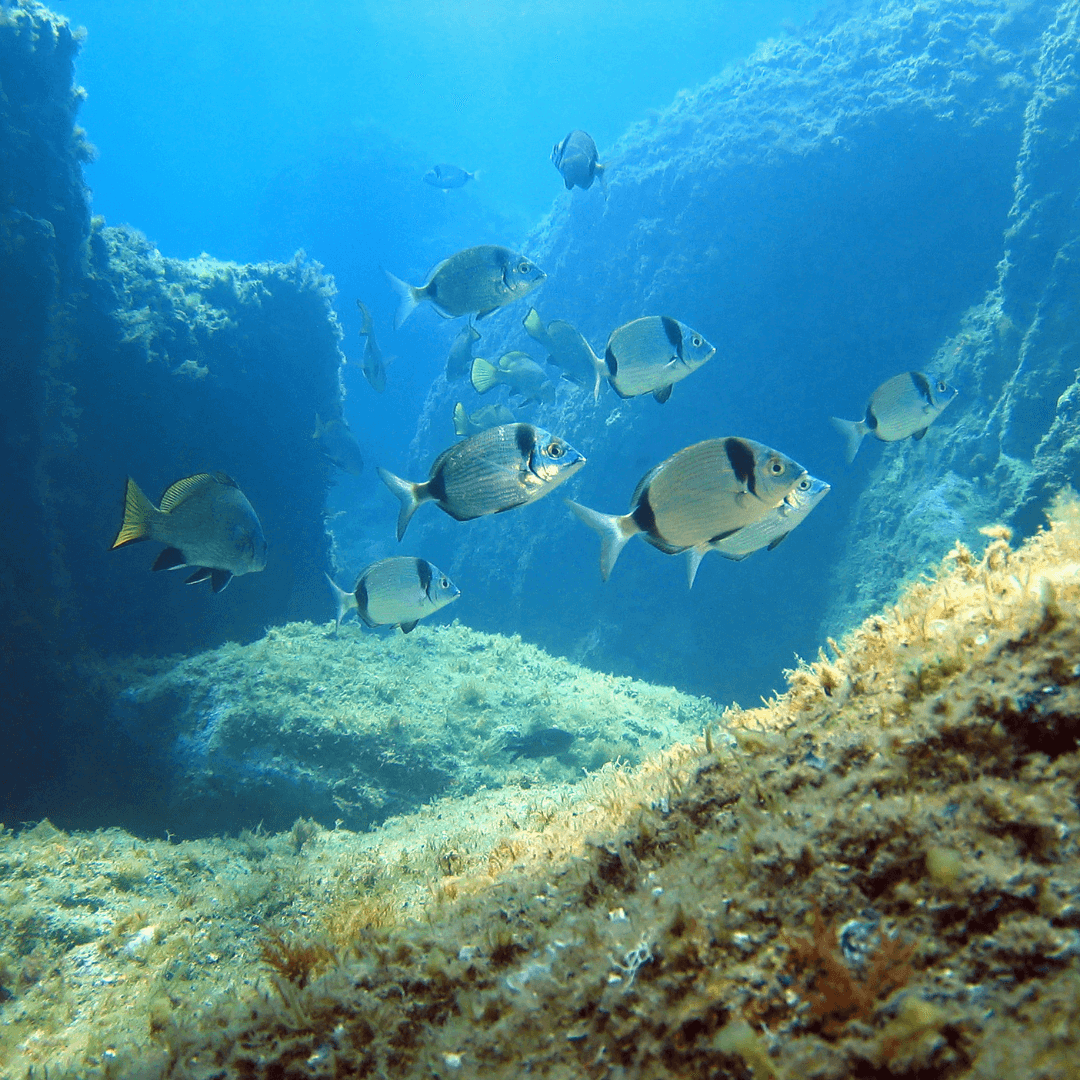
Diplodus argenteus
A species that occurs along the entire coast of the American Atlantic Ocean and in the Mediterranean Sea. It is found in turbulent coastal environments with shallow water, close to coral, rocky and/or sandy bottoms. It feeds on algae, mollusks, crustaceans and other invertebrates. Its body is oval and compressed, silver in color and has a dark rounded spot called ocellus, next to the tail, used to confuse predators. It can measure up to 37.8 cm in length. It is a little commercial fish.
Atlantic spadefish
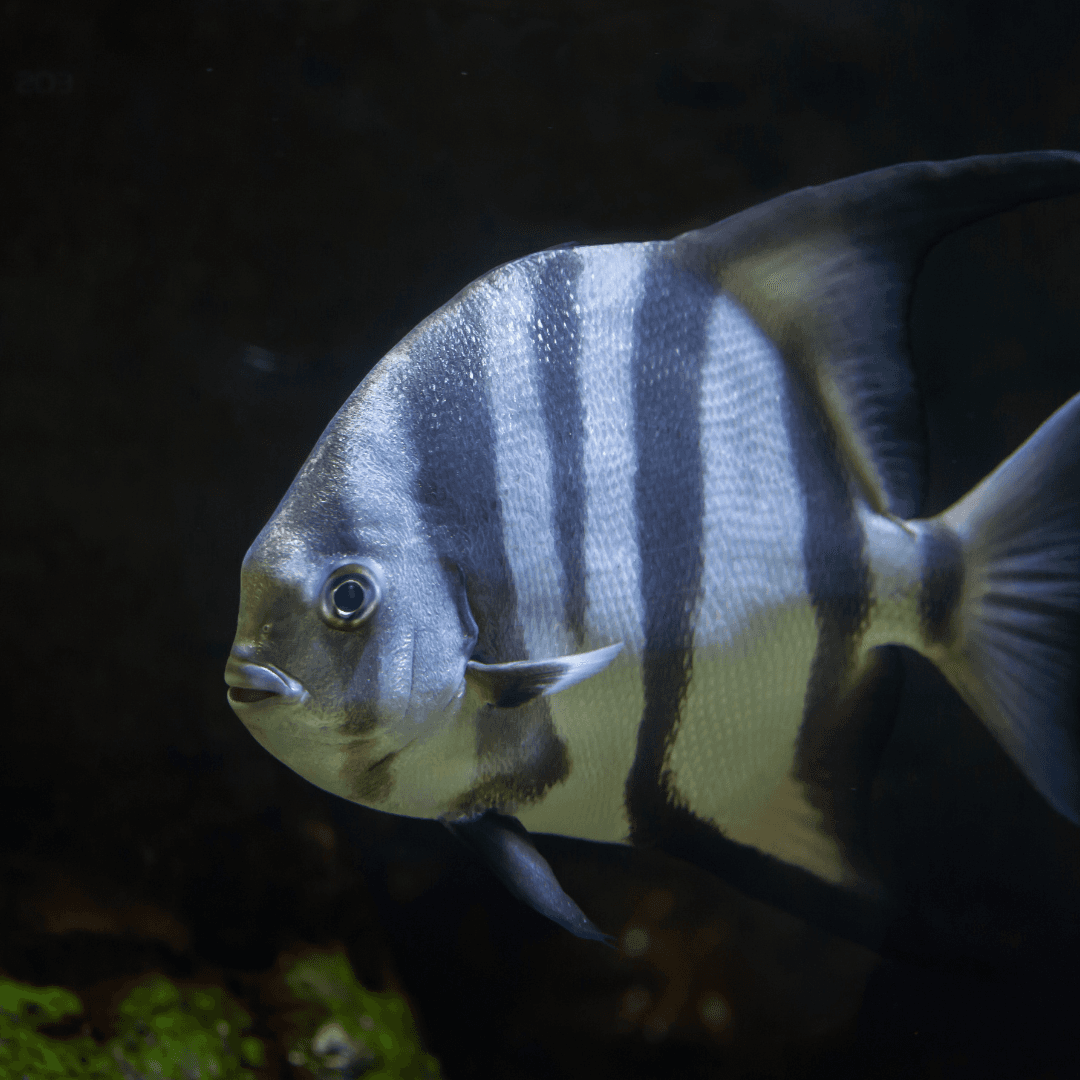
Chaetodipterus faber
It is a species found in the Atlantic Ocean, from the southeast of the USA to Rio Grande do Sul (Brazil). It lives associated with coral reefs, at depths between 3m and 35 meters. It feeds on animals such as crustaceans, molluscs, annelids and cnidarians, and can also feed on plankton in the water column. Individuals have an average size of 50 cm and maximum weight ever recorded of 9 kg. In the reproductive period, females can release up to 1 million eggs into the water column, with the eggs hatching about 24 hours later. There are cases of ciguatera poisoning when consuming this animal. It is a commercial species in the aquarium, sport fishing and aquaculture market, being little commercial for other types of fisheries.